Home cleaning, organization and lifestyle tips
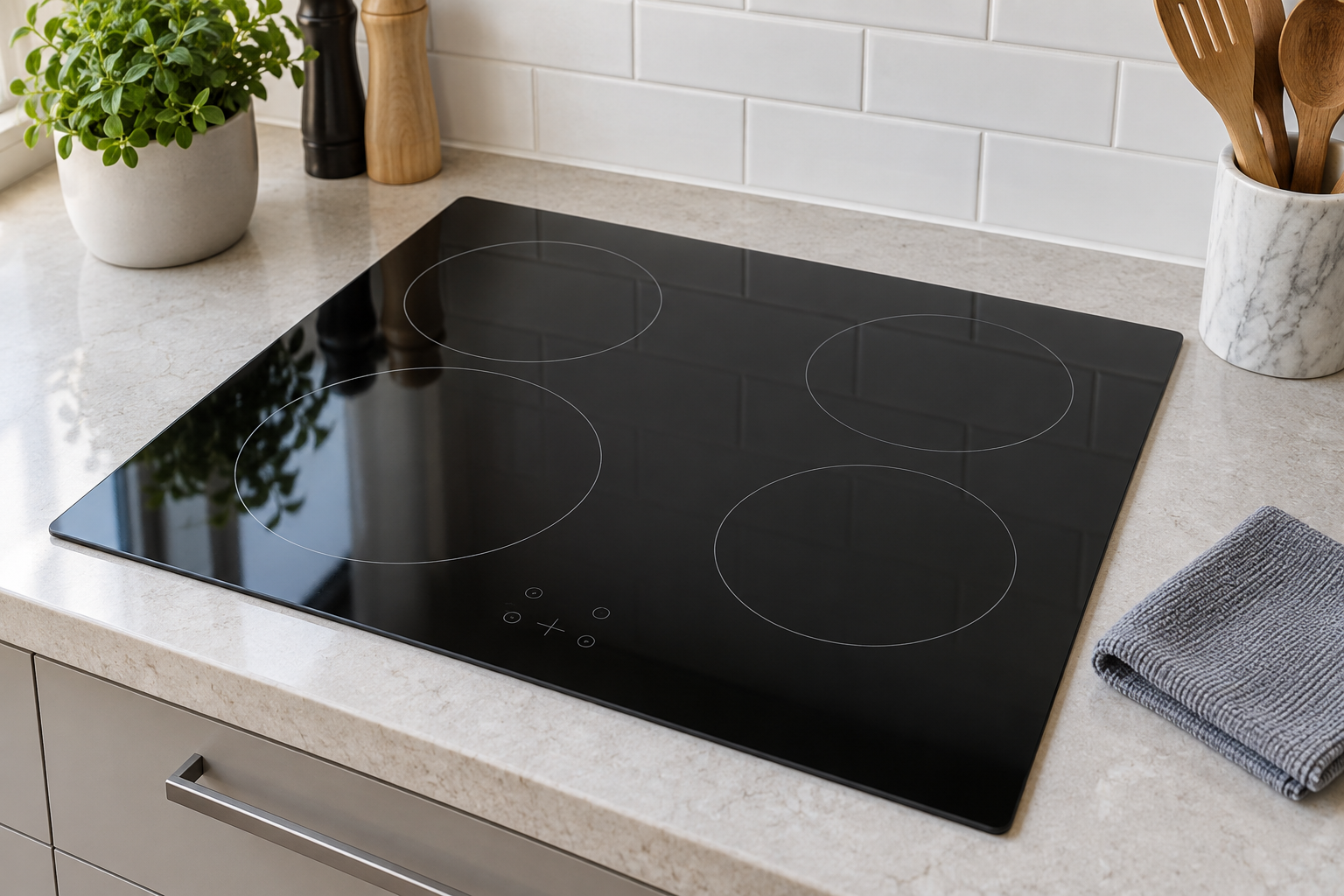

Quick answer: switch every cooking zone off, let the surface reach the condition specified in the appliance manual, remove loose grit, and clean with a product approved for ceramic glass. Use a cooktop scraper only when the manufacturer allows it and only for firmly attached residue. Finish with a clean, dry microfiber cloth. The safest method is controlled contact time and the correct tool, not harder scrubbing.
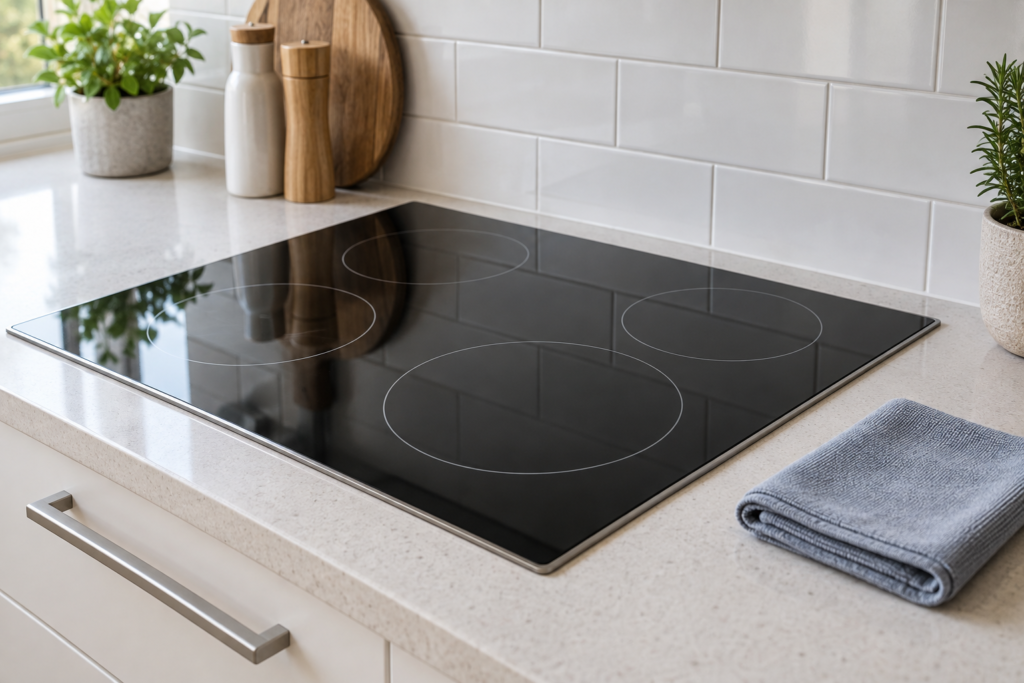
A black glass surface shows every fingerprint and water mark, but appearance alone does not tell you what the mark is. Greasy film, mineral residue, cooked-on food and damage to the glass need different responses. Start gently, check the result after the surface is dry, and stop if a mark looks like a crack, chip or scratch rather than removable soil.
Before you start: check the cooktop and the manual
Confirm that the appliance has a ceramic-glass surface; this guide is not for stainless steel, enamel, gas-burner parts or a cracked top. Read the cleaning section of the model manual before using a scraper, vinegar, baking soda or any commercial product. Manufacturers do not all approve the same household mixtures, and the instructions for a sugary spill can differ from routine cleaning.
Turn the controls off and use the control lock if your model has one. Keep children away. For ordinary cleaning, wait until the surface is cool. Some manufacturers direct owners to remove certain cooked-on or sugary residues while the glass is still warm but not hot to the touch; follow that model-specific instruction and use heat protection if it is required. Never pour cold water onto hot glass.
Gather two clean microfiber cloths, a non-abrasive pad specifically approved for ceramic glass, a manufacturer-approved cooktop cleaner, and a cooktop scraper if the manual permits one. Inspect cloths and pads for trapped crumbs. A grain of salt or grit under a cloth can scratch while an otherwise safe product is being used.
How to clean a ceramic glass cooktop step by step
1. Remove loose debris without dragging it
Lift off crumbs with a soft, dry cloth. Do not sweep them across the entire top and do not slide pans out of the way: lift cookware instead. Check that the bases of the pans are clean before returning them. This first dry pass matters because hard particles cause many of the fine marks blamed on cleaning products.
2. Clean ordinary grease and cooking film
Apply a small amount of ceramic-cooktop cleaner as directed on its label. Work on one section at a time with the approved pad or a soft cloth. Use moderate, even movements rather than pressing on one spot. If your manual explicitly approves a mild dish-soap solution, it may be suitable for a fresh greasy film, but remove its residue completely. Do not flood the perimeter, touch controls or ventilation openings.
3. Give dried residue time to soften
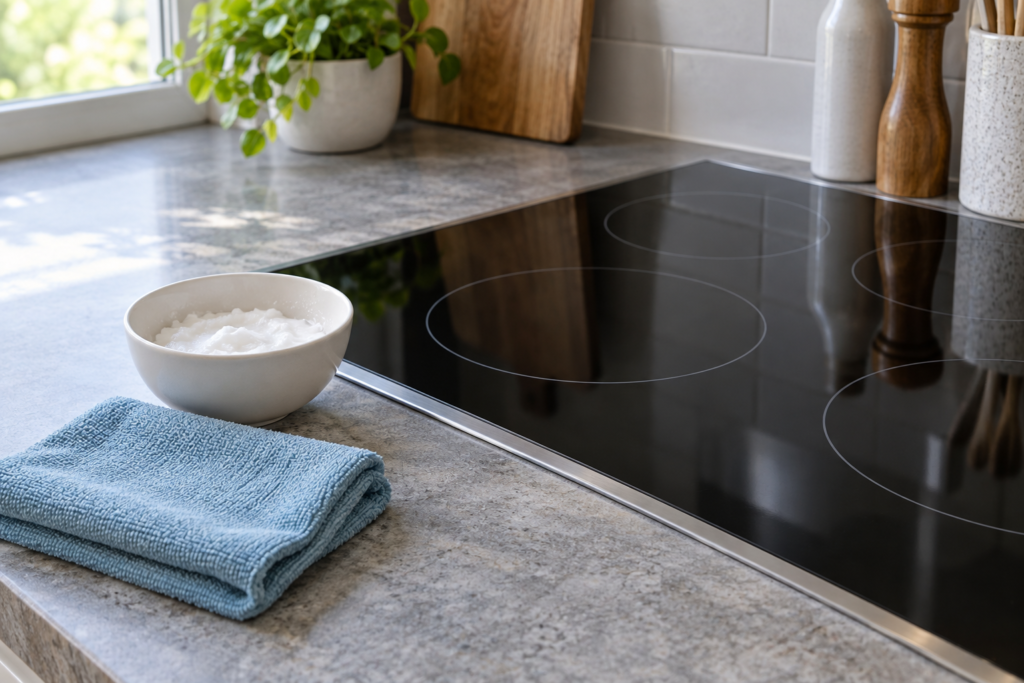
For a dry splash that is not heavily carbonized, leave the approved cleaner in contact for the time stated on the label. Then wipe and reassess. Repeating a gentle cycle is safer than reaching immediately for a rough sponge. Baking soda is not universally approved: even though many household guides suggest a paste, use it only if the cooktop manufacturer allows it.
4. Use a cooktop scraper for firmly burned-on soil
A purpose-made scraper is different from a kitchen knife. Check the blade before use and replace it if it is dull, chipped or rusty. Hold the tool at the angle stated in the appliance or scraper instructions, keep the full cutting edge against the glass, and make short, controlled passes away from your body. Do not use the corner of the blade and do not scrape over trim, markings or a damaged area.
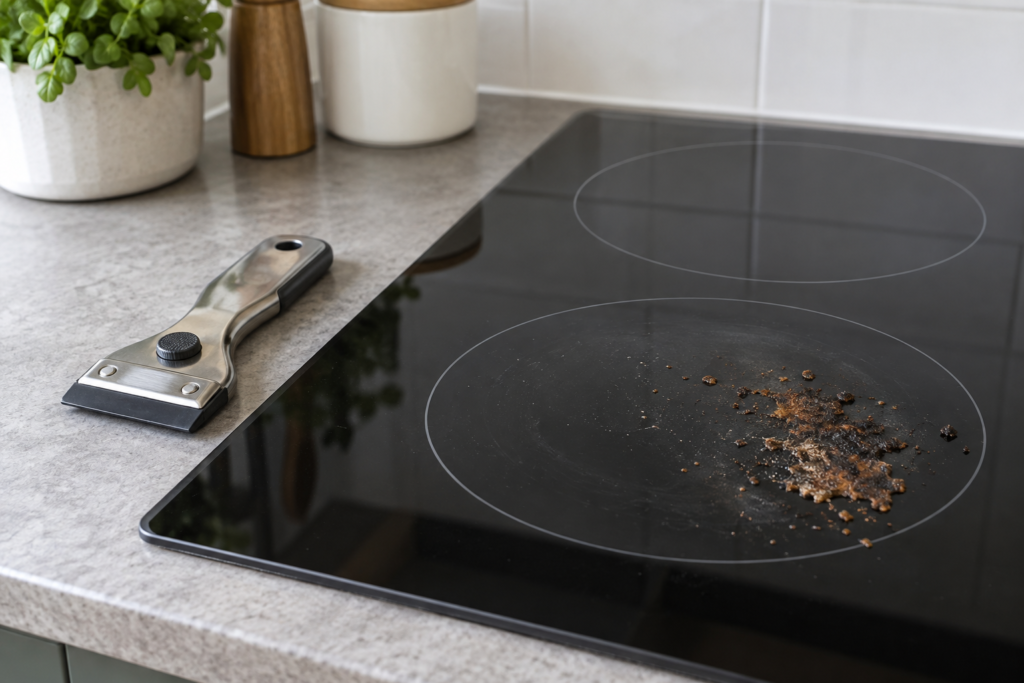
Whirlpool and GE guidance both describe using a scraper intended for ceramic glass for heavy residue, followed by a compatible cooktop cleaner. Their temperature and handling directions are not identical for every model, which is why the owner manual takes priority over a universal angle or timing rule.
5. Remove cleaner residue and dry
Wipe with a separate clean cloth, turning it frequently. Follow the product label on whether a damp rinse cloth is needed. Remove all cleaner before the cooktop is heated again. Finally, polish with a dry microfiber cloth. Drying reveals whether the remaining mark is soil, a mineral film or permanent surface damage.
Sugary spills, melted plastic and mineral marks
Hot sugar, syrup, jam and melted plastic can bond to ceramic glass and may pit it as they cool. Treat these as a special incident, not as routine grease. Switch the zone off, move the pan safely, and follow the emergency-spill directions in the model manual. Do not touch the spill with bare skin, add water or improvise with a knife. If the manual tells you to use a scraper while the surface remains warm, use the specified protection and method.
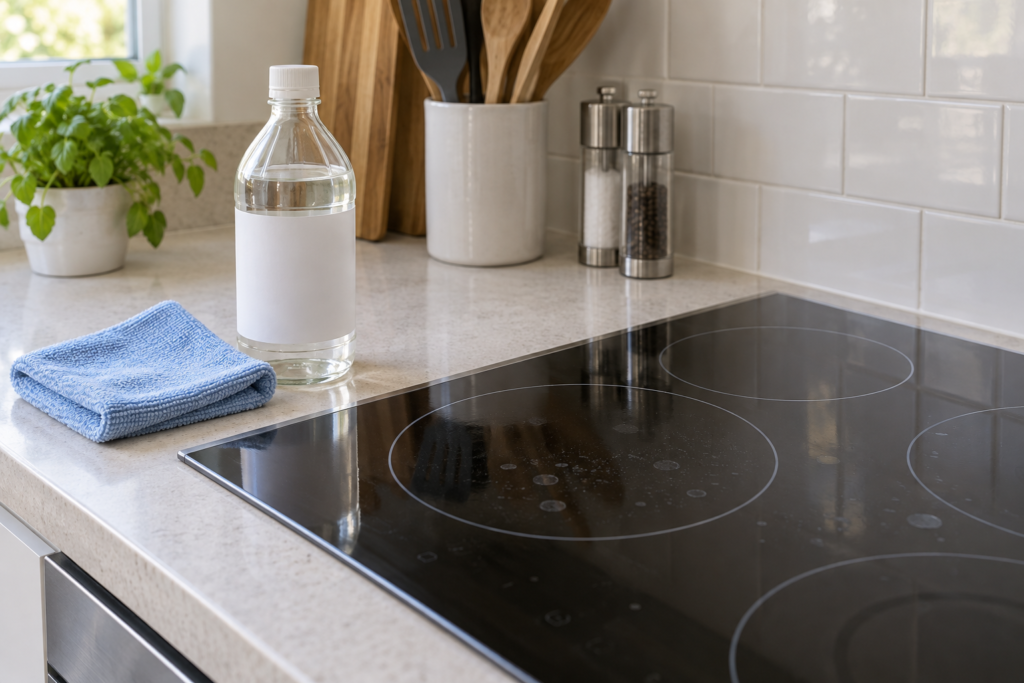
White or rainbow-like marks can be mineral residue, cleaner residue, pan transfer or actual change to the glass. A mild vinegar solution is appropriate only where the manufacturer permits it. Apply it to the cloth rather than spraying controls, and never combine vinegar with bleach or another cleaner. If a mark remains after the approved method and full drying, stop increasing the strength of the treatment.
What not to use on ceramic glass
- Steel wool, metal scouring pads, abrasive powders or a dirty kitchen sponge.
- Oven cleaner, rust remover, chlorine bleach or ammonia unless the appliance manual explicitly calls for that exact product.
- Knives, screwdrivers or a scraper not designed for ceramic cooktops.
- A melamine sponge unless the manufacturer approves it; it works by micro-abrasion and can dull some finishes.
- Large amounts of liquid around controls, seams or the frame.
- Hard scrubbing on a dry surface or heating the cooktop while cleaner residue remains.
Do not mix cleaning products. A stronger chemical cocktail is not a substitute for identifying the stain, and some combinations release hazardous gases. Rinse or remove one product as its label directs before considering another.
How to prevent scratches and stubborn buildup
Wipe fresh splashes after each use once it is safe to do so. Lift cookware instead of sliding it. Keep pan bases flat, smooth and free from dried food, salt and sand-like particles. Avoid using the cooktop as an extra counter for grocery bags, ceramic dishes or utensils. A protective mat should never be placed on a hot or operating surface unless it is supplied and approved by the appliance manufacturer.
For the rest of the kitchen, use a separate cloth and method: our guides explain how to remove grease from kitchen cabinets, clean an oven safely, clean a microwave with lemon, and descale a kettle. Separating tools prevents oven grit or cabinet grease from being transferred to the glass.
Frequently asked questions
Can I use baking soda on a ceramic glass cooktop?
Only if the manufacturer of your model permits it. Baking soda is still a fine solid and is not the default recommendation in every manual. A dedicated ceramic-cooktop cleaner is the more predictable starting point.
Can I use vinegar?
Some manufacturers allow a diluted vinegar method for mineral film; others specify their own cleaner. Check the manual, use one product at a time, and keep liquid away from electrical controls and seams.
Is a scratch removable?
Cleaning removes material sitting on the surface; it does not repair glass. If a line catches a fingernail, remains after cleaning, or connects to a chip, stop using aggressive methods. A cracked or chipped cooktop needs advice from the manufacturer or a qualified service technician before further use.
Sources and further guidance
- Whirlpool Product Help: Cleaning Ceramic Glass Cooktops
- GE Appliances: Glass Cooktop Cleaning Instructions
- KitchenAid Product Help: Ceramic Glass Cooktop
Related reading
Continue with the four same-language kitchen-cleaning guides linked above. Each guide uses the same rule as this one: identify the material first, follow the appliance instructions, and use the least aggressive method that works.
Related guides