Home cleaning, organization and lifestyle tips
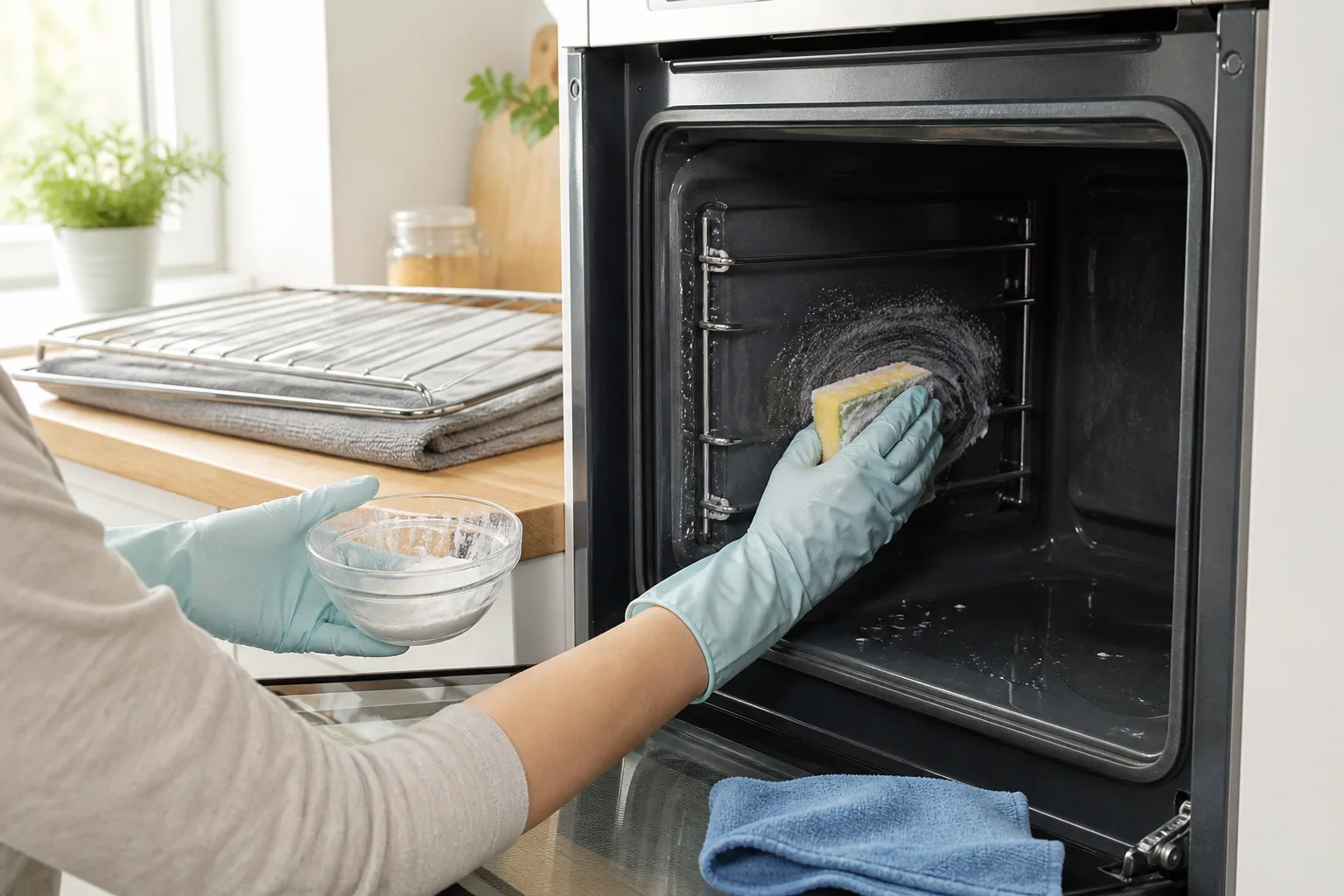

Short answer: for many conventional smooth-enamel ovens, a paste made from 1/2 cup baking soda and about 3 tablespoons of water can loosen baked-on food without aerosol oven cleaner. Apply it only to surfaces your manual allows, leave it for at least 20 minutes, then remove it with a damp cloth and a plastic scraper. Self-cleaning, steam-cleaning and catalytic ovens need model-specific care.
“Without chemicals” is a common search phrase, but it is not literally possible: water, baking soda and vinegar are chemicals too. Here it means cleaning without a harsh commercial oven spray. The safest method is always the gentlest one approved in your oven’s user manual.
Before you clean: identify the oven surface
Do not assume every dark panel inside the oven is ordinary enamel. Some ovens have porous catalytic liners that absorb grease; covering those panels with paste or scrubbing them can damage their function. Find the model number and check the cleaning section of the manual first.
| Oven type | Best starting point | Important caution |
|---|---|---|
| Conventional smooth enamel | Manual cleaning with warm water, dish soap or an approved baking-soda paste | Keep paste away from elements, vents, fans and the door gasket |
| Steam Clean | Use the built-in cycle and the exact water amount in the manual | Do not invent a temperature or pour water into an oven not designed for it |
| Pyrolytic / Self Clean | Follow the programmed cycle instructions | Remove accessories and heavy loose soil as directed; surfaces become extremely hot |
| Catalytic / continuous-clean liner | Follow the manufacturer’s method only | Do not coat or aggressively scrub the porous panels |
What you need
- Rubber or nitrile gloves and good ventilation.
- Two microfiber cloths or soft dishcloths.
- A non-scratch sponge and a plastic or silicone scraper.
- Warm water and a small amount of dish soap.
- Baking soda and a small bowl, only if the manual permits it.
- White vinegar in a cloth or spray bottle, optional and used only to remove chalky baking-soda residue.
How to clean an oven without harsh cleaner: step by step
1. Switch off, cool and empty the oven
Turn every control off and wait until the oven is completely cool. Remove cookware, thermometers and loose accessories. Take the racks out if the manual recommends it. Brush or vacuum out dry crumbs without touching a heating element.
2. Wash the racks separately
Place old towels in a sink or tub to prevent scratches, then soak compatible racks in warm water with dish soap. Loosen residue with a non-scratch sponge or nylon brush, rinse and dry. Some coated or telescopic racks require special care, so never soak them unless the manual allows it.
3. Make a spreadable baking-soda paste
For an oven that permits this method, mix 1/2 cup baking soda with about 3 tablespoons of water. Add water a teaspoon at a time until the paste spreads without running. This manufacturer-published ratio is a useful starting point; you do not need a thick layer.
4. Spot-treat the approved enamel
Use a soft brush or silicone spatula to cover greasy marks on the smooth enamel. Avoid heating elements, gas openings, fan slots, lights, sensors, catalytic panels and the flexible door gasket. Leave the paste for 20 minutes; stubborn spots may need several hours or overnight if the manual permits.
5. Lift residue instead of scratching it
Wipe with a damp cloth, folding it to expose a clean side. Hold a plastic scraper at a shallow angle for softened food, then wipe again. Repeat with clean water until no gritty or white residue remains. Metal knives, razor blades and steel wool can permanently mark enamel or glass.
6. Use vinegar only as a final rinse if needed
A little white vinegar on a cloth can help dissolve the white film left by baking soda. It is a cleanup step, not a stronger cleaning reaction: mixing vinegar and baking soda together neutralizes much of both ingredients. Wipe once more with clean water and dry thoroughly.
How to clean the oven-door glass and gasket
Clean cool glass with warm soapy water and a soft cloth first. If the manual allows baking soda on the inner glass, use a thin paste and a non-scratch pad. Do not flood vents along the top or bottom of the door, because liquid can become trapped between glass panels.
Wipe the door gasket very gently, or leave it untouched if the manual says so. Pulling, soaking or scrubbing the gasket can stop the door from sealing correctly. If grease is trapped between panes, use the model’s service instructions rather than dismantling the door by guesswork.
What to do with heavy burnt-on grease
Repeat the paste treatment rather than increasing abrasion. If the oven has a Steam Clean or Self Clean program, use it exactly as directed after removing loose grease and accessories specified in the manual. A smoking oven, damaged gasket, electrical smell or residue around an element is a reason to stop and arrange service.
If a manufacturer-approved commercial product is required for your model, follow its label instead of combining it with a home remedy. Never mix bleach, disinfectant, ammonia, vinegar or another cleaner. The CDC warns that mixing household cleaners can release dangerous vapors.
Seven mistakes that can damage an oven
- Lining the oven floor with aluminum foil or a silicone mat. Foil can trap heat, melt or block airflow.
- Pouring water onto the oven floor unless the appliance manual specifically instructs it.
- Spraying liquid into vents, fans, igniters, lights or controls.
- Coating catalytic liners, heating elements or the door gasket with paste.
- Using a metal scraper, knife, steel wool or abrasive powder on enamel or glass.
- Running a self-clean cycle with loose grease, foil or incompatible racks inside.
- Mixing cleaning products or applying a cleaner to a hot surface.
How to keep the oven cleaner for longer
Place food on a rimmed baking sheet or covered casserole dish to catch drips. Do not line the oven floor. Once the appliance is cool, wipe fresh splashes before they bake on again. A quick monthly check usually prevents the smoky “deep-clean emergency.”
For the rest of the cleaning routine, see how to remove refrigerator odors safely, clean a washing machine and deal with limescale, and remove coffee stains from clothes.
Frequently asked questions
Can I leave baking soda in the oven overnight?
Often yes on compatible smooth enamel, but only if the manual allows baking soda. Keep the paste away from sensitive parts and remove every trace before heating the oven.
Should I heat vinegar and water in the oven?
Use steam only when your manual describes a Steam Clean cycle or an approved bowl method. Water amount, placement and temperature vary by model, so a universal homemade steam recipe is not safe advice.
Why is there white dust after cleaning?
That is usually dried baking soda. Wipe repeatedly with clean damp cloths; use a small amount of vinegar on the cloth for the final film, then rinse with water.
Can I clean the heating element?
Do not coat or soak an element. When the oven is cold, remove loose crumbs around it without bending or disconnecting anything. Follow the manual or request service for baked-on material attached to the element.
How often should an oven be deep-cleaned?
There is no universal schedule. Clean a cooled spill promptly and inspect the cavity monthly. Frequent roasting or visible smoke may require more frequent cleaning; light use may require less.
Sources and further reading
- Whirlpool: How to Clean an Oven Inside and Out.
- GE Appliances: Using Aluminum Foil or Silicone Liners.
- CDC: Cleaning and Disinfecting with Bleach.
Related guides