Home cleaning, organization and lifestyle tips

Quick answer: read every care label, separate plain whites from coloured trim and delicate fabrics, treat stains before they enter the dryer, choose detergent and the warmest water the least tolerant item permits, and leave enough room for laundry to move. Use chlorine or non-chlorine bleach only when both the garment label and product label allow it. Remove clean items promptly and dry at the stated setting.
White is a colour, not a fabric type. A cotton towel, stretch T-shirt, wool jumper and shirt with dark piping may look suitable for one load but tolerate different heat, agitation, bleach and drying. Bright whites come from controlling soil and dye transfer while protecting fibres; repeatedly applying the harshest cycle can shorten a garment’s life and sometimes make yellowing or damage worse.
Let the care label set the limits
Check washing method, maximum or recommended temperature, cycle, bleaching symbol, drying and ironing. The US Federal Trade Commission’s Care Labeling Rule requires covered garments to carry supported care instructions and warnings. Treat the label as the ceiling for treatment, not an obstacle to a favourite household recipe. If several items share a load, follow the most delicate instruction among them.
A crossed bleach symbol means no bleach. A triangle marked for non-chlorine bleach does not permit chlorine. “Dry clean only,” hand-wash instructions, decorative trims and structured garments require their stated method. Photograph a fading label before it becomes unreadable.
Sort whites by more than colour
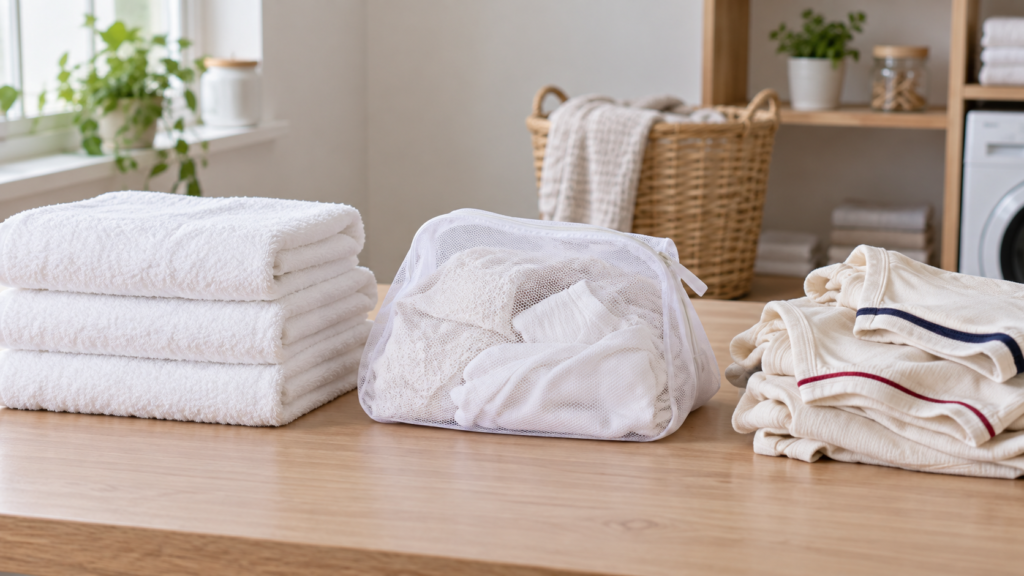
Create separate groups for sturdy white cottons, everyday synthetics or blends, delicate items and whites with coloured print, piping or embroidery. Wash lint-producing towels away from lint-attracting smooth clothing when possible. Keep heavily soiled socks or kitchen cloths out of a lightly worn shirt load. New pale or contrast-trim garments deserve a colourfastness check or separate first wash.
Empty pockets, close hooks and zips that can snag, turn printed pieces inside out and place small delicate items in a mesh bag. Do not wash a white garment with a yellowed care label, leather trim or unknown decoration as though it were a plain cotton sheet.
White sneakers also contain glue, foam and mixed panels, so they do not belong automatically in a clothes load. Use our material-specific guide to cleaning white sneakers safely.
Pretreat stains before washing
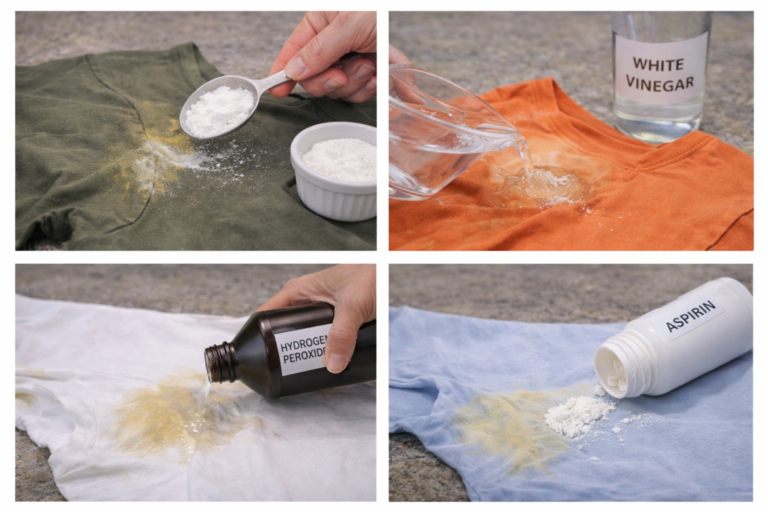
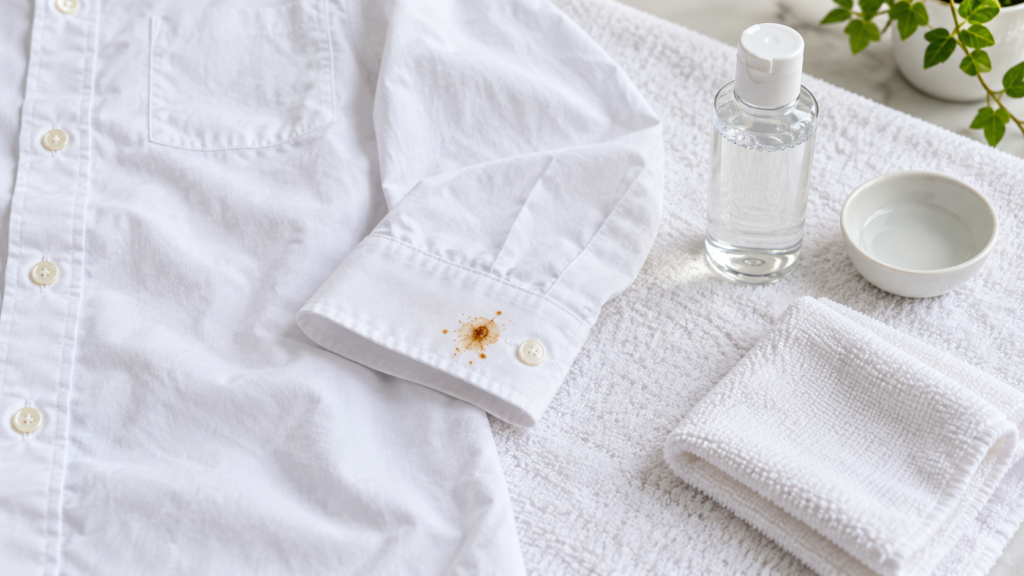
Identify the likely stain and act before heat sets it. Blot liquid; do not rub it across a larger area. Rinse a fresh water-based stain from the reverse with cool water when the care label permits. Apply a stain remover or liquid detergent approved for the fibre, test on a hidden seam and follow its contact time. Keep different products separate.
Protein stains such as blood or dairy generally begin with cool water because heat can set them. Oily marks need a detergent suited to grease. Coffee may contain milk or sugar in addition to pigment; our coffee-stain guide explains that sequence. Never put a still-visible stain in a hot dryer: inspect after washing and repeat an appropriate treatment instead.
Choose detergent and water temperature
Use a machine detergent in the amount stated for load size, soil level, water hardness and washer type. Too little may leave soil; too much can leave residue that attracts dirt and makes fabric look dull. Measure rather than pouring by eye, and place powder, liquid or pod where the washer manual specifies.
Hot water is not the automatic rule for whites. Sturdy cotton towels or bedding may allow a warm or hot setting, but elastane, synthetics, delicate fibres, prints and trims may require cooler water. ENERGY STAR recommends cold water when possible for energy savings. For appearance and stain removal, use the care label, detergent directions and the needs of the dirtiest compatible group.
Load the machine so washing action can work
Place laundry loosely in the drum and respect the machine’s stated capacity. An overpacked load cannot circulate, rinse or expose soil evenly to detergent. A very small item trapped in bedding may also wash poorly. Balance heavy towels rather than concentrating them on one side.
Select the cycle named by the garment and washer instructions: normal for suitable everyday cottons, gentle for approved delicates, and a bedding or bulky option only for items the machine can handle. A cycle called “Whites” may use higher temperatures or stronger action; the name does not override a low-temperature or gentle-care label.
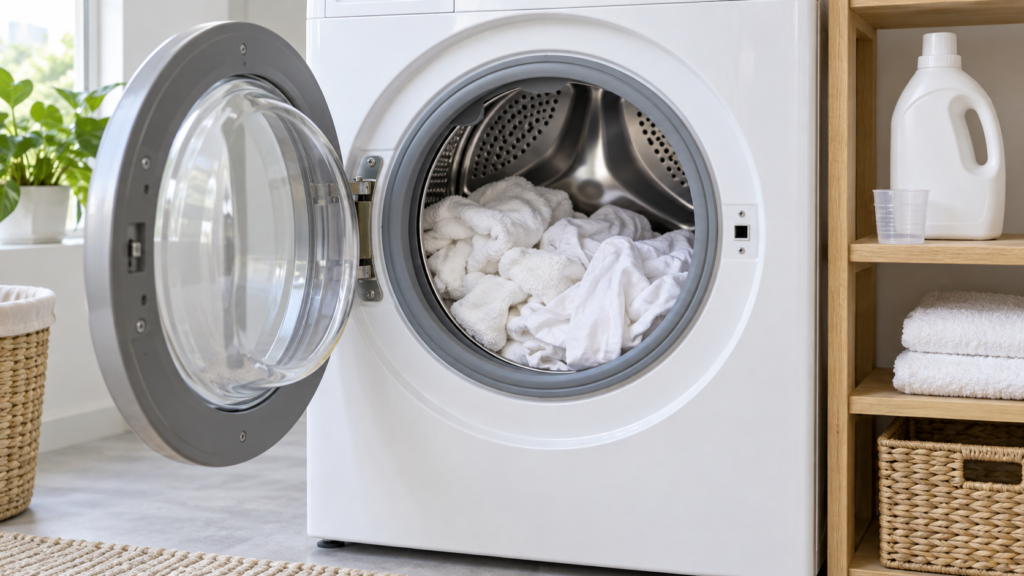
If white laundry repeatedly emerges with flakes, odour or grey residue, the machine may need maintenance rather than more detergent. Follow our guide to cleaning a washing machine safely and its manufacturer’s manual.
Use bleach only when both labels permit it
Bleach is a category, not one interchangeable liquid. Chlorine bleach and non-chlorine oxygen products have different compatibility and instructions. FTC guidance distinguishes “only non-chlorine bleach when needed” from permission to use any bleach. Read the garment first, then the exact product and washer manual.
Clorox, for its own chlorine laundry bleach, warns against use on wool, silk, mohair, leather, spandex and non-colourfast items. Other products can differ. Use the correct dispenser or dilution method, never pour concentrated bleach directly onto fabric and never mix bleach with ammonia, acids, vinegar or other cleaners. Ventilate and keep products secured from children and pets.
Rinse, inspect and troubleshoot before drying
When the cycle ends, check cuffs, collars, underarms and the original stain in good light. If a mark remains, do not iron or tumble-dry it hot. Re-treat according to fibre and stain type. If fabric feels slippery or shows detergent streaks, review dosing and load size; an extra rinse may help when allowed, but correcting the cause is better than adding rinses forever.
Grey whites can result from dye transfer, redeposited soil, overloading, poor detergent dosing or mineral-rich water. Yellowing may be aged body soil, excessive heat, fibre degradation, incompatible bleach or long storage with residue. Do not combine random acids, alkalis and bleach to “cancel” the colour. Test one label-compatible correction and stop if the fibre weakens or colour changes.
Dry without undoing the wash
Follow the drying symbol. Shake items out and separate them so air can move. Tumble-dry only at the permitted setting and remove clothes promptly to reduce creasing. Air-dry delicates or items marked for line or flat drying. Strong heat can set remaining stains, shrink cotton and damage elastic components.
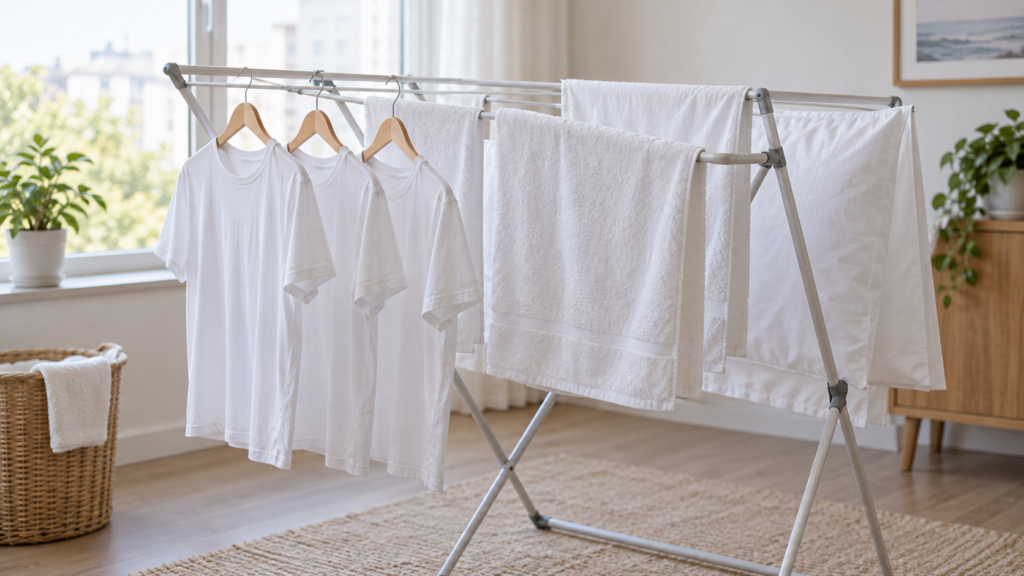
Indirect daylight and airflow are a controlled default for many washable whites, but direct sun can affect some fibres, prints and trims. Turn sensitive garments inside out and do not leave them outside longer than necessary. Store only when completely dry; trapped moisture encourages odour and mildew.
Common mistakes that make whites look worse
- Washing every pale item together without checking coloured trim or fibre.
- Assuming hot water and the “Whites” cycle are always safest.
- Overloading the drum or adding extra detergent for a crowded load.
- Applying concentrated bleach directly to cloth.
- Mixing chlorine bleach with vinegar, ammonia or stain products.
- Drying a stain before confirming it is gone.
- Storing slightly damp sheets or shirts.
A repeatable white-laundry routine
- Read labels and make compatible groups.
- Empty pockets, secure fasteners and pretreat stains.
- Measure detergent for the washer, water and soil.
- Select the least harsh effective temperature and cycle.
- Use only permitted bleach by its label.
- Leave drum space, start the cycle and remove promptly.
- Inspect before drying and dry by the garment label.
Frequently asked questions
Can white and off-white clothes be washed together?
Only when their fibres, care instructions and trims are compatible and the off-white item is colourfast. A cream garment is less risky than a new white shirt with dark piping, but the label and a first-wash test decide.
Does vinegar replace fabric softener or detergent?
No universal substitution is safe for every machine and fibre. Acid can affect components or finishes, and it must never meet chlorine bleach. Use only a method approved by both washer and garment instructions.
Why did a white shirt turn pink or blue?
Dye likely transferred from another item, sometimes a small coloured trim or forgotten sock. Keep the garment wet, separate it, and use a dye-transfer product only if its label and the garment care allow it. Heat may make correction harder.
Sources
- FTC: Care Labeling Rule guidance
- Whirlpool: How to Wash White Clothes
- ENERGY STAR: Clothes Washers
- Clorox: Laundry bleach compatibility and use
Related guides