Home cleaning, organization and lifestyle tips
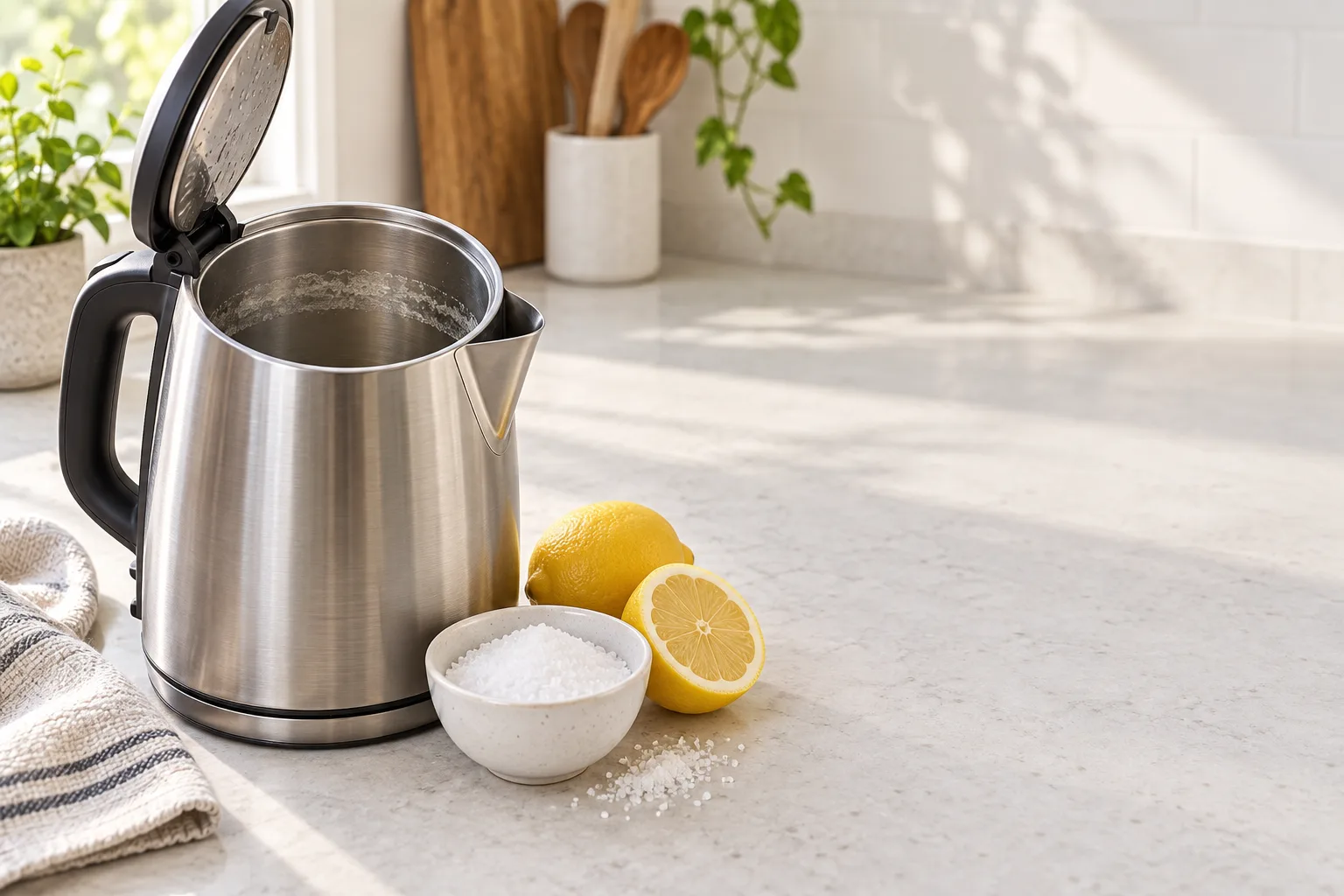

Short answer: for most kettles, a purpose-made descaler or a citric-acid solution recommended by the manufacturer is the sensible first choice. Remove the solution completely, rinse well, then boil and discard fresh water before making a drink. Use vinegar only when the kettle manual permits it; do not improvise with strong acids, abrasive tools, cola, or mixed cleaners.
White flakes in tea, a dull coating on the heating plate, a louder boil, or longer heating time usually point to mineral scale rather than a broken kettle. Hard water contains dissolved calcium and magnesium; when water is heated, some of those minerals can form deposits. That is why limescale is especially common in kettles. It is not a reason to panic, but it is worth removing before the layer becomes stubborn.
Before you descale: identify the kettle and read its manual
Electric, glass, stainless-steel, enamel, and stovetop kettles do not all have the same restrictions. Look for the brand’s cleaning section before choosing a product or ratio. In particular, do not soak the base, power connector, or exterior of an electric kettle; keep liquid inside the vessel only. Unplug it and allow it to cool before emptying, wiping, or removing the spout filter. Never scrape the heating plate with a knife, steel wool, or a rough scourer: a scratch can make later cleaning harder.
Use only drinking-water-safe descaler or food-grade citric acid, and measure it according to the product or appliance directions. If your kettle has a maximum-fill line, do not exceed it. Good ventilation is useful with vinegar, but do not mix vinegar with bleach, ammonia, or any other cleaner. The goal is a controlled descaling cycle, not a stronger chemical reaction.
Method 1: citric acid or a kettle descaler
This is the default method for many electric kettles because it is effective without leaving a strong odor. Some manufacturers specify a ready-made citric-acid descaler; others give a concentration or an overnight soak. Follow that instruction exactly. If the manual gives no recipe, choose a commercial product labelled for kettles and use its dose rather than guessing.
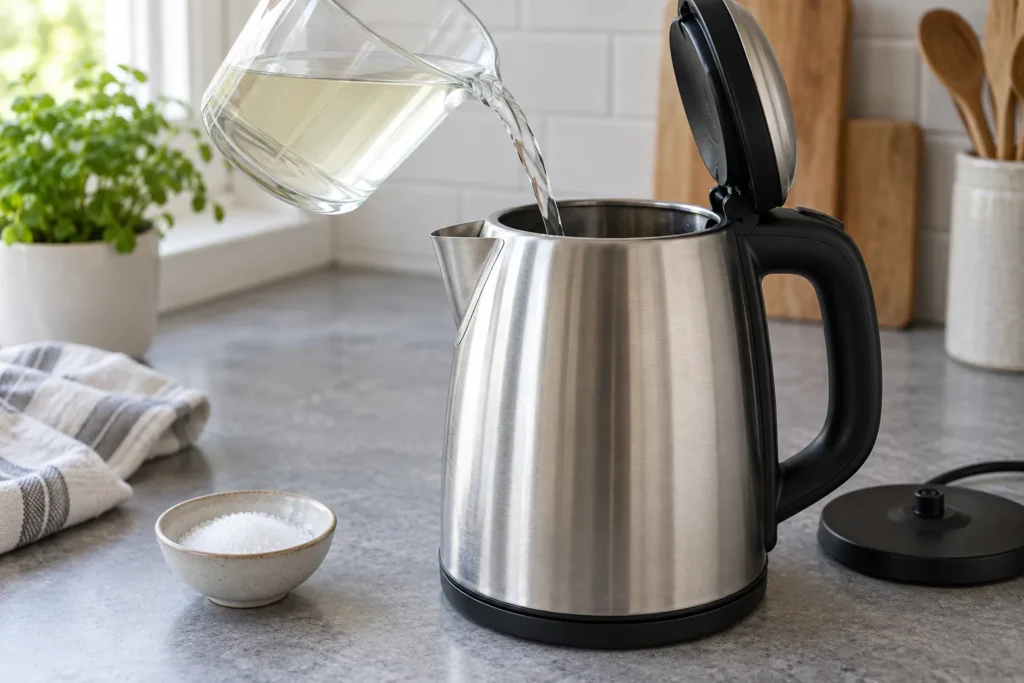
- Fill the kettle only to the level stated by its manual or descaler instructions.
- Add the measured product, close the lid, and run the cycle only if the instructions say to heat it.
- Allow the contact time shown on the label. Do not leave a solution longer merely because the scale looks thick.
- Pour it away carefully, rinse the interior thoroughly, then boil fresh water and discard it. Repeat that fresh-water rinse cycle if the manufacturer recommends it.
Check the bottom, sides, and removable filter after rinsing. A small amount of remaining scale is a reason to repeat a normal cycle, not to increase the concentration or start scraping. If a filter is removable, rinse it separately and return it only when clean and cool.
Method 2: white vinegar, only where the manual allows it
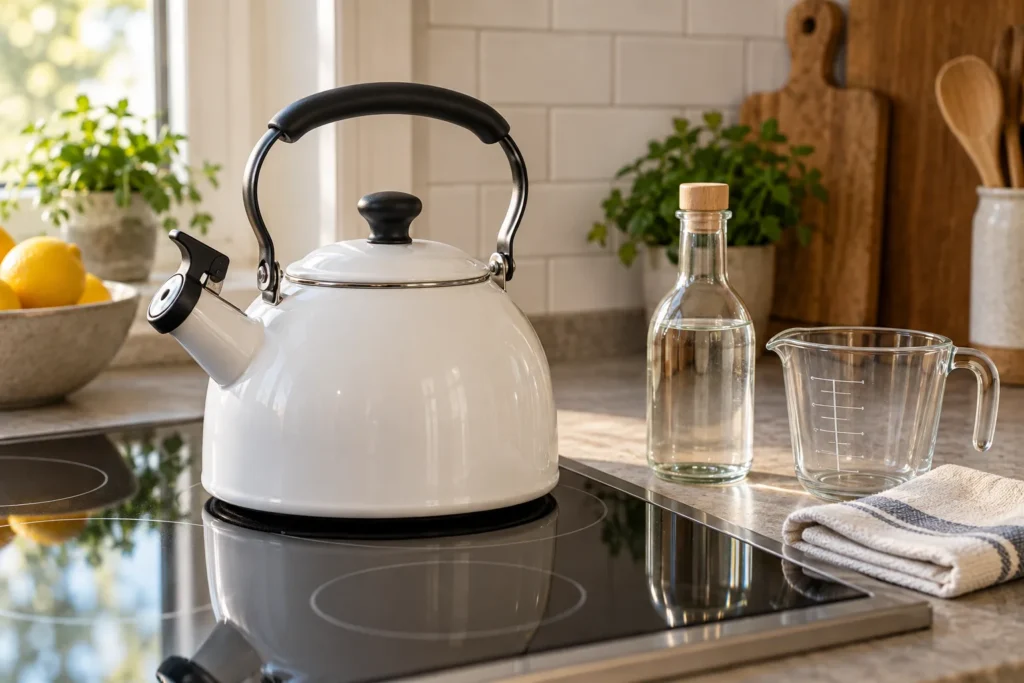
White vinegar is a traditional option for some metal or enamel stovetop kettles and for certain electric models. It has a persistent smell, and manufacturer guidance differs: some manuals permit a water-and-vinegar mix, while others specifically prefer citric acid. That difference matters. A method suitable for one appliance is not automatically suitable for another, especially when seals, coatings, or sensors are involved.
Breville, for example, gives a 1-part white-vinegar to 2-parts-water method for one kettle model, followed by repeated fresh-water boils. Treat that as an example of model-specific guidance, not a universal formula. If your manual permits vinegar, use its stated dilution, let it sit only for the stated time, and flush until no vinegar odor remains. If the manual is missing or says nothing, choose a commercial kettle descaler instead.
Methods to skip
Baking soda is useful for some kitchen tasks, but it is alkaline and is not a dependable primary treatment for calcium scale. Carbonated drinks add sugar, color, and unnecessary residue; boiling them in an appliance is not a good cleaning practice. Lemon slices leave pulp and oils behind, while concentrated acids and toilet descalers can damage materials or create a food-safety problem. Do not use bleach, oven cleaner, rust remover, dishwasher tablets, or abrasive powders inside a kettle.
Also avoid the common “two products are better” approach. Vinegar and baking soda mostly neutralize one another; bleach should never be mixed with acids or household cleaners. One compatible descaling method, followed by a complete rinse, is safer and easier to evaluate.
How often should you descale?
There is no universal calendar. Frequency depends on water hardness and how often the kettle is used. Philips gives a useful example for normal use: about every three months in a soft-water area and monthly in a hard-water area. Your manual and local water supplier are better guides than a fixed internet schedule. If you notice flakes, a visible ring, slower heating, or a dirty spout filter, clean sooner.
Scale is a maintenance issue, not evidence that tap water has suddenly become unsafe. Still, keep the kettle itself clean: empty unused water after it has cooled, wipe the outside with a damp cloth rather than submerging it, and do not ignore a leaking lid, damaged cord, unusual smell, or cracked glass. Those are reasons to stop using the appliance and seek repair or replacement advice.
Prevent the next buildup
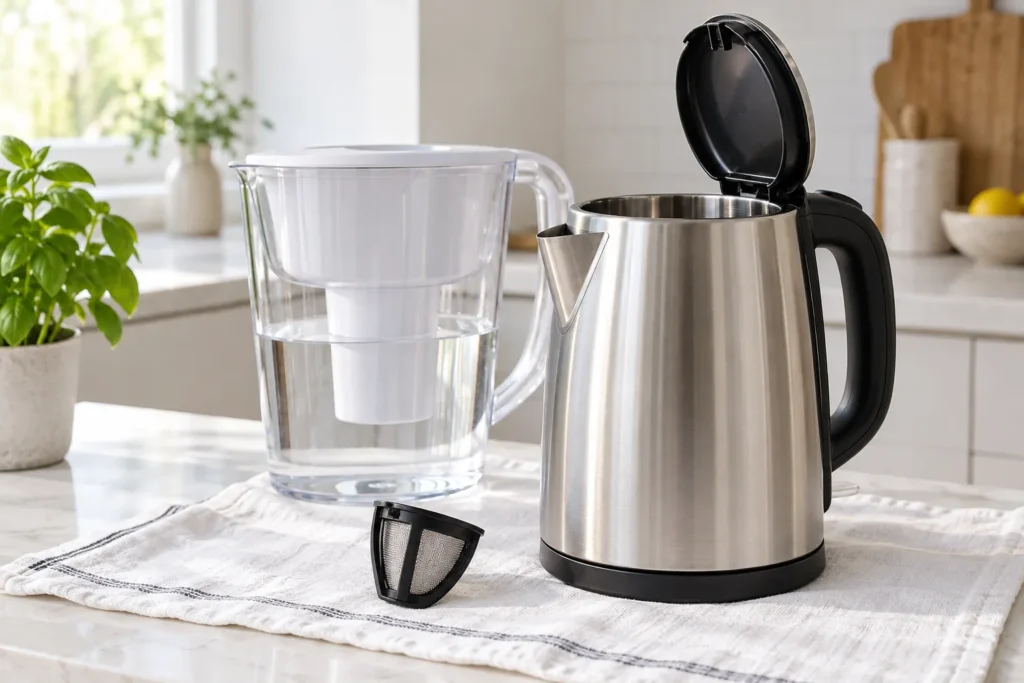
Use fresh water rather than repeatedly reboiling the same water, and empty the kettle after use once it is safe to handle. If appropriate for your water and appliance, a maintained filter jug may reduce the tendency for scale to form, but it does not replace cleaning. Washing the removable spout filter and keeping the lid rim dry help keep flakes out of a cup. Small regular cleaning is usually easier than rescuing a heavily coated element.
Water use still matters. Fill only the amount you need for the next round of tea or coffee; it saves energy as well as water, a habit that fits with our practical guide to saving water at home. When you are already doing routine appliance care, the label-first, one-product approach in our safe washing-machine cleaning guide is the same useful principle.
Frequently asked questions
Can I drink water from a kettle with a little limescale?
Scale is largely mineral deposit, but visible flakes and a coated appliance are a clear prompt to clean it. Rinse and descale for performance and taste, then use the kettle only after the prescribed fresh-water flush.
Why is the inside brown or rainbow-colored?
Some discoloration on stainless steel can be mineral residue rather than rust. Check the maker’s care guidance before treating it. If there is pitting, corrosion, flaking coating, a crack, or damage to electrical parts, do not keep experimenting with cleaners.
Can I use the kettle immediately after descaling?
Only after the recommended rinse and fresh-water boil(s) have been completed and discarded. The appliance should be cool, clean, dry on the outside, and correctly reassembled.
Sources
- Drinking Water Inspectorate: water hardness and limescale
- Philips: kettle cleaning and descaling instructions
- Breville: removing mineral deposits from a kettle
Related guides