Home cleaning, organization and lifestyle tips
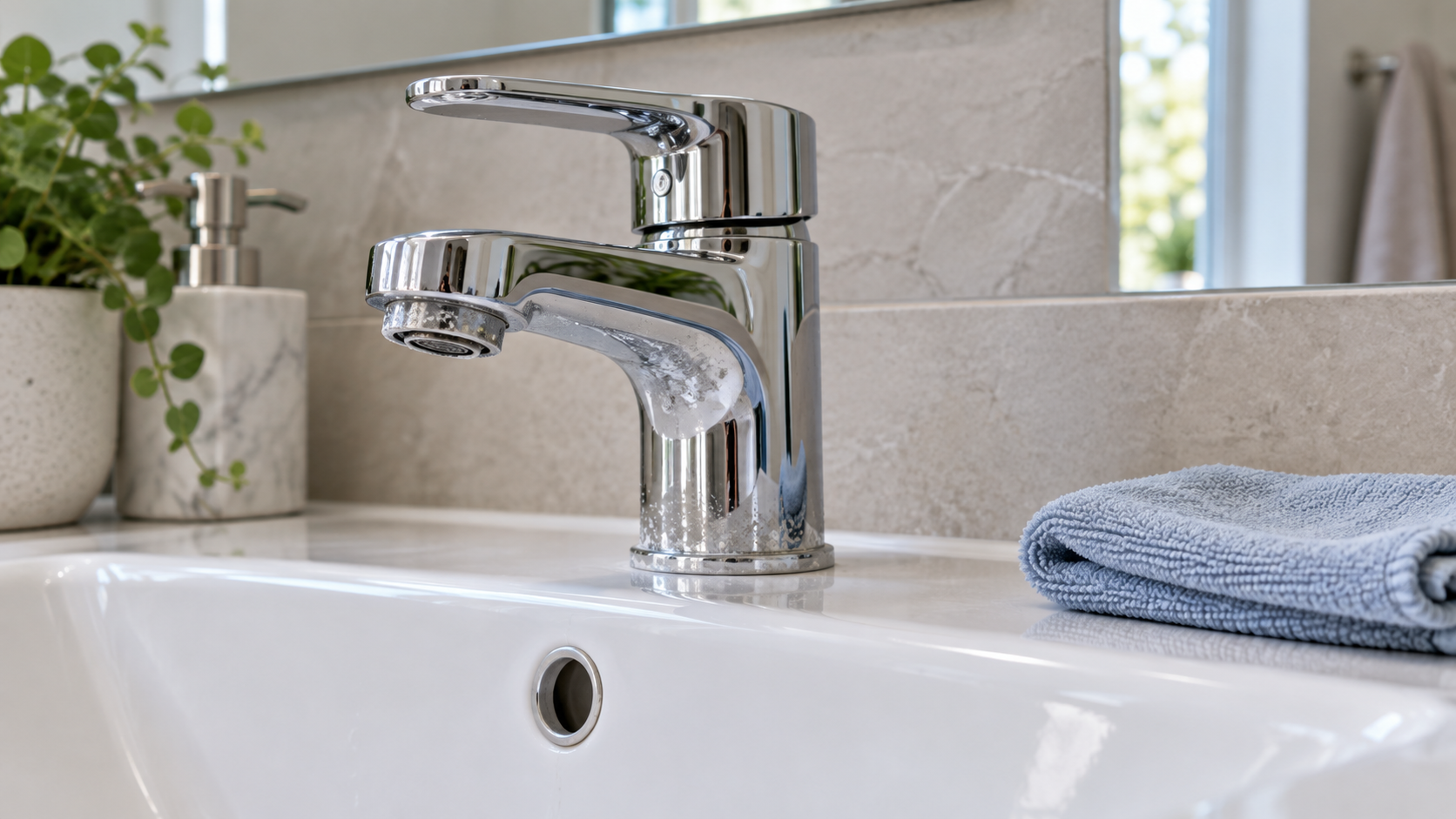

Quick answer: begin with warm water and a soft microfiber cloth. If chalky mineral marks remain, check the faucet maker’s care instructions and test an inconspicuous spot. On a finish that permits it, apply a 1:1 mixture of white vinegar and water with a cloth for a short, controlled contact time, then rinse thoroughly and dry. Remove the aerator for a separate soak only if its manual allows removal. Never scrape the finish or combine vinegar with bleach.
Limescale is the pale crust left when hard water evaporates and dissolved calcium and magnesium compounds remain. It commonly gathers at the aerator, around the base and beneath the handle. Soap residue can trap those deposits, while corrosion or a damaged coating may look similar but will not disappear with ordinary cleaning. The safest method is therefore gradual: identify the surface, start mild and stop when the deposit releases.
Check the finish and protect nearby surfaces
Find the faucet brand and model if possible. Polished chrome, brushed nickel, stainless-look coatings, matte black, brass tones and living finishes do not necessarily share the same care rules. Delta permits a 50/50 white-vinegar-and-water solution for hard-water stains on its finishes, while Moen limits vinegar contact and warns against abrasives, ammonia, bleach and harsh descalers on Spot Resist finishes. A model-specific manual always outranks a general recipe.
Test the proposed solution under the spout or behind the body, rinse it and let the area dry before treating a visible section. Cover unsealed marble, limestone, travertine, cement grout and other acid-sensitive surroundings with a waterproof towel or tray: vinegar can etch or stain porous stone. Close the drain before working on removable parts and place a folded towel in the basin so a dropped aerator cannot chip the sink.
Gather a small, finish-safe kit
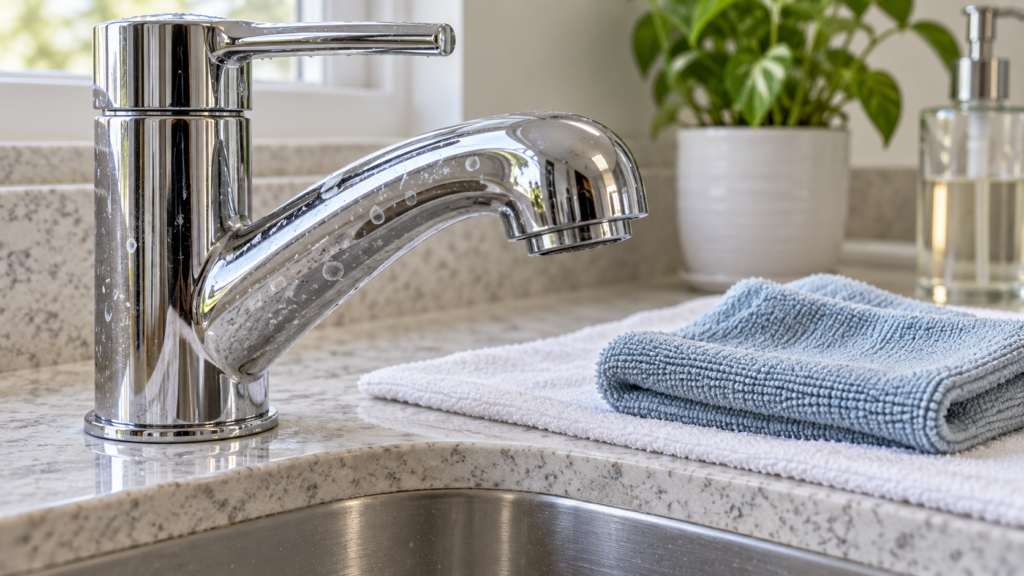
You need two clean microfiber cloths, warm water, mild dish soap, a soft toothbrush reserved for removable parts, a shallow bowl and, only when the manufacturer permits it, plain white household vinegar. Keep a rubber jar gripper or the faucet’s aerator key nearby. Avoid steel wool, scouring pads, abrasive powders, razor blades, hard brushes and metal pliers directly on the decorative finish.
Ventilation is sensible, but protective drama is unnecessary for a small amount of diluted household vinegar. The important chemical rule is never to mix cleaners. In particular, vinegar or any other acid must not be combined with chlorine bleach because hazardous chlorine gas can be released. Rinse away one product completely before considering another, and keep labelled products in their original containers.
Start with the gentlest cleaning
- Wipe away dust and loose grit with a dry soft cloth. Grit under a wet cloth can make fine scratches.
- Dampen a second cloth with warm water and a drop of mild dish soap. Wipe the faucet without flooding seams, the cartridge area or electronic components.
- Use a clean damp cloth to remove soap, then buff dry. Examine the result in side light.
This first pass often removes the dull film that makes limescale look worse. It also prevents soap from shielding the mineral crust from the next treatment. If the remaining mark is rough and chalky rather than pitted or discoloured, proceed to a controlled mineral-removal step.
Use diluted vinegar only where approved
Mix equal parts white vinegar and water. Wet a microfiber cloth with the solution and wring it out; do not pour acid over the faucet. Hold the cloth against the affected chrome or other approved finish briefly, checking every few minutes rather than leaving it unattended. Manufacturer instructions vary, so use their stated contact time. Gently wipe softened residue without scraping.
Remove the cloth, rinse the faucet thoroughly with clean water and dry it immediately. Repeat one short treatment if the finish remains unchanged and deposits are still lifting. Do not wrap a faucet in a leaking plastic bag for hours: extended exposure can attack coatings, seals and the counter below. Stop if colour transfers to the cloth, the sheen changes or the surface becomes patchy.
The same measured approach is useful elsewhere in a hard-water home. Our guides explain how to clean a showerhead safely and descale a kettle without damaging it; each surface has different limits, so do not transfer soaking times blindly.
Clean a removable aerator separately
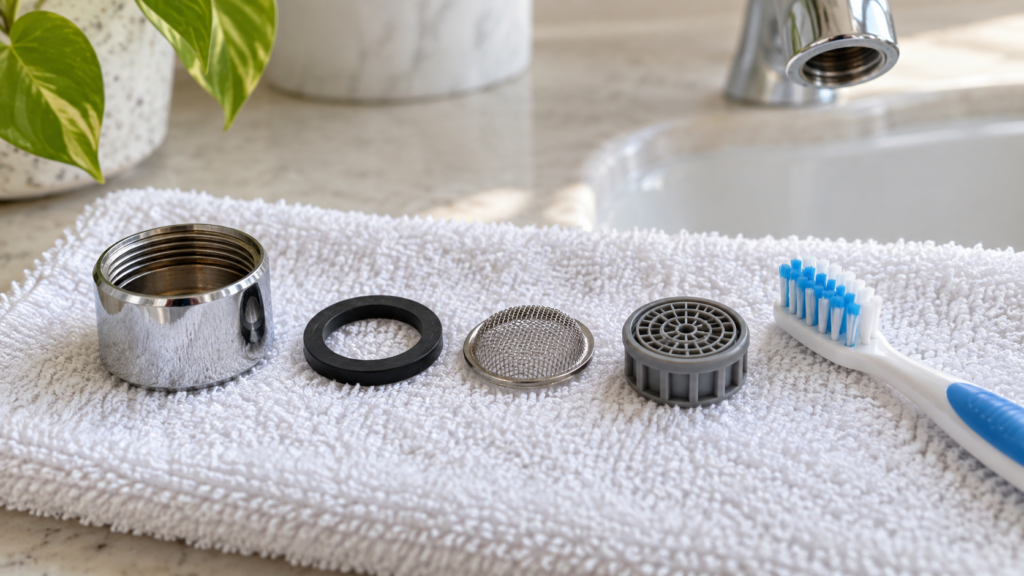
A weak or uneven stream often points to deposits in the aerator rather than on the faucet body. Confirm how your model is removed: some aerators unscrew by hand, some use a recessed key and some pull-out spray heads have a different assembly. Close the drain. Photograph the order of washers, screens and inserts before taking anything apart.
- Unscrew the aerator gently. Use a rubber gripper; if a tool is specified, protect the finish and follow the manual.
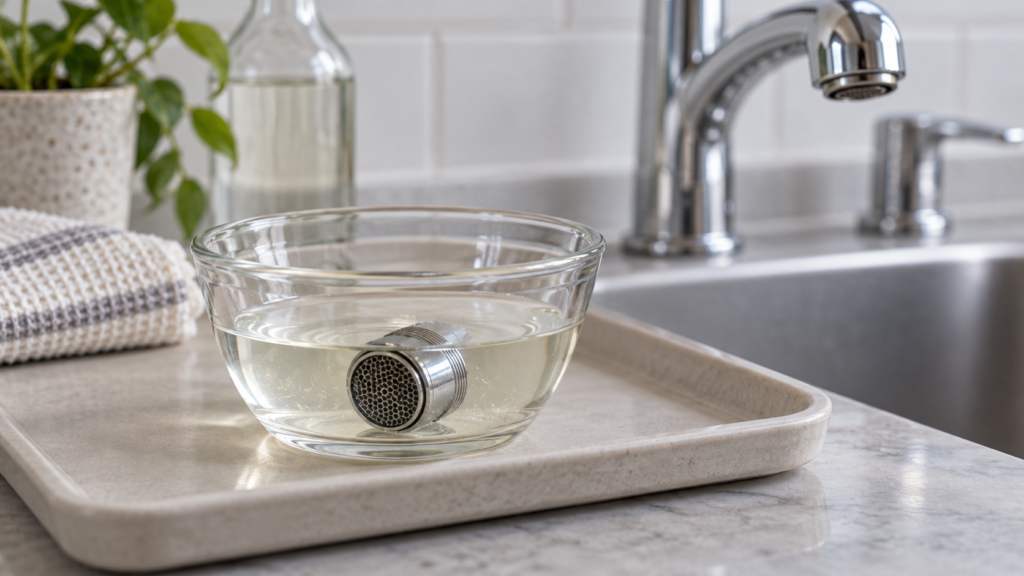
- Rinse out loose particles. Soak only the removable metal and plastic parts using the manufacturer’s approved vinegar concentration and time.
- Brush the screen lightly with a soft toothbrush, rinse well and inspect the washer for damage.
- Reassemble in the photographed order and hand-tighten. Run cold water and check the stream and joint for leaks.
Delta advises soaking a removable aerator in vinegar and flushing it with water, but another brand or specialty finish may specify a different method. If the aerator is cracked, permanently blocked or deformed, replacement is more reliable than aggressive scraping. If pressure remains low at several fixtures, the cause may be supply pressure, a shutoff valve or plumbing debris rather than limescale.
Avoid the mistakes that damage faucets
- Do not scrape with a blade or pin. Scratches expose the substrate and can distort aerator openings.
- Do not use toilet cleaner or concentrated limescale remover. Strong acids and caustic agents can permanently alter plated and coated finishes.
- Do not use bleach, ammonia or abrasive paste unless the faucet maker explicitly approves it. Product labels that say “bathroom” do not make them safe for every tap.
- Do not leave wet cloths tied on overnight. Longer is not automatically better.
- Do not force a seized aerator. The wrong tool can twist the spout or crush a hidden insert.
Keep the task separate from cabinet cleaning: splashes from acidic or alkaline products can mark adjacent paint or wood. If the sink area also needs degreasing, use our finish-aware kitchen cabinet method and protect the faucet from overspray.
Prevent limescale from returning quickly
After use, wipe standing droplets from the spout, handle and base with a soft dry cloth. Delta specifically notes that evaporation encourages mineral buildup. A quick weekly wash with mild soap and a complete dry usually postpones the need for acid. Clean the aerator when the stream begins to split instead of waiting for it to clog.
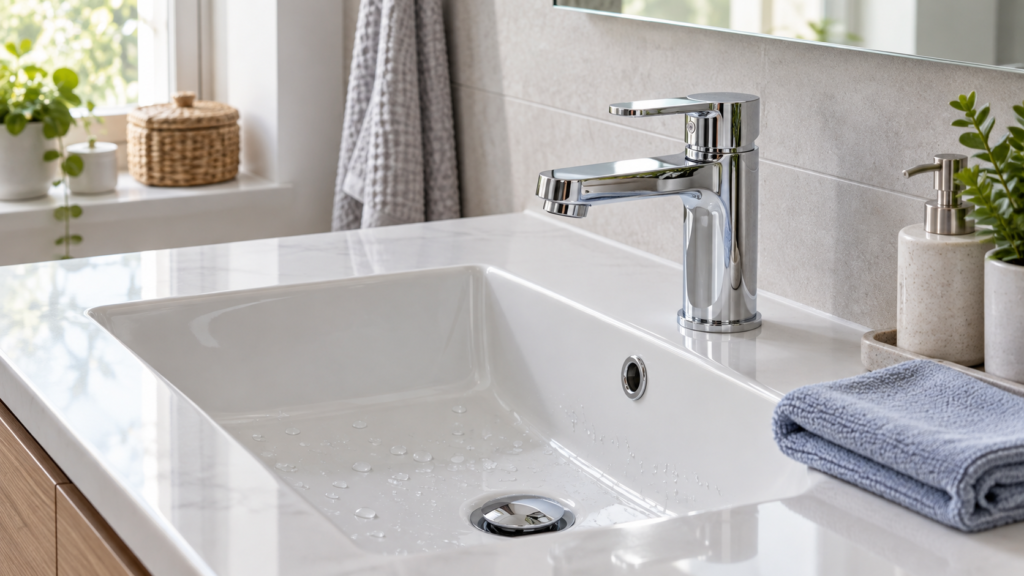
Check the base for recurring wetness. A slow leak continually feeds mineral deposits, so replacing a worn cartridge, O-ring or supply connection may matter more than polishing. White crust at a plumbing joint can also indicate seepage. Clean it once, dry the area and watch for fresh moisture; call a plumber if the leak source is unclear or the fixture moves at the deck.
When cleaning will not solve the problem
Pitting, peeling plating, green-blue corrosion and permanent darkening are material changes, not loose limescale. Stop cleaning if the finish flakes or the metal underneath is visible. Request a replacement part from the manufacturer or consult a plumber. On a new faucet, harsh unapproved products may affect warranty coverage, another reason to keep the care guide.
Persistent dampness can also encourage mould in caulk or grout around the sink. That is a separate problem requiring moisture control and material-appropriate treatment; see our guide to removing bathroom mould safely.
Frequently asked questions
Can vinegar damage a faucet?
Yes, on an incompatible finish or after excessive contact. Use it only when the faucet maker allows it, dilute it as directed, test first, keep contact brief, rinse thoroughly and dry. Protect natural stone around the fixture.
Can I use lemon juice or baking soda?
They are not automatically safer. Lemon juice is acidic and baking soda is mildly abrasive; either may affect a coating or surrounding material. Manufacturer-approved care is a better basis than substituting one household ingredient for another.
Why is the water stream still weak after cleaning?
The aerator may be incorrectly reassembled, damaged or blocked deeper inside. Low pressure at multiple fixtures suggests a supply or plumbing issue. Recheck the manual and seek professional help rather than dismantling the faucet body without instructions.
Sources
- Delta Faucet: cleaning and maintaining faucet finishes
- Delta Faucet: removing mineral deposits from an aerator
- Moen: faucet finish care and cleaning
- Kohler: faucet, drain and trim care
Related guides