Home cleaning, organization and lifestyle tips
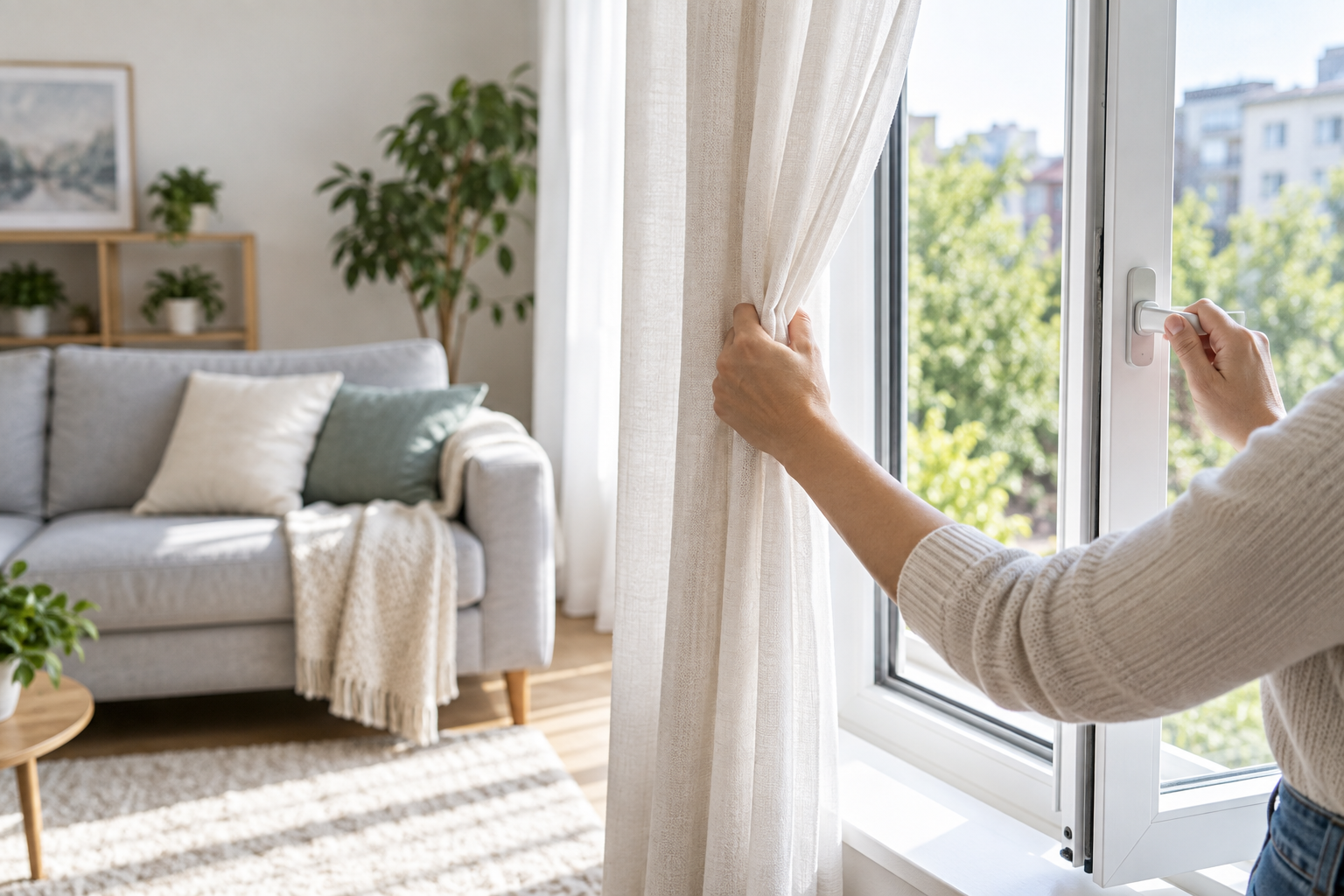

Quick answer: an air freshener does not remove cigarette smell. The reliable order is to stop smoking indoors, remove ash and waste, ventilate with clean outdoor air when safe, and clean the fabrics and surfaces that hold residue. A properly sized air cleaner can be useful after that work, but it is a supplement, not a cure for an active smoke source.
Why the smell keeps returning
Smoke is not only a smell in the air. Particles and gases can settle on curtains, upholstery, bedding, painted walls, dust, filters and the inside of cupboards. A room may smell better after a window is opened, then smell stale again once the air is still or the heating runs. That does not mean the cleaning failed; it means the source has not yet been removed from every practical reservoir.
Start by deciding whether the source is historical or ongoing. An old tenancy, a single guest or a recently purchased item can usually be tackled room by room. Smoke entering through a shared wall, corridor, balcony or ventilation system needs a different response: keep a dated record and contact the property manager or landlord. Cleaning your own flat cannot stop smoke that is still arriving.
Before you clean: make a safe plan
Open windows only when weather, security and outdoor air conditions allow. Empty ashtrays, seal cigarette waste in a bag and remove it from the apartment. Put washable textiles aside by room so clean items do not go back into a smoky area. Wear gloves if residue bothers your skin, and wash your hands before handling pale fabric or food-preparation surfaces.
Read product labels and work with one cleaner at a time. Never mix bleach with ammonia, acids, vinegar or another cleaner; dangerous gases can result. Avoid ozone-generating devices. The U.S. Environmental Protection Agency notes that ozone is a lung irritant, while source control and ventilation remain the basic approach to indoor-air problems.
1. Start with washable textiles
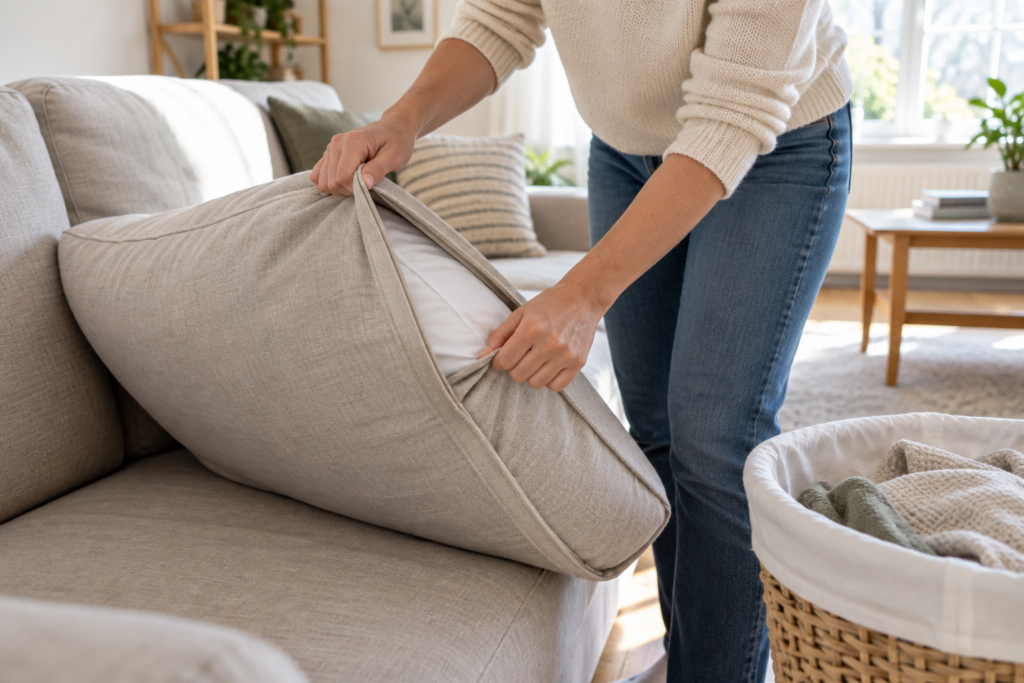
Textiles often carry the strongest odour because they offer so much surface area. Wash curtains, removable cushion covers, throws, bedding, table linens and washable rugs according to their care labels. Use the normal detergent and the temperature permitted by the item; repeated gentle washing is safer than an improvised harsh treatment. Dry everything fully before putting it away, because damp fabric can create a separate musty odour.
Vacuum upholstered furniture if the maker permits it, including seams and the space beneath loose cushions. For fixed upholstery, do not pour liquid onto the filling. Test any fabric product on an inconspicuous section, apply the smallest amount needed and allow it to dry before judging the result. If a sofa, mattress or drapery remains strongly odorous, professional upholstery cleaning may be more sensible than repeated wet treatments.
2. Remove residue from hard surfaces
Work from high surfaces down: tops of cabinets, light fittings that can be safely cleaned, window frames, doors, shelves, baseboards and then floors. A soft microfiber cloth that is only lightly damp, plus a cleaner approved for the material, is a cautious starting point. Change or rinse the cloth often so residue is lifted rather than spread. Follow the care instructions for sealed wood, laminate, stone and appliance finishes.
Kitchen grease can make smoke residue cling more firmly. Degrease cooking surfaces with a product suitable for the finish, then wipe again with clean water if the product instructions require it. Keep cleaners out of electrical openings, and never spray directly into switches, vents or powered appliances. For a more efficient room-by-room sequence, see our quick-cleaning guide.
3. Treat walls and ceilings gently
Paint, wallpaper and ceiling finishes are easy to damage. First inspect for yellowing, peeling paint, previous water damage or a powdery surface. Test a small hidden patch using the mildest compatible cleaner and a barely damp cloth. Wipe in short passes without scrubbing, then dry the section with a clean cloth. Flat paint, unsealed wood and delicate wallpaper may tolerate very little moisture.
If residue or odour persists after careful washing, pause rather than escalating to aggressive chemicals. A restoration cleaner or painter can advise whether a stain-blocking primer and repainting are appropriate for that specific surface. Repainting over an uncleaned, odorous wall is rarely a shortcut. Persistent staining, heavy smoking history or a smoke-damaged move-in warrants professional assessment.
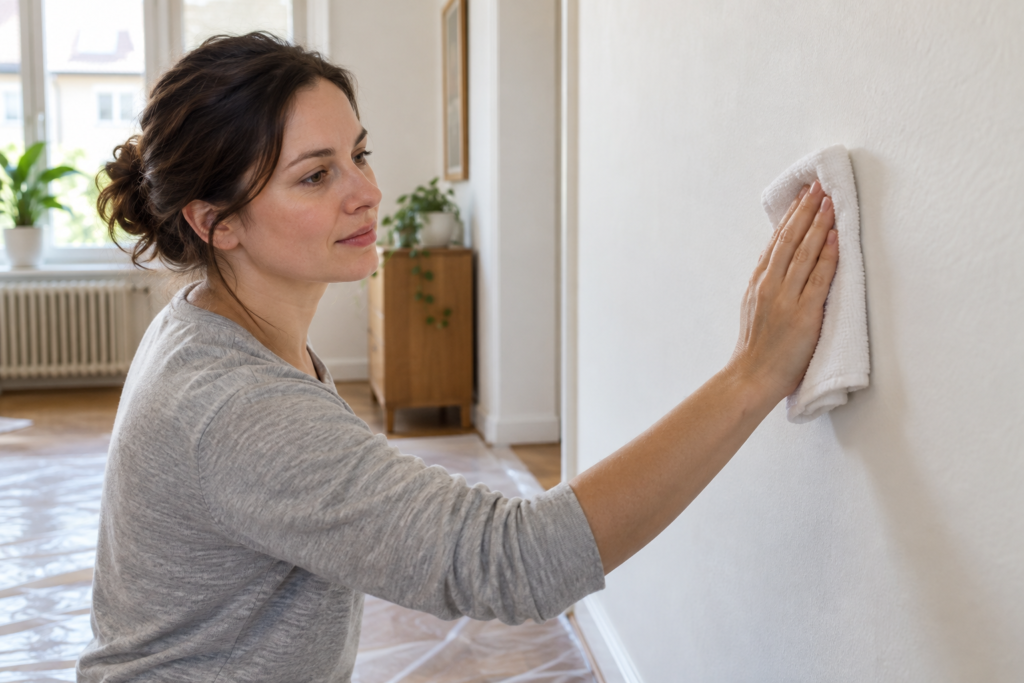
4. Ventilate, then use filters as support
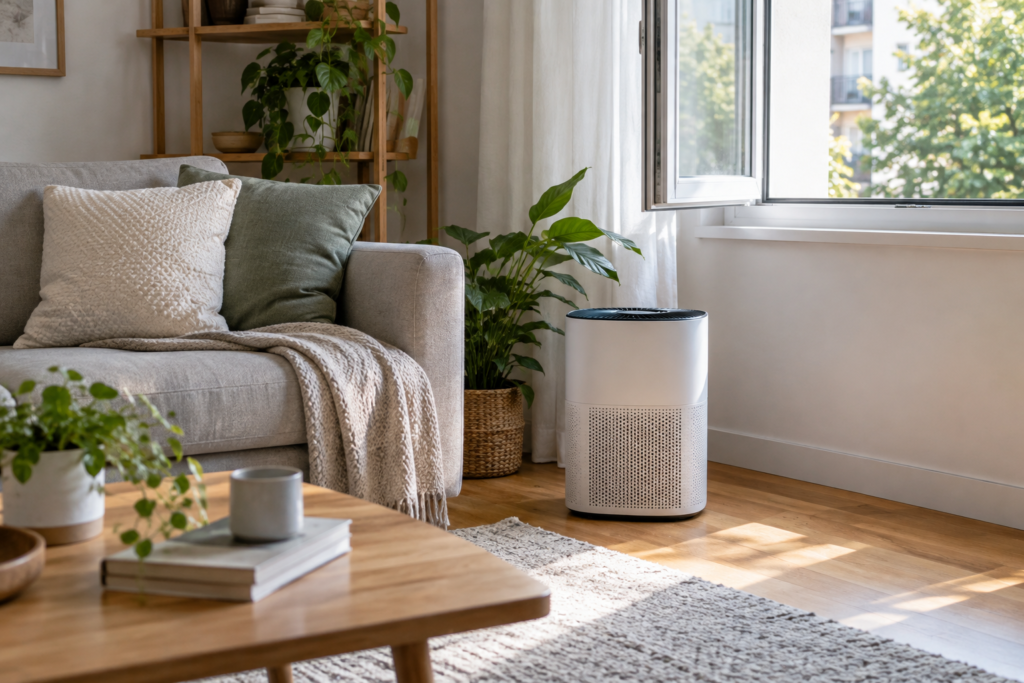
Cross-ventilation—opening windows on opposite sides when it is safe—can replace stale indoor air more effectively than leaving one window slightly open. Run the kitchen or bathroom exhaust where it actually vents outdoors, but do not rely on an extractor that merely recirculates air. Replace central HVAC filters on the schedule and with the rating your system manufacturer permits; a restrictive filter can cause equipment problems if it does not fit the system.
For a portable cleaner, choose one sized for the actual room. Particle filtration such as HEPA addresses particles; activated carbon or another gas-phase medium is needed for some gases and odours. EPA guidance stresses that filters do not remove every pollutant and need regular replacement. A unit that intentionally produces ozone is not an odour solution. Our our guide to choosing a vacuum cleaner can also help when settled dust and debris are part of the cleanup.
5. Do not forget cupboards, entryways and small reservoirs
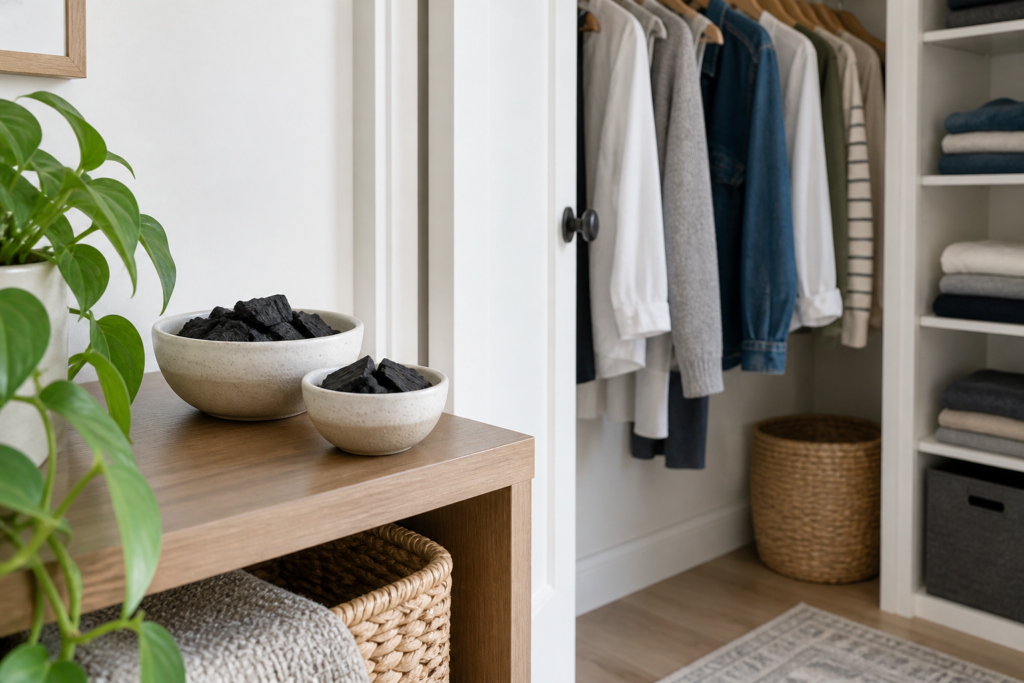
Empty cupboards and drawers, wipe their hard surfaces with a finish-safe method and leave doors open to air once dry. Launder clothes before returning them; storing clean clothing beside smoky fabric simply transfers the problem back. Activated charcoal may be a small additional absorber in a dry, ventilated cupboard, but it has limited capacity. Replace it as directed and keep it out of reach of children and pets.
Check entry mats, washable pet bedding, coats, reusable bags and soft toys. These small items can make a freshly cleaned room seem as though nothing changed. If pet hair is also holding dust and odour on furniture, our guide to removing pet hair from furniture offers a separate material-conscious approach. Do not perfume drawers, filters or soft furnishings to hide the issue; fragrance makes it harder to tell whether source cleaning is working.
Common mistakes that make the problem worse
- Masking the smell with sprays, candles or incense instead of removing residue.
- Soaking a sofa, mattress, carpet backing or wall finish without knowing it can dry safely.
- Mixing cleaning products or using a stronger product after a failed spot test.
- Buying an air cleaner without checking room size, filter type and replacement cost.
- Ignoring smoke that continues to enter from another unit or a malfunctioning ventilation route.
When to call for help
Ask a qualified cleaner, restoration company or property manager for help when yellowing is heavy, smoke is coming from HVAC, odour follows a fire, the source is ongoing, or anyone has symptoms that concern them. People with asthma, heart or lung disease, infants and older adults may need extra caution around smoke exposure. The practical goal is a smoke-free home, not a home that merely smells perfumed.
FAQ
Will baking soda or vinegar remove cigarette smell?
They may be used in limited, material-safe cleaning tasks, but neither replaces removal of the source, washing, surface cleaning and ventilation. Do not use them on a surface unless its care guidance permits it, and never combine them with other cleaners.
How long does it take?
A lightly affected room can improve after one thorough cleaning and several ventilation cycles. A heavily smoked-in apartment may require repeated work, professional cleaning, filter replacement and sometimes repair or repainting. Judge progress after each material has dried fully.
Sources
- US EPA: Guide to Air Cleaners in the Home
- US EPA: ionizers and ozone-generating air cleaners
- CDC: preventing exposure to secondhand smoke in the home
Related reading
our safe carpet-cleaning guide
Related guides