Home cleaning, organization and lifestyle tips

For years, I used regular cleaning products without ever thinking about what was in them. Then my daughter developed allergies. I started looking for alternatives and discovered that simple kitchen staples — baking soda, vinegar, lemon — work just as well as the harsh stuff. Now the store-bought cleaners just sit on the shelf collecting dust.
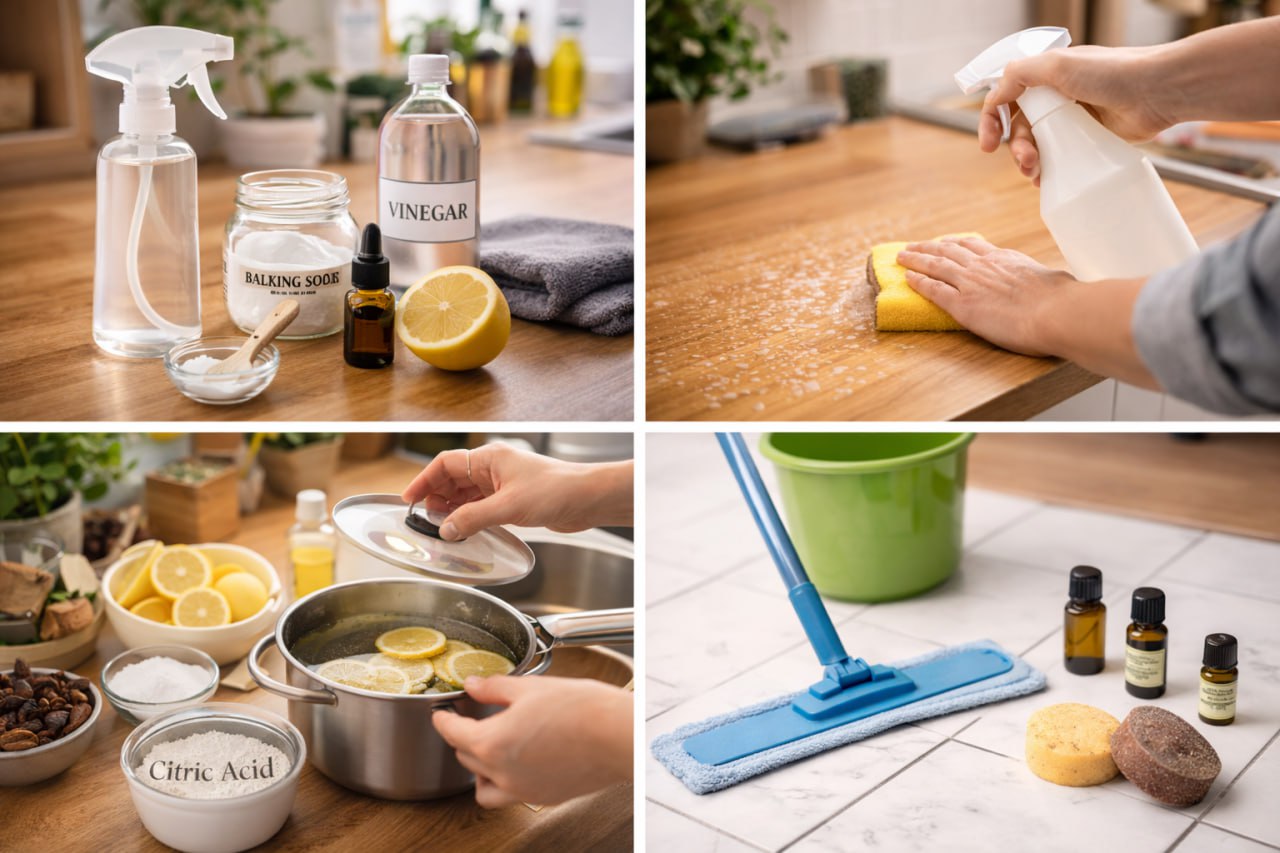
What You’ll Need
- White vinegar — the all-purpose cleaner.
- Baking soda — a gentle scrub and odor absorber.
- Citric acid — fights limescale and rust.
- Castile soap or laundry soap — for stains and laundry.
- Essential oils (tea tree, lemon, lavender) — for scent and extra disinfecting power.
- Empty spray bottles, jars, and clean rags.
Step-by-Step Guide
All-Purpose Surface Cleaner. In a spray bottle, mix 1 cup water, 1 cup white vinegar, and 10 drops of your favorite essential oil. Shake. Works on kitchen counters, stovetops, and bathroom surfaces.
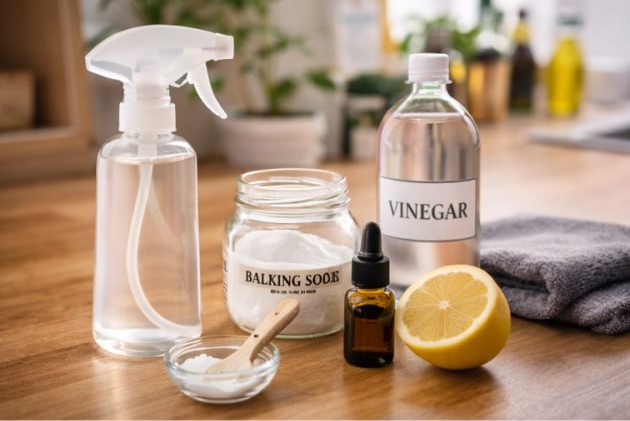
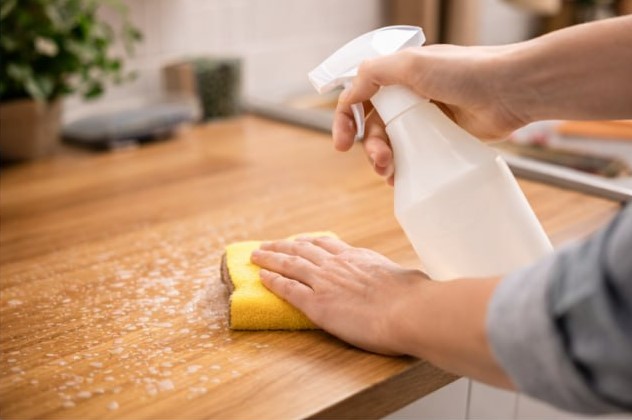
Cleaning Paste for Grease and Grime. Mix baking soda with just enough water to form a thick paste. Apply to greasy spots, scrub with a sponge, and rinse. Great for pans and tubs.
Glass and Mirror Cleaner. Combine 2 cups water, ½ cup white vinegar, and ½ cup rubbing alcohol in a spray bottle. Spray on windows or mirrors and wipe with a microfiber cloth for a streak-free shine.
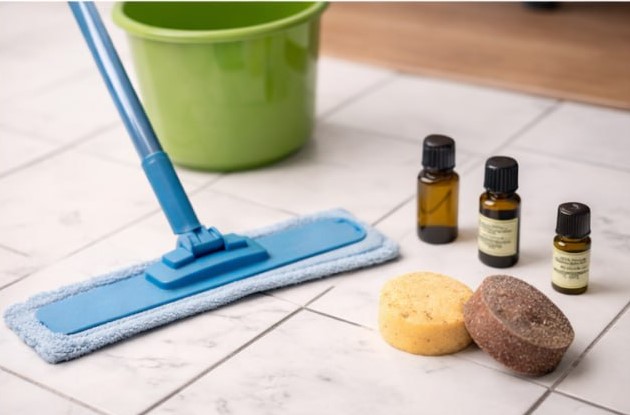
Floor Cleaner. Add ½ cup white vinegar and a few drops of essential oil to a bucket of warm water. Mop as usual. Avoid on unsealed wood or laminate.
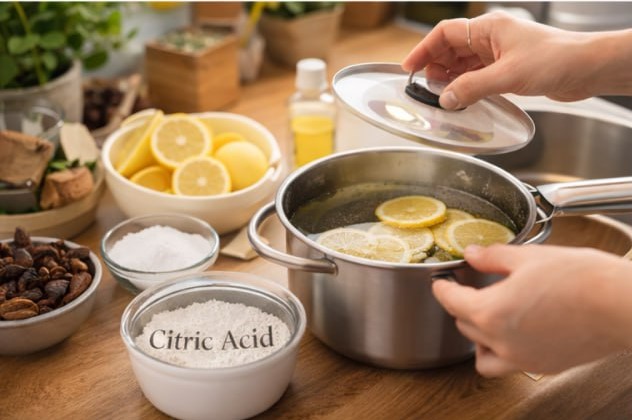
Limescale Remover (for kettles, irons). Fill your kettle with water and add 2 tablespoons citric acid. Boil, let it sit for an hour, then rinse thoroughly. For irons, use the same solution in the water tank and steam over an old towel.
Recipe Cheat Sheet
| Product | Ingredients | Best For |
|---|---|---|
| All-Purpose Spray | Water, vinegar, essential oil | Counters, sinks, stovetops |
| Baking Soda Paste | Baking soda + water | Pots, pans, tubs, stubborn spots |
| Glass Cleaner | Water, vinegar, rubbing alcohol | Windows, mirrors |
| Floor Cleaner | Water, vinegar, essential oil | Tile, vinyl, sealed floors |
| Limescale Remover | Citric acid + water | Kettles, irons, coffee makers |
What NOT to Do
- Never mix vinegar with bleach — it releases toxic chlorine gas.
- Don’t use vinegar on natural stone (marble, granite) — it etches the surface.
- Test baking soda on aluminum or lacquered surfaces first — it can be abrasive.
- Always label your homemade cleaners and store them out of reach of children.
Prevention Tips
- Label every bottle clearly.
- Test any new mixture on an inconspicuous area.
- Keep essential oils away from pets — some are toxic to cats and dogs.
The Bottom Line
Natural cleaners are safer for your family, cheaper, and better for the planet. Start with one recipe — the all-purpose spray is a great first step. You’ll be amazed how easy it is to ditch the chemicals.
Tested in my own kitchen: the vinegar spray cuts grease like a dream, and the smell fades in minutes.
Already using natural cleaners? Share your favorite recipes in the comments!
Related guides