Home cleaning, organization and lifestyle tips

I remember after a long walk in new shoes, I found a painful corn on my pinky toe. Walking was miserable. I tried all kinds of things and learned the hard way — don’t cut, just soften and gently remove. Now I have a system that gets my feet back in shape fast.
The good news? Most corns and calluses can be handled at home without a doctor. The bad news? Do it wrong, and you risk infection.
Why corns and calluses form
| Cause | What Happens |
|---|---|
| Tight or ill-fitting shoes | Constant rubbing and pressure |
| Flat feet or foot deformities | Uneven weight distribution |
| Synthetic socks | Increase friction |
| Long periods of walking | Repeated stress on the same spots |
What you’ll need
| Tool / Product | Purpose |
|---|---|
| Warm water, Epsom salt, baking soda | For softening foot soaks |
| Pumice stone or foot file | To gently buff away dead skin |
| Urea cream (10–20%) | Softens and hydrates rough areas |
| Medicated corn pads (salicylic acid) | For dry corns |
| Antiseptic (like hydrogen peroxide) | To clean any broken skin |
Step-by-step guide
Step 1. Soak your feet
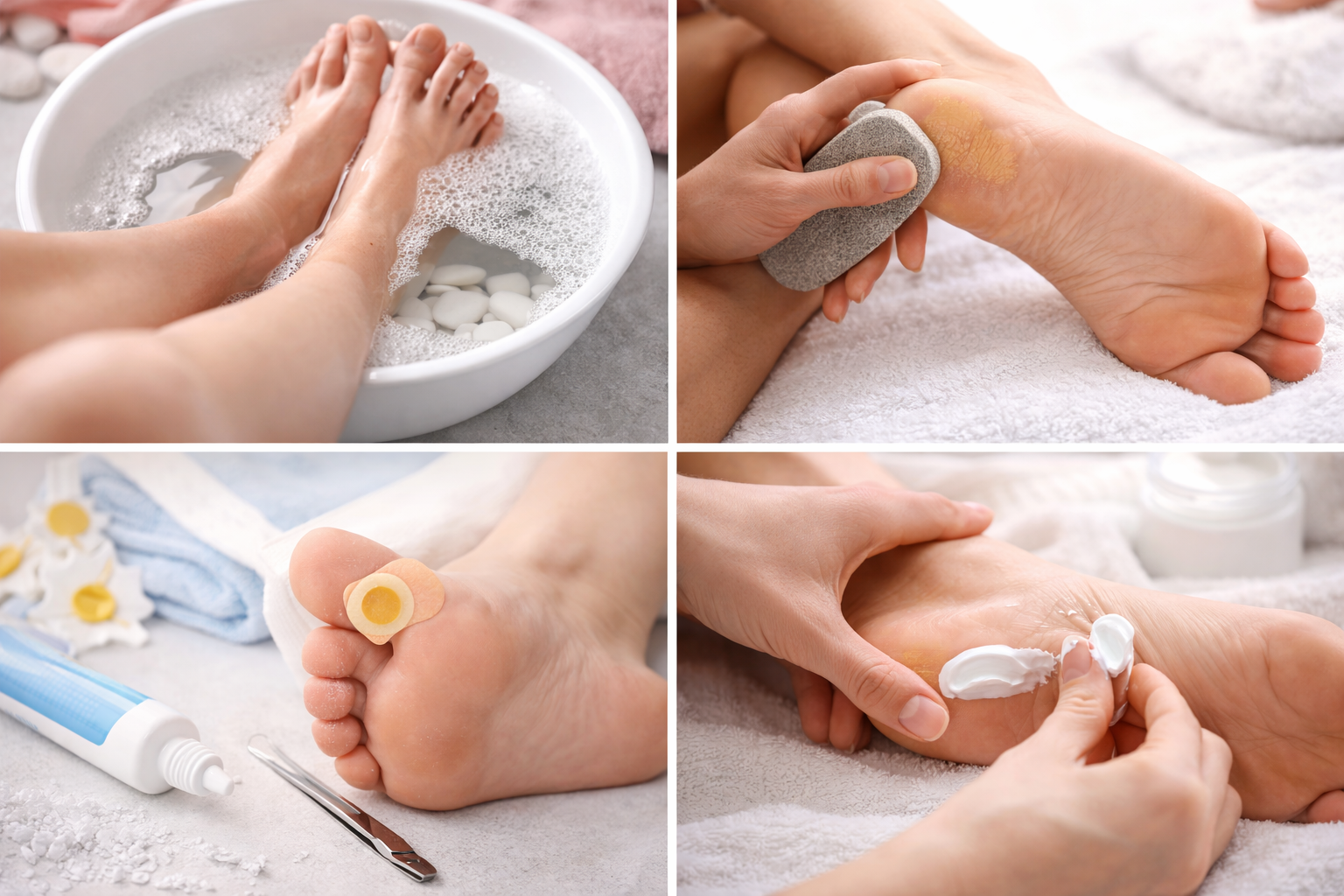
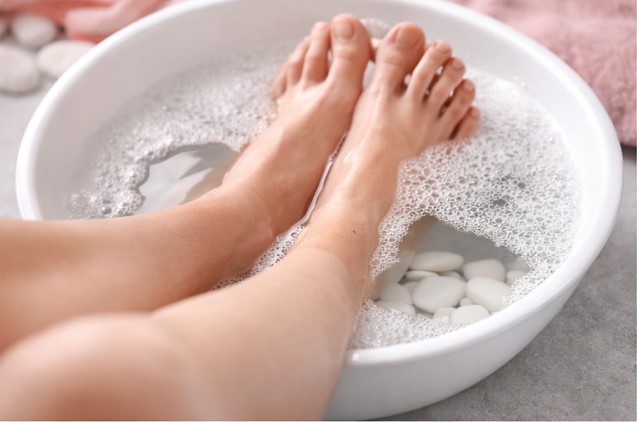
Fill a basin with warm water (about 100–110°F). Add 2 tablespoons of baking soda or Epsom salts. Soak for 10–15 minutes until the skin softens.
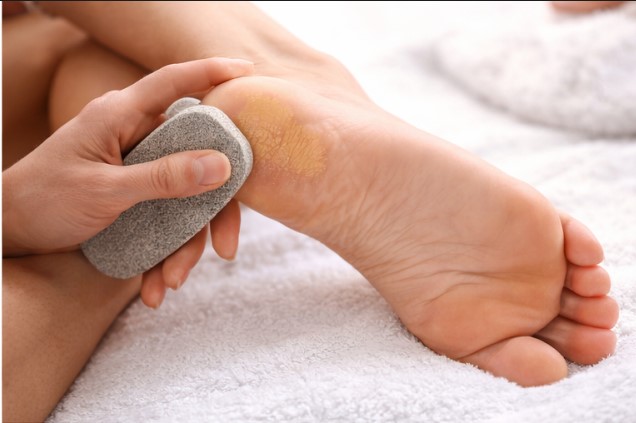
Step 2. Gently use a pumice stone
Rub the softened area with a pumice stone or foot file. Use circular motions and don’t press too hard — you’re not trying to draw blood. Just remove the loose, softened skin.
Step 3. Use targeted treatments
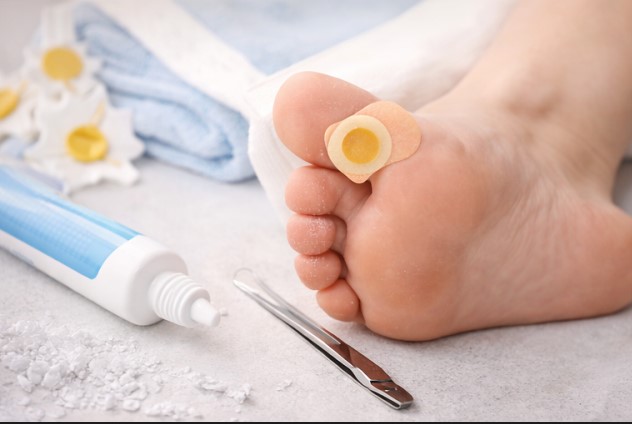
For dry corns: Apply a medicated corn pad containing salicylic acid. Leave it on for 24–48 hours. After removing, any loose skin can be gently buffed away.
For softening: Use a cream with urea every day on clean, dry feet. Within a week, you’ll notice the rough spots getting softer.
Step 4. Moisturize
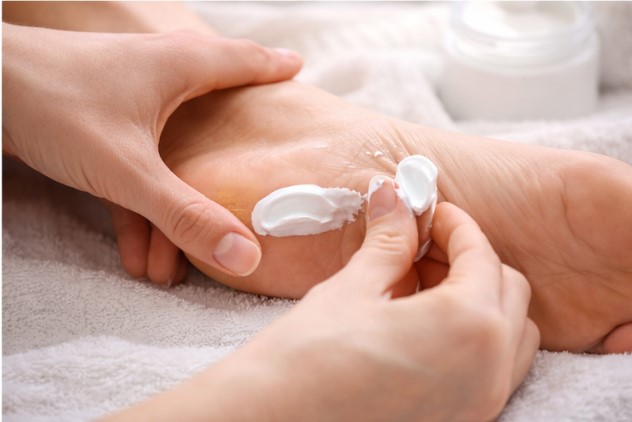
After treatment, rub in a thick moisturizer or natural oil like coconut or olive oil. Keeping the skin supple prevents it from hardening again.
Step 5. Repeat as needed
Stubborn spots might need 2–3 treatments over several days. Be patient — rushing leads to mistakes.
What to use for different types
| Type of Lesion | What to Use | Notes |
|---|---|---|
| Blister (wet) | Antiseptic, protective cushion | Do NOT pop it! |
| Dry callus | Soaks, pumice stone, urea cream | Gradual removal is safest |
| Corn with a core | See a podiatrist | This needs professional removal |
What NOT to do
- ❌ Don’t cut corns or calluses with a blade or scissors — huge infection risk.
- ❌ Don’t pop blisters — that skin is a natural bandage.
- ❌ Don’t use harsh acids without medical advice — you can burn yourself.
- ❌ Don’t ignore redness, swelling, or pus — if it looks infected, go to the doctor.
Prevention tips
- Wear shoes that actually fit. Break in new shoes slowly.
- Use gel inserts or cushions to reduce pressure points.
- Choose socks made of natural fibers — they cause less friction.
- Moisturize your feet daily — soft skin resists rubbing better.
The bottom line
You can handle most corns and calluses at home with a gentle, consistent approach. Soaks, pumice, and urea creams are your best friends. And a little prevention goes a long way.
Tested on my own feet: after two weeks of regular care, my feet felt baby-soft again.
Got your own tricks for dealing with corns? Share them in the comments!
Related guides