Home cleaning, organization and lifestyle tips
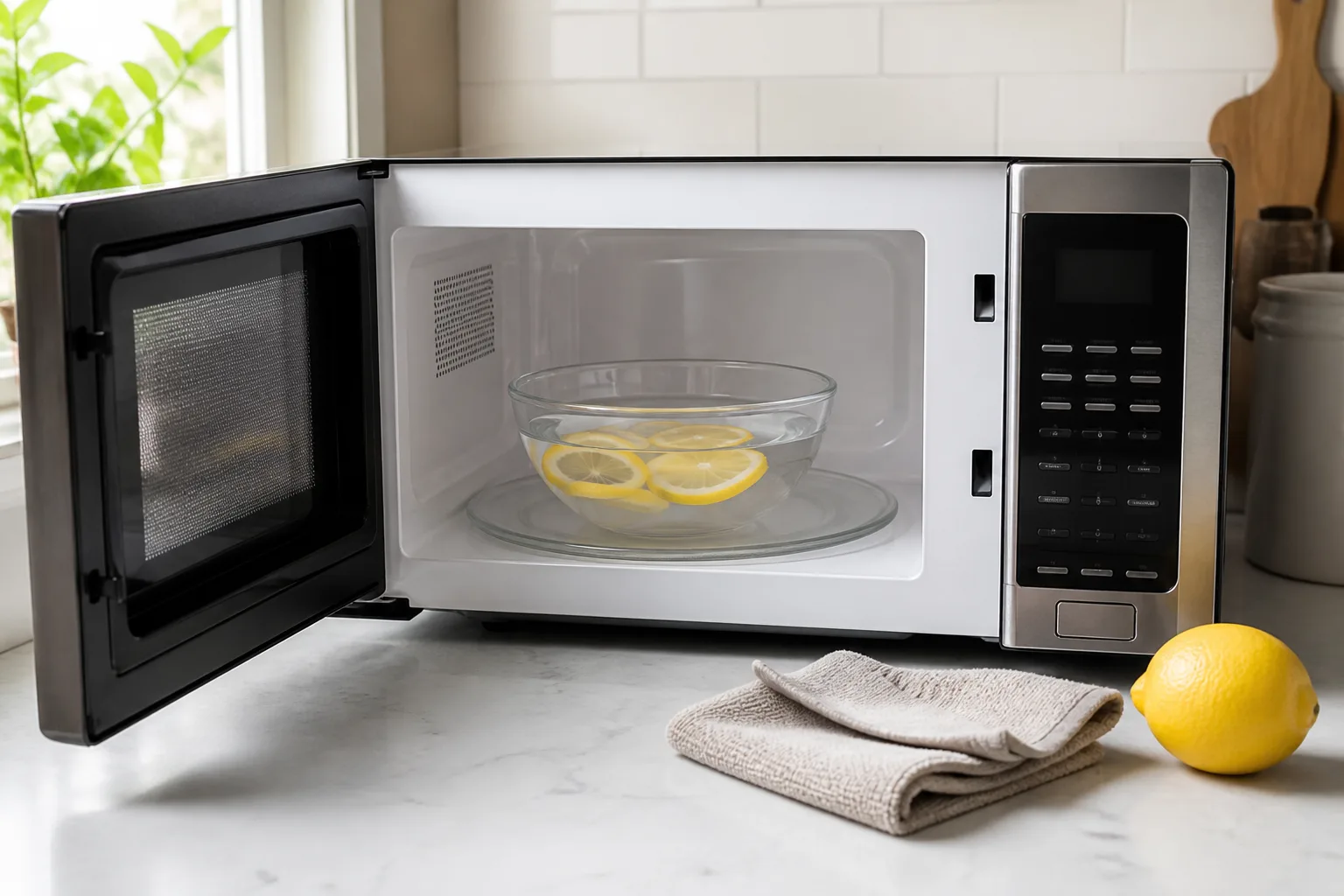

Short answer: Put 1 cup (250 ml) of water and about 1 tablespoon of lemon juice in a roomy microwave-safe glass or ceramic bowl. Follow the manual and heat only until steaming or just boiling—commonly 2 to 5 minutes. Wait with the door closed, remove the hot bowl carefully, then wipe with a soft cloth and mild dish soap.
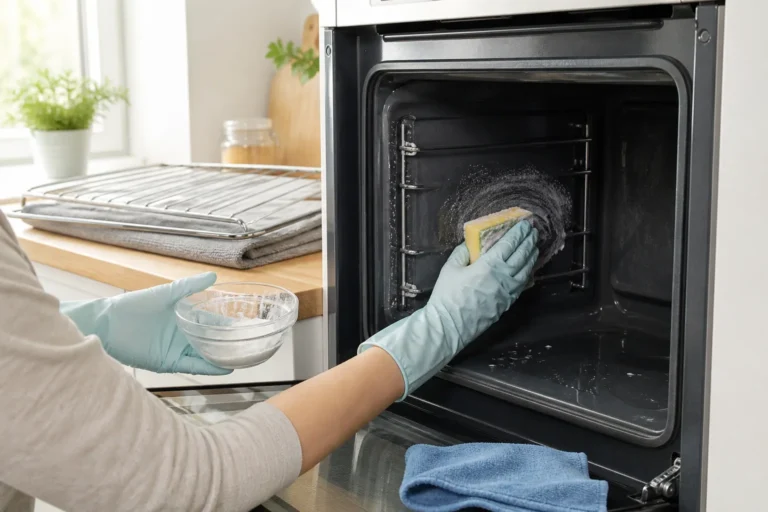
This method helps with routine splatters and food odors, but it is not a magic degreaser or disinfecting cycle. Power and manufacturer instructions differ, so watch the water instead of relying on a fixed “five-minute hack.” For baked-on grease elsewhere, use a surface-specific method such as our safe oven-cleaning guide.
What lemon steam actually does
Water vapor condenses on the cooler walls and rehydrates dried food, making splatters easier to lift. GE describes steam cleaning similarly: heat and moisture soften cooked-on soil before wiping.
Lemon adds mild acid and a fresh scent, not detergent. Greasy film still needs physical removal. After raw-food contamination, follow the appliance maker’s specific cleaning or sanitizing procedure.
- Steam: softens and rehydrates dried splashes.
- Lemon: helps with stale odors and leaves a light citrus scent.
- Dish soap: helps remove the remaining greasy film during wiping.
- Drying: removes moisture that could leave streaks or odors behind.
When this method is not enough
Use the owner’s manual when paint is peeling, metal is exposed, the waveguide cover or seal is damaged, the door is loose or the turntable is cracked. Cleaning cannot repair these faults. Arcing, smoke or electrical odor needs service advice.
- Do not use steam as proof that the microwave has been disinfected.
- Do not use lemon on a damaged interior finish or leave acidic liquid sitting on metal trim.
- Do not spray cleaner into vents, the control panel or openings in the cavity.
- Do not run the microwave empty or operate it without the turntable when the manual requires one.
Safety check before heating water
The main risk is heat. The FDA warns that overheated water can erupt when moved. Lemon provides nucleation points but does not make excessive heating safe. Use a bowl larger than the water volume, stay within the manual’s timing and assume the container is very hot.
- Use heat-safe glass or plain microwave-safe ceramic with no metallic rim.
- Choose a bowl of at least 2-cup capacity for 1 cup of water and do not overfill it.
- Never add foil, metal utensils, steel wool or a metal-decorated container.
- Keep children and pets away while removing the bowl and turntable.
- If the door, hinges, latch or seal is damaged, stop using the microwave and contact the manufacturer.
What you need
- 1 cup (250 ml) water, unless your manual specifies another amount.
- About 1 tablespoon lemon juice or a few thin lemon slices.
- A roomy microwave-safe glass or ceramic bowl.
- Two soft microfiber cloths or nonabrasive sponges.
- A small amount of mild dishwashing liquid.
- Baking soda and a small dish for optional spot treatment.
- Dry oven mitts for the hot bowl and turntable.
How to clean a microwave with lemon safely
1. Prepare a roomy bowl
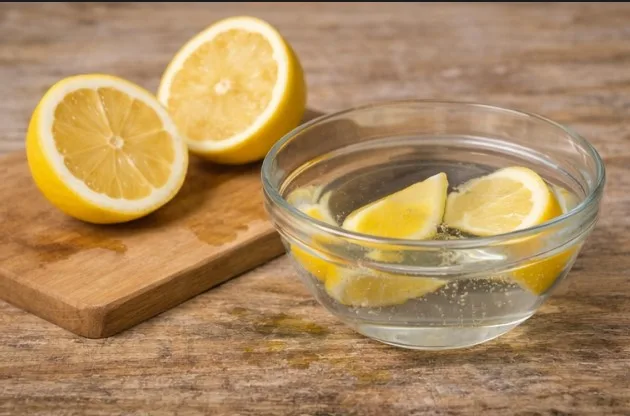
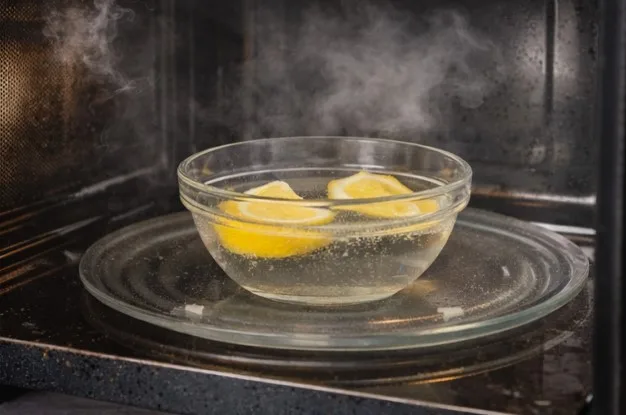
Remove loose crumbs from the cool cavity. Pour the water into the bowl, add the lemon juice or slices, and set it in the center of the turntable. Do not fill the bowl close to the rim. If your microwave has a Steam Clean program or supplied steam container, follow that model-specific process instead.
2. Heat only until steaming
Use the setting recommended by the manual. Many models need 2 to 5 minutes for 1 cup, but wattage changes the timing. Watch through the door and stop when the water steams or just boils—not when a promised timer expires.
If it boils vigorously, stop and leave the door closed while the liquid settles. Never lean over the container or add powder to very hot water.
3. Let the steam work with the door closed
After heating, wait 2 to 5 minutes without opening the door. This stand time is often more useful than extra heating because condensation continues to soften residue without pushing the water closer to a violent boil. If your manual gives a different stand time, use it.
4. Remove the bowl and wipe from top to bottom
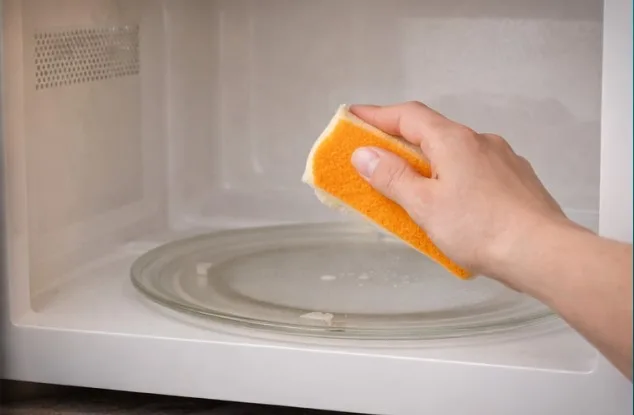
Stand slightly aside when opening and use dry mitts for the bowl. Once the cavity is safe to touch, unplug it if accessible. Wipe ceiling, walls and floor with a soft cloth, warm water and a drop of dish soap. Avoid vents and the waveguide cover; rinse with a clean damp cloth and dry.
5. Wash removable parts and clean the door seal
Let the turntable cool before washing; hot glass can crack under cold water. If allowed, wash the tray and roller ring, then dry fully. Wipe the door, frame and seal. Apply permitted glass cleaner to the cloth, never directly to the appliance.
For stubborn spots: use a baking-soda paste without heating it
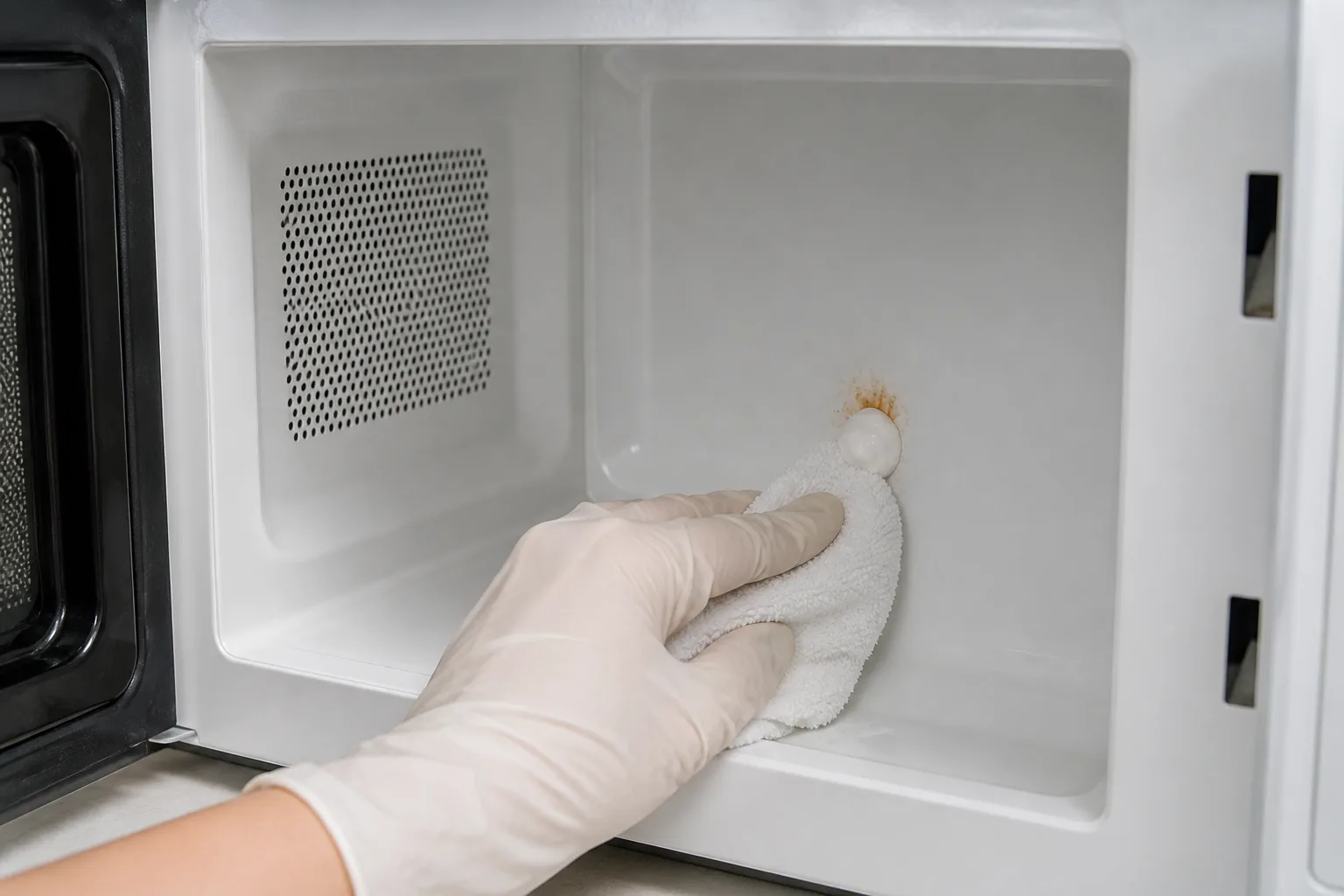
Use paste as a cool, local follow-up—not in boiling lemon water. Because baking soda is mildly abrasive, check the manual and test a hidden area. Never rub the waveguide cover, heating element, special coating or damaged paint.
- Mix a small spoonful of baking soda with just enough water to make a thick paste.
- Dab it on the cooled stain only and leave it for 5 to 10 minutes.
- Wipe gently with a soft damp cloth; do not use steel wool or a scouring pad.
- Remove every trace with a clean damp cloth, then dry the cavity.
How to remove fish, garlic or burnt-food odor
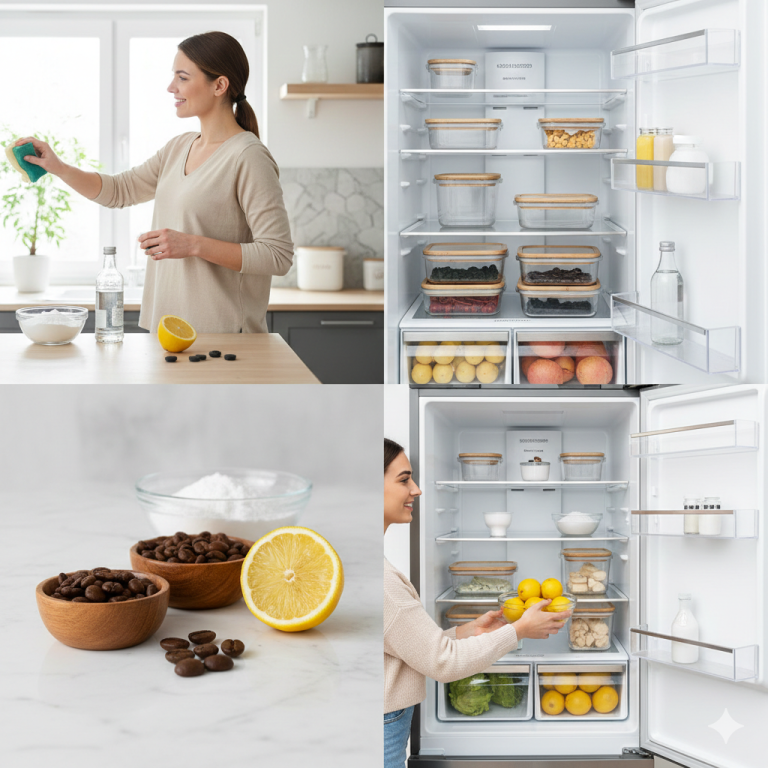
Odor usually means residue remains under the turntable, on the ring, door frame or ceiling. Clean the source instead of masking it—the same principle used in our guide to removing refrigerator odors.
- Repeat a short lemon-water steam cycle only after visible residue is gone and the manual permits it.
- Leave the clean, cool microwave door open briefly to let moisture escape.
- If a burnt smell returns when the oven runs empty-free as directed, stop using it and seek service advice.
- Do not use bleach, ammonia, solvent cleaners or aerosol fragrance inside the cavity.
Which parts need different treatment?
Microwaves vary, especially combination and convection models. The owner’s manual always overrides a general chart.
| Part | Safer routine | Avoid |
|---|---|---|
| Painted or enamel cavity | Soft cloth, mild soap, clean-water rinse | Abrasives, oven cleaner, bleach or ammonia |
| Turntable and roller ring | Cool fully, wash separately if the manual allows | Thermal shock and reinstalling while wet |
| Door, frame and seal | Damp soft cloth; remove crumbs carefully | Flooding the seal, sharp tools or forcing the latch |
| Control panel and vents | Barely damp cloth, then dry immediately | Direct spray or dripping liquid |
| Waveguide cover | Very gentle wipe only if the manual permits | Scrubbing, soaking, peeling or removing it |
Common mistakes to avoid
- Overheating water: longer is not automatically cleaner and can increase burn risk.
- Using a bowl that is too small: vigorous boiling can spill acidic water onto the cavity.
- Opening immediately: stand time softens soil and lets the water settle.
- Spraying the controls: cleaner can enter electrical openings.
- Scrubbing dry residue: it takes more force and may scratch the finish.
- Calling lemon a disinfectant: steam cleaning and sanitizing are not interchangeable claims.
Keep the microwave cleaner between deep cleans
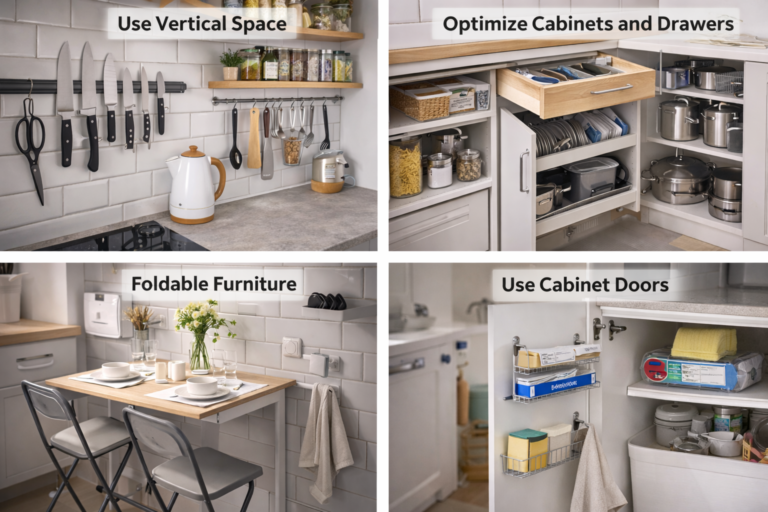
A microwave is easier to maintain when the surrounding counter and storage stay orderly; our small-kitchen organization guide offers practical layout ideas. Small, prompt cleanups also protect appliance finishes—the same maintenance habit used in our washing-machine cleaning guide.
- Cover food with a vented microwave-safe lid or plate.
- Wipe fresh splashes after the cavity cools instead of letting them bake on.
- Clean under the turntable regularly and dry the roller track.
- Use lower power or shorter intervals for foods that spit or foam.
- Check the door contact area for crumbs without picking at the seal.
Frequently asked questions
Can I put a whole lemon in the microwave?
Use juice or a few slices in water rather than heating an intact lemon. Whole fruit can build pressure, and it does not improve the cleaning result.
How long should lemon water stay in the microwave?
Heat only until it steams or just boils within your manual’s guidance, then leave the door closed for about 2 to 5 minutes. Wattage and water volume matter more than a universal timer.
Can I mix lemon, vinegar and baking soda?
There is usually no benefit. Acid and baking soda react and largely neutralize each other. Use lemon water for steam, mild soap for grease and a separate cool baking-soda paste only where permitted.
Does lemon steam kill bacteria?
Do not treat it as a validated disinfection method. It loosens residue. If contamination requires sanitizing, follow the appliance maker’s instructions and the cleaner label.
Why does the microwave still smell after cleaning?
Check under the turntable, the roller ring, ceiling, door frame and waveguide area for missed residue. Persistent electrical or burnt-plastic odors require service, not more fragrance.
The practical takeaway
Lemon water is a useful steam-cleaning aid when it is used in a roomy microwave-safe bowl and heated only as long as the model requires. Let condensation soften the mess, remove the hot bowl cautiously, then finish with mild soap, a clean rinse and thorough drying. Treat stubborn marks locally and stop if you see damage, arcing or a persistent electrical smell.
Sources and further guidance
- US FDA: Microwave ovens and super-heated water safety.
- Samsung: How to clean a microwave.
- Whirlpool: Microwave cleaning instructions.
- GE Appliances: Microwave cleaning recommendations.
Related guides