Home cleaning, organization and lifestyle tips
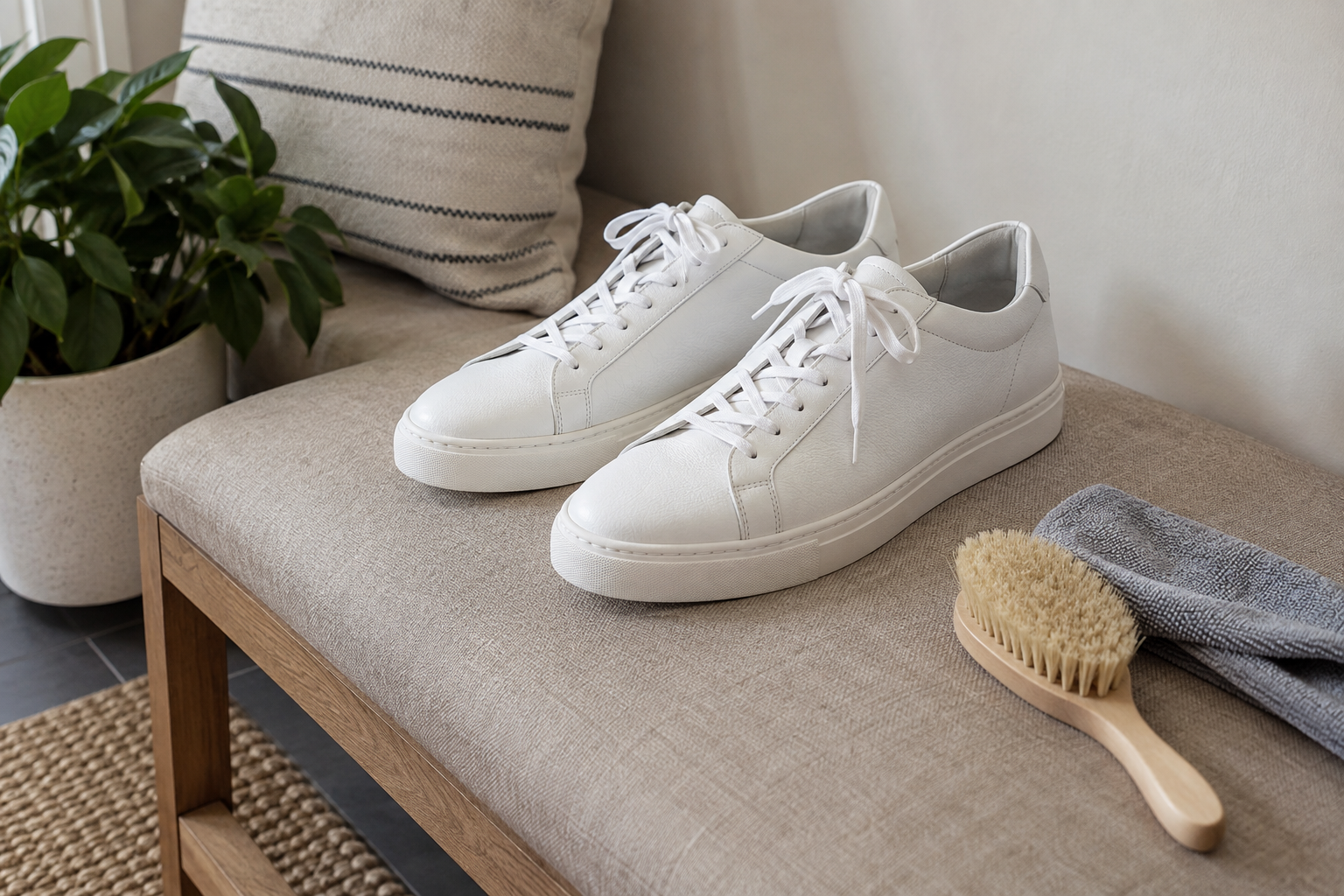

Quick answer: check the upper material and the maker’s care instructions, remove loose dirt with a soft dry brush, then clean the upper with a small amount of mild cleaner that the material tolerates. Wash removable laces separately, wipe the rubber sole, blot away soap and let the shoes dry completely at room temperature. A white sneaker can have leather, mesh, suede and rubber in one pair, so one strong solution is rarely right for every part.
White shoes are unforgiving because dark grit, street dust and detergent residue all show against the upper. The aim is to lift dirt while preserving dye, glue, shape and surface finish. A stubborn mark may need a second gentle pass, but a faded patch, scuff or worn coating cannot be “cleaned” back to new.
Identify the material before using water
Look at the label or product page and examine the upper, panels, lining and trim. Smooth leather and many synthetic leather surfaces can usually be wiped with a barely damp cloth, but they should not be soaked. Canvas is more tolerant of gentle moisture, yet vigorous rubbing can spread a stain or fray the weave. Knit and mesh snag easily, so follow the direction of the yarn and use a very soft brush. Suede and nubuck need a dedicated dry brush and material-specific products; water can leave rings or flatten the nap.
Mixed-material shoes need separate treatment by panel. Test any solution at the outer edge of the tongue or another inconspicuous place and wait for the patch to dry before continuing. Converse explicitly recommends a hidden-area test, and New Balance advises a mild, dye-free detergent for suitable athletic shoes while directing leather and suede owners to specialist cleaners.
Prepare the shoes and work area
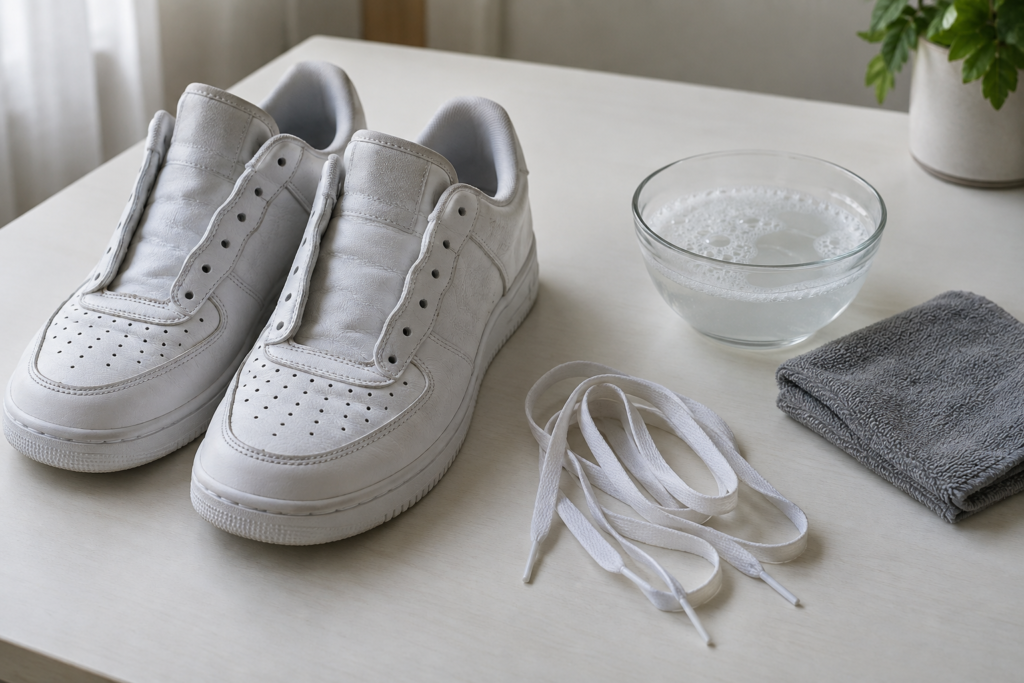
Choose a clear table or tray, protect the surface and set out a soft shoe brush, two clean microfiber cloths, a small bowl of lukewarm water and a little mild, dye-free detergent if the material permits it. Use a separate cloth or brush for the soles so grime from the tread never moves onto white fabric. Take out the laces and removable insoles. If the insole is glued in or has an electronic component, leave it in place and follow the maker’s instructions.
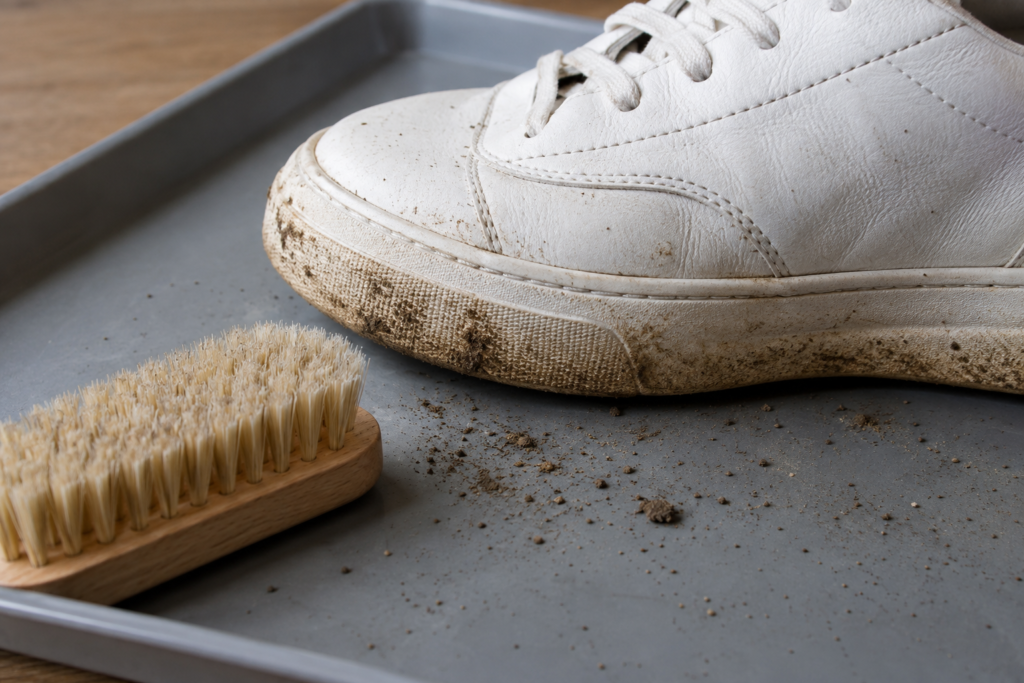
Let wet mud dry first; brushing wet soil pushes it into fibres. Brush loose dust from the shoe gently, including seams and the tongue. Knock debris from the outsole over a bin. Before any wet cleaning, inspect for loose stitching, peeling coating or separating glue. A fragile shoe may need a cobbler rather than more rubbing.
Clean the upper in a controlled sequence
1. Remove dry dirt
Start at the cleaner parts of the upper and work toward the dirty edge. On smooth leather, a dry microfiber cloth may be enough for dust. On sturdy canvas, a soft brush can lift grit; on mesh, use short light strokes that do not catch the knit. Avoid a hard toothbrush on delicate fibres.
2. Spot-clean one section at a time
Dip a cloth or approved soft brush into the mild solution, then squeeze or shake away excess water. Work a small section with light strokes and blot lifted dirt with a second cloth. Do not pour solution onto the shoe. For smooth leather or synthetics, wipe rather than saturate. For canvas or mesh, repeat a gentle pass after the first area has been cleaned instead of scrubbing a wet patch for several minutes.
White does not mean bleach-safe. Chlorine bleach can weaken materials, alter a finish or yellow glue and trim. Baking soda, vinegar, toothpaste and a melamine sponge are not interchangeable shortcuts: each can abrade, leave residue or affect a coating. Use them only when the specific shoe maker approves that treatment for that material.
3. Wipe away cleaner
Use a clean cloth dampened with plain water to remove remaining soap where the material allows it. Work toward seams rather than flooding them. Blot with a dry cloth. If the cloth still picks up dirt, clean another small area instead of soaking the whole shoe.
Clean laces, insoles and rubber separately
Removable laces can be washed by hand in mild soapy water, rinsed well and dried flat. Replace frayed laces instead of using an aggressive whitener. For removable insoles, follow the maker’s directions; many tolerate a gentle wipe but not a long soak. Dry them fully outside the shoes before reassembly. For persistent in-shoe odour, see our shoe-odour guide: fragrance does not replace drying and source cleaning.
The rubber sole and sidewall can take a somewhat firmer brush than mesh, but keep that brush away from the upper. Clean tread grooves without forcing water into a seam. A dark scuff on white rubber may need repeated gentle cleaning; if colour has transferred into the material, not every mark will disappear. If the outsole is coming away from the upper, do not continue with wet work.
Dry slowly and check the result
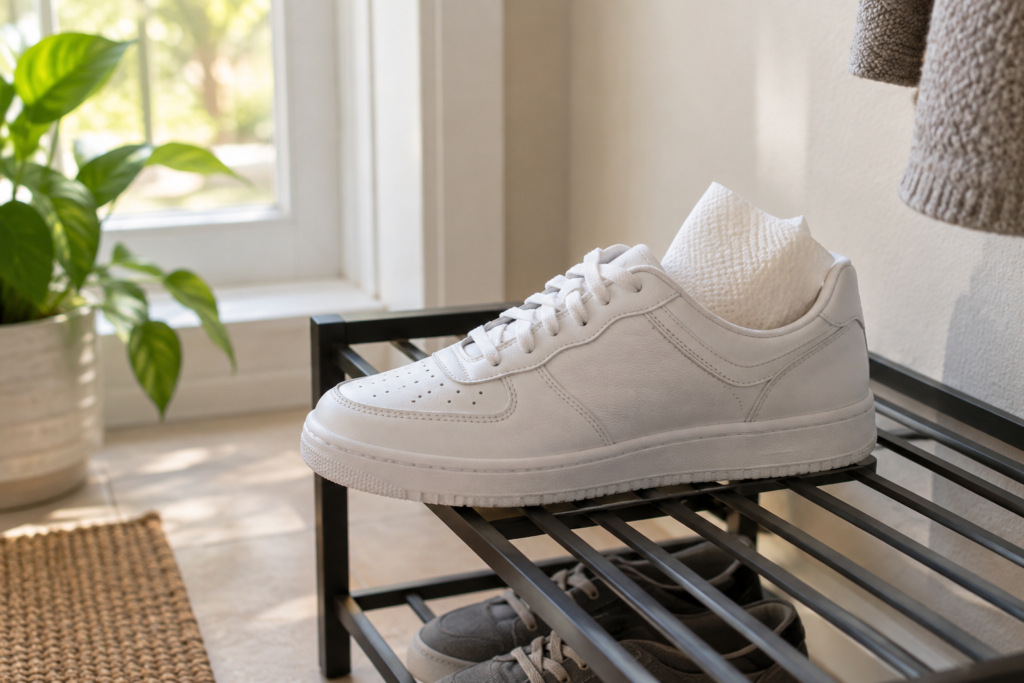
Blot moisture with a clean towel, then place the shoes in an airy room away from a radiator, hair dryer and direct strong heat. A little plain white paper inside helps hold shape; change it if it becomes damp. Avoid printed newspaper, which can transfer ink. Dry laces and insoles separately. Do not wear or store the shoes while the lining is still damp, because trapped moisture can create a different smell and weaken adhesive.
Check the upper in daylight after it is fully dry. A dark ring may be remaining soil, uneven drying or a changed finish. Test a small second pass only if the material is sound. If whitening looks patchy because the original coating has worn off, a cleaner cannot rebuild it; a material-specific restoration product or professional repair may be the honest next step.
Machine washing, stains and material limits
Do not assume that a fabric upper makes the entire shoe machine-washable. The drum can stress adhesives, reinforcements and shape. Converse says not to machine wash or dry its canvas and leather shoes, while New Balance generally advises against machine washing its shoes. Use the washing machine only when the manufacturer of that exact pair explicitly allows it, and follow its stated cycle and drying instructions.
For a fresh coloured spill, blot promptly; do not rub pigment deeper into fabric. The approach is similar to treating clothing, but footwear has glue, foam and layered materials that limit rinsing. Our coffee-stain guide explains the blotting principle for washable garments; check the shoe care label before adapting anything. If the dirt came from an indoor rug, our carpet-cleaning guide covers that surface separately.
Keep white sneakers cleaner between washes
Remove dry grit after wear and let the pair air out before storing it. Rotate footwear so a damp pair can finish drying. Keep a clean cloth by the door for quick sole and leather touch-ups. A protective spray is useful only if its label names the shoe material; test it out of sight and apply it exactly as directed in a ventilated place. Do not spray suede with a product intended only for smooth leather.
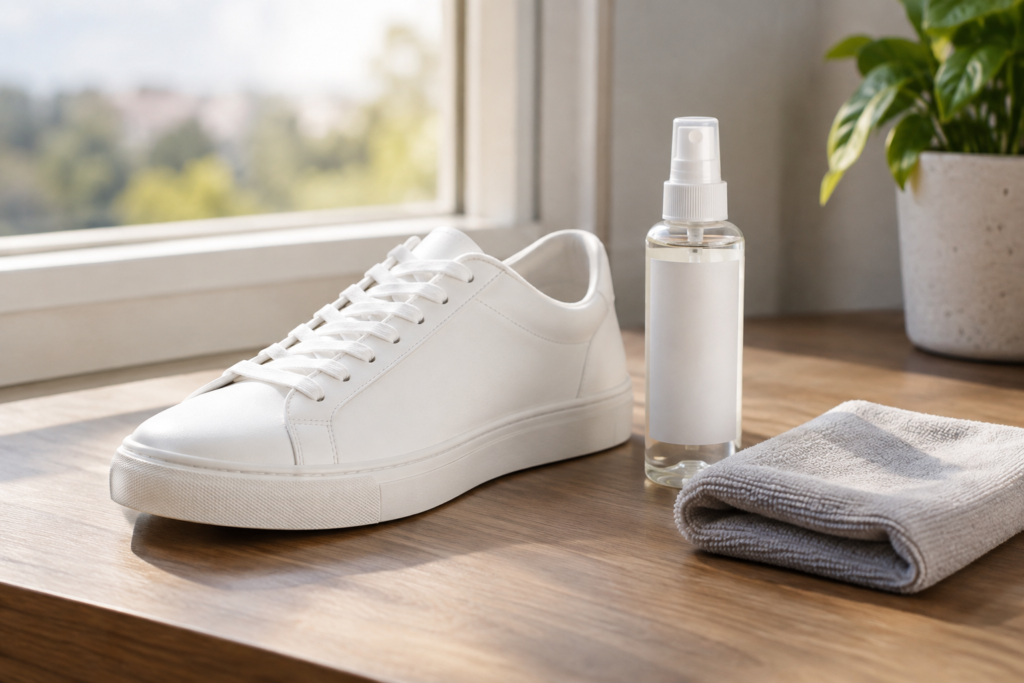
For a tidy entryway without spreading dirt, see our quick-cleaning guide. A small, repeatable routine is more effective than waiting for a shoe to become deeply stained and then using harsh treatment.
Frequently asked questions
Can I use toothpaste or baking soda to whiten shoes?
Only if the manufacturer approves it for that material. Abrasive particles can dull a finish, lodge in mesh and leave a white residue that becomes visible after drying. Mild approved cleaner is the safer starting point.
How long should white sneakers dry?
Until the upper, lining, insoles and seams are dry throughout. The time depends on materials and airflow; New Balance advises allowing shoes to air dry for 24 hours before wearing. Avoid heat to speed the process.
What if the shoes have suede panels?
Keep wet cleaning away from those panels. Brush the suede when dry with a dedicated suede brush and follow the maker’s specialist care advice. A mixed upper must be cleaned section by section.
Sources
- Converse: How to Clean Converse Shoes
- New Balance: Product Care and Maintenance
- Nike: How to Clean Your Shoes
Related guides