Home cleaning, organization and lifestyle tips
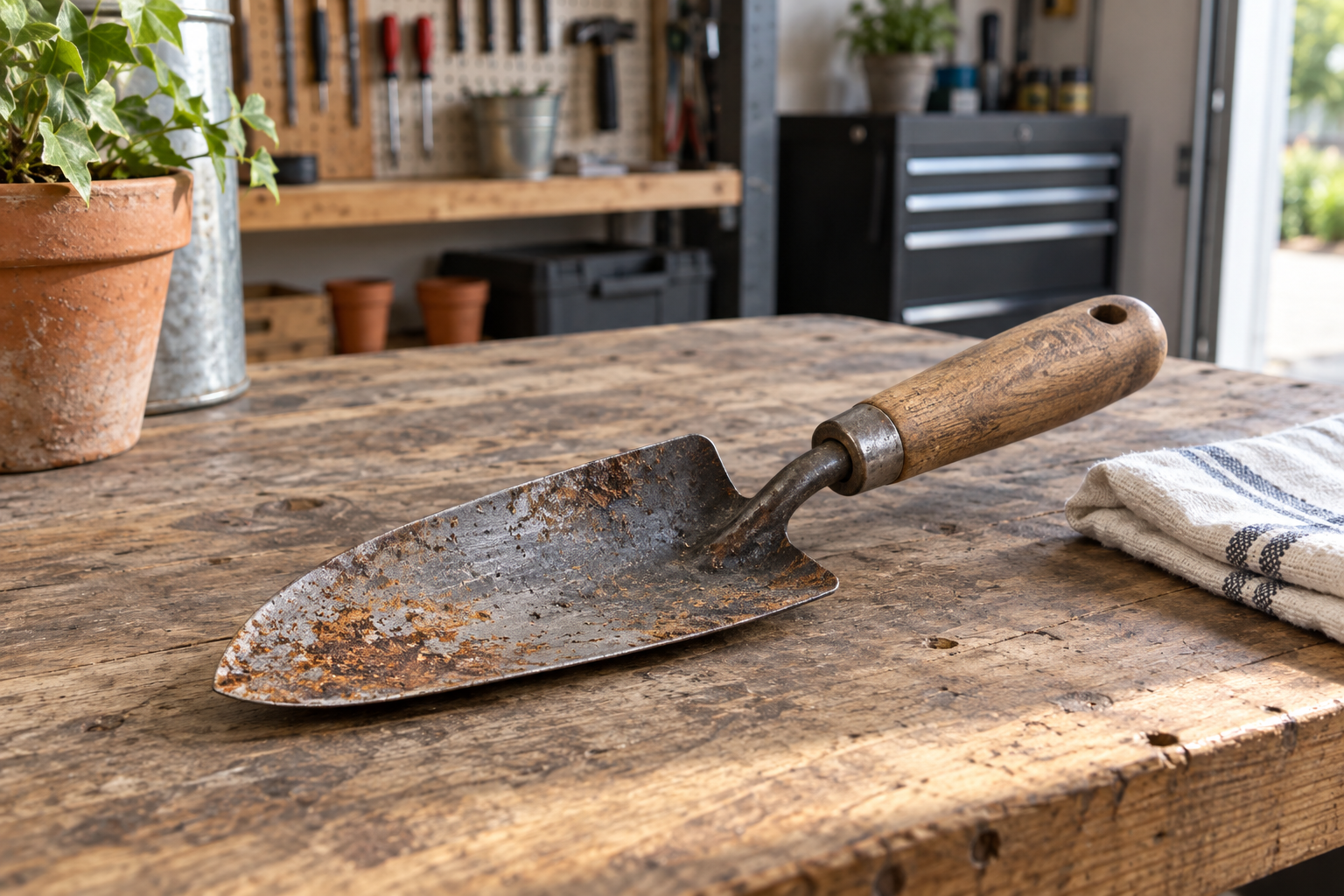

Quick answer: first decide whether you are dealing with a removable, lightly rusted item or a safety-critical part. For a small tool, hinge or fastener, remove loose rust with the least aggressive method that works, clean away residue, dry completely and protect the bare metal. Do not grind, sand or use acid on unknown painted metal, structural hardware, food-contact items or anything that could fail and cause injury.
Rust is corrosion of iron or steel. Removing its orange-brown layer can improve appearance and function, but it does not restore metal that has become thin, deeply pitted or cracked. The useful question is not “what home remedy is strongest?” but “is this item still sound, and what finish must be preserved?”
Start by identifying the item and the limit of DIY repair
Stop and seek qualified advice for brake parts, gas fittings, load-bearing hardware, electrical equipment, antique finishes, tools with a compromised handle, or a railing, gate or appliance part whose failure could hurt someone. Stainless steel and aluminium do not form ordinary red rust; a stain on them may need a different diagnosis. If rust is lifting old paint in a home built before 1978, treat the paint as potentially lead-containing until it is tested or assessed.
Work outdoors or in good ventilation. Wear eye protection and gloves suitable for the chosen product. Keep children, pets, food and drink away from the work area. Read the product label and safety data before opening a commercial remover or converter. Never mix chemicals, including vinegar, bleach, ammonia or another cleaner.
Prepare the work without spreading dust
Remove the item if possible and place it on a stable tray. Brush away loose dirt with a dry cloth. For a painted or unknown surface, do not begin with a power grinder. EPA warns that disturbing old paint can create hazardous dust; wet methods and dust control are safer than dry sanding in a home environment. Photograph the item first if you need to reproduce a finish or reassemble hardware.
1. Start with gentle mechanical removal
For light surface rust on an unpainted, removable tool or fastener, use a nylon or brass brush, fine abrasive pad, or fine sandpaper as appropriate for the object. Work only until loose scale is gone. Wipe frequently so you can see whether you are removing rust or cutting into sound metal. A wire brush is not a universal solution: it can scratch polished surfaces, erase markings and spread dust.
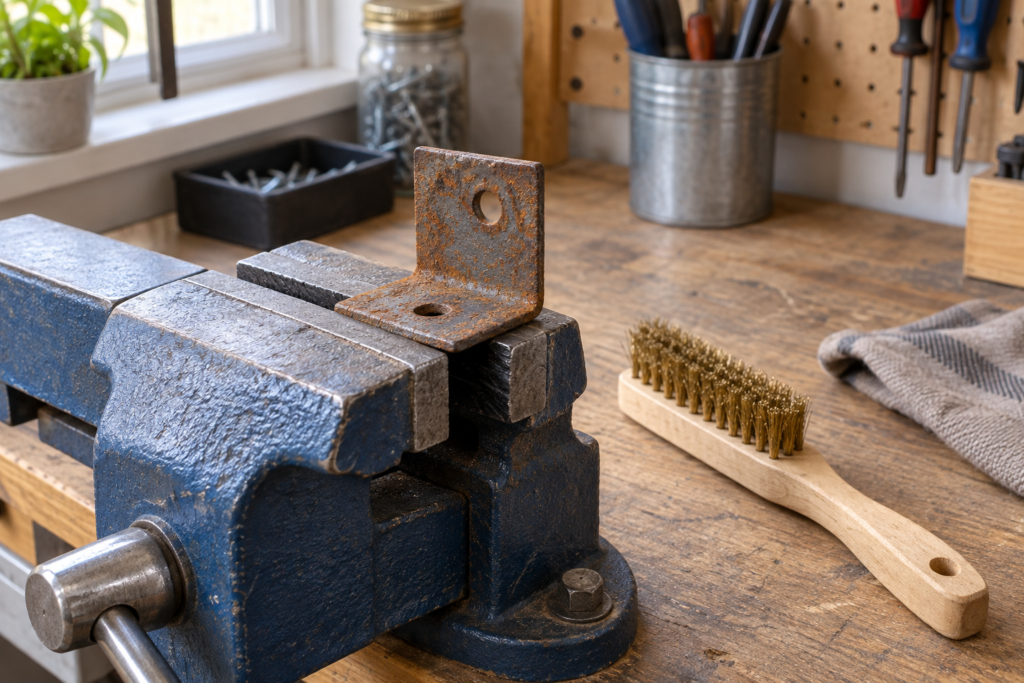
Do not use a powered wire wheel on a small item unless you know how to control it and have suitable eye and dust protection. Fragments can fly, and aggressive abrasion can overheat or thin delicate metal. If the item has a plated, painted or protective coating you want to keep, test a hidden spot or choose a non-abrasive method instead.
2. Use a mild soak only for suitable removable items
Plain white vinegar can loosen light rust from small, unpainted steel fasteners or tools, but it is not a universal treatment. Put only the metal part in a non-food container, cover it, check progress periodically and avoid a long unattended soak. Remove the item when the rust has loosened, brush gently, rinse as appropriate for the item and dry immediately. Extended acid exposure can darken, etch or affect surrounding finishes.
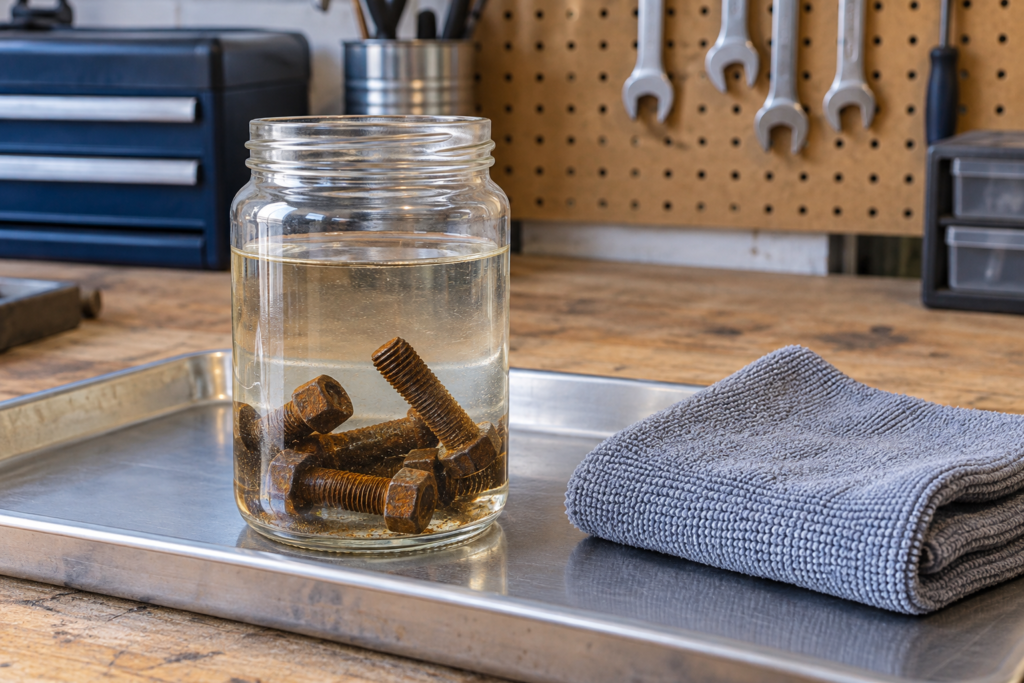
Do not soak an assembled tool with wood, leather, electrical parts or unknown coatings. Do not combine vinegar with another chemical. If the item is valuable, plated, precision-made or safety-related, ask a conservator, manufacturer or repair professional instead of experimenting.
3. Use a commercial rust remover or converter with its instructions
Commercial products vary: some dissolve rust, some chelate it, and a converter is meant to stabilize remaining rust before a compatible coating is applied. They are not interchangeable. Use the product only on the metals and finishes listed on its label, wear the specified protection and keep it off skin, painted areas and drains unless the manufacturer says otherwise. More product or a longer dwell time is not automatically better.
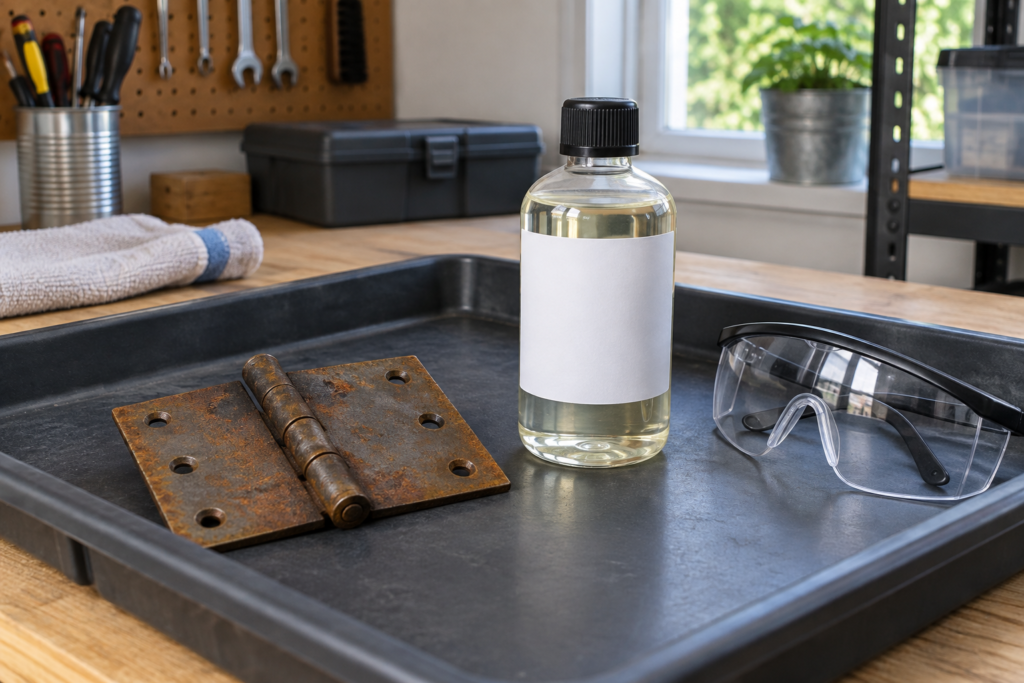
A converter can be useful where complete removal would damage a large steel surface, but it is not a cosmetic shortcut. Loose scale, grease and failed coating still need preparation; then the treated surface must be protected exactly as the product system requires.
Clean, dry and protect the metal immediately
After treatment, remove every residue as the chosen product directs. Dry joints, screw threads and hidden edges thoroughly; moisture left in these areas lets rust return quickly. For a tool or bare steel part, use an appropriate primer, paint, protective oil or wax according to its intended use and the manufacturer’s instructions. Do not oil a surface that will be painted unless the coating system allows it.
For related home-maintenance jobs, see our guides on cleaning grease from kitchen cabinets, cleaning an oven safely, cleaning a microwave, and descaling a kettle. Use separate cloths and tools so metal dust or chemical residue does not migrate to food areas.
Common mistakes that make rust work worse
- Using a knife, harsh grinder or coarse abrasive on a delicate finish.
- Treating deep pitting as a purely cosmetic problem.
- Mixing products or using an acid in an unventilated room.
- Leaving an item wet after rinsing or soaking.
- Painting over loose scale, grease or active corrosion.
- Sanding unknown old paint without lead-safe dust control.
When to replace the item or call a professional
Replace a rusted fastener, blade, tool or structural part when corrosion has reduced its thickness, created cracks, seized a safety mechanism or undermined its purpose. Call a qualified professional for vehicles, gas or water systems, electrical equipment, load-bearing structures and extensive corrosion. The goal is a safe, durable repair, not simply a cleaner colour.
Frequently asked questions
Does vinegar remove all rust?
No. It can help with light rust on suitable removable steel items, but it cannot rebuild pitted metal and can damage finishes if left too long.
Can I paint directly over rust?
Only if a specific rust-converter or coating system says so and the required preparation is complete. Loose scale and contamination must still be removed.
Is rust dust dangerous?
Any dust can irritate eyes and lungs. The greater concern is old paint or coatings disturbed at the same time, especially in pre-1978 homes; follow lead-safe work practices and keep dust contained.
Sources and further reading
Related guides