Home cleaning, organization and lifestyle tips
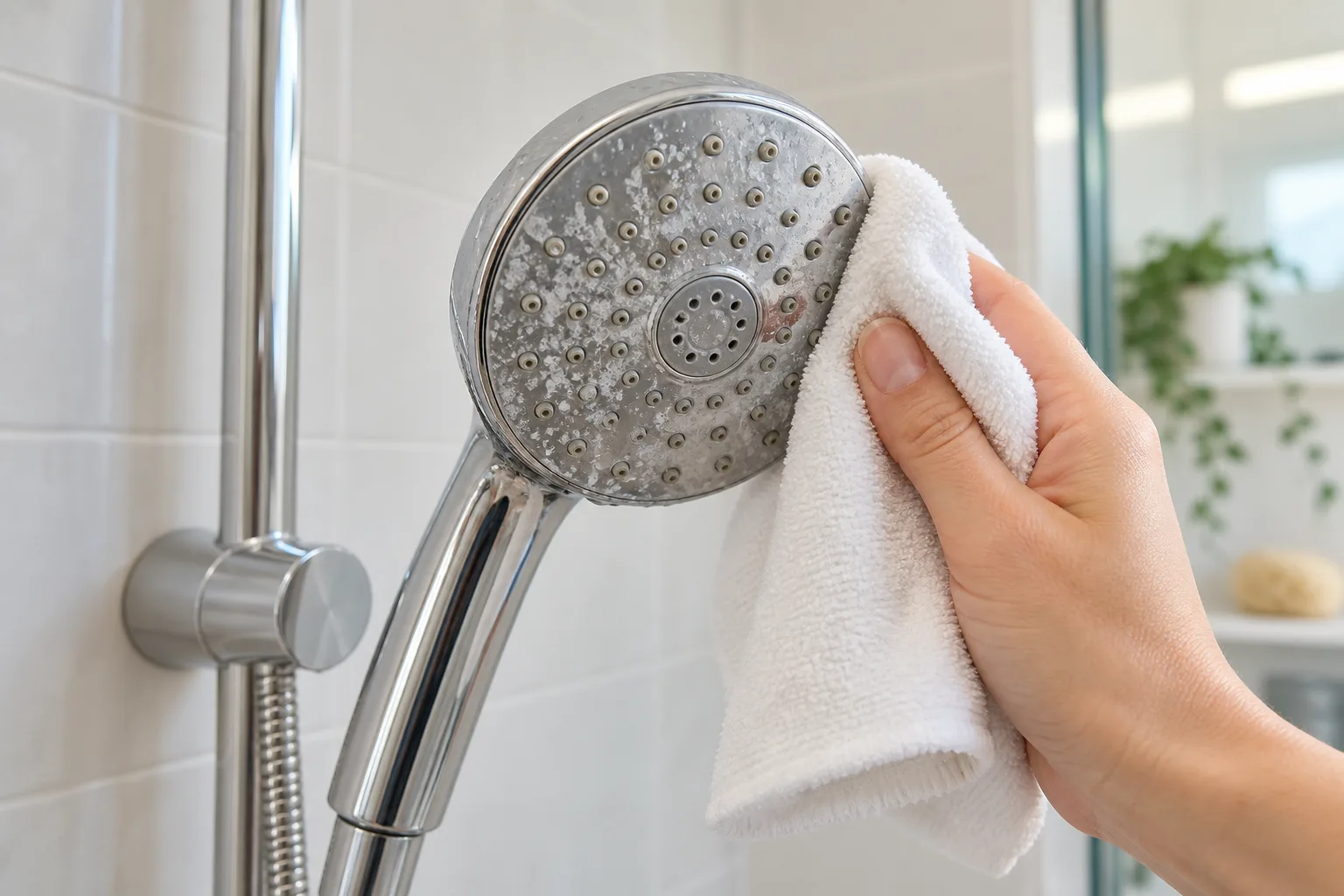

Short answer: check the showerhead maker’s care instructions, wipe the spray face first, and use a mild, compatible descaling method only when mineral scale is the likely problem. A 50/50 mix of distilled white vinegar and water is a method Delta Faucet recommends for many non-Touch-Clean models. Rinse thoroughly, reinstall carefully, and stop if the finish, seal, hose, or fitting appears damaged.
A weak or uneven spray is often caused by mineral deposits at the nozzles or inlet screen. Hard water contains dissolved calcium and magnesium; those minerals can settle on fittings as water evaporates. But a showerhead is not always the cause. Low flow at other fixtures, a kinked hose, a partly closed valve, or a cartridge fault need different attention. Cleaning should be gentle, deliberate, and limited to the parts your model allows you to remove.
Start with the model and the obvious checks
Read the manufacturer instructions before unscrewing or soaking anything. Some showerheads have soft rubber nozzles meant to be rubbed clean; some have removable screens, while others should not be dismantled. Turn the shower off and let hot surfaces cool. Protect the finish with a cloth if you need a tool, and never twist the shower arm inside the wall. Check that the hose is not bent, the selector is set correctly, and the problem is limited to one showerhead.
Routine clean: wipe before you soak
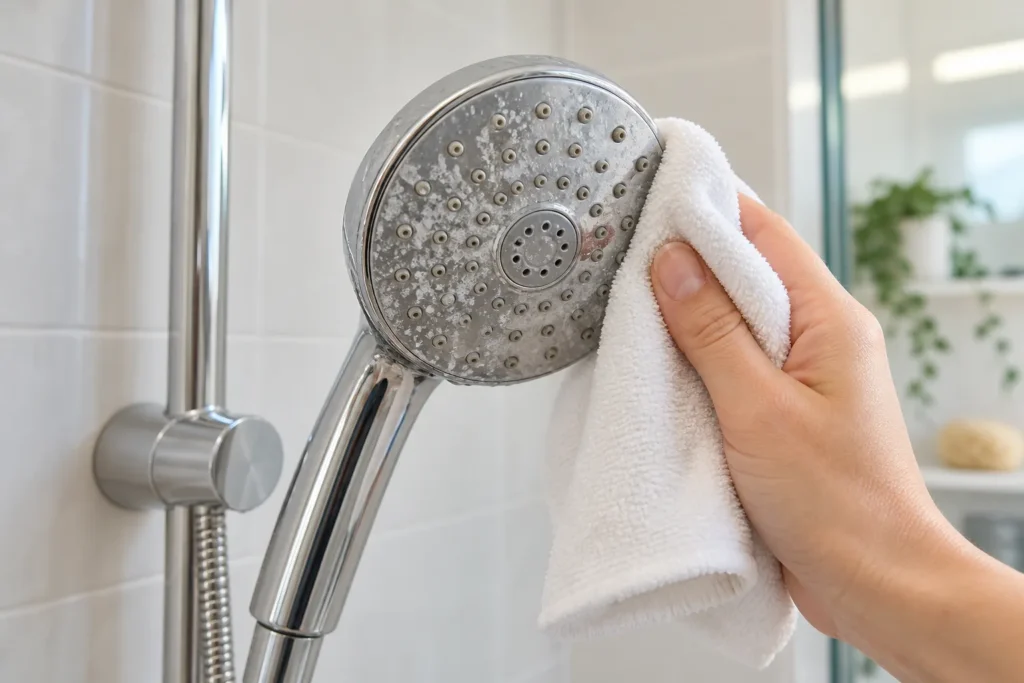
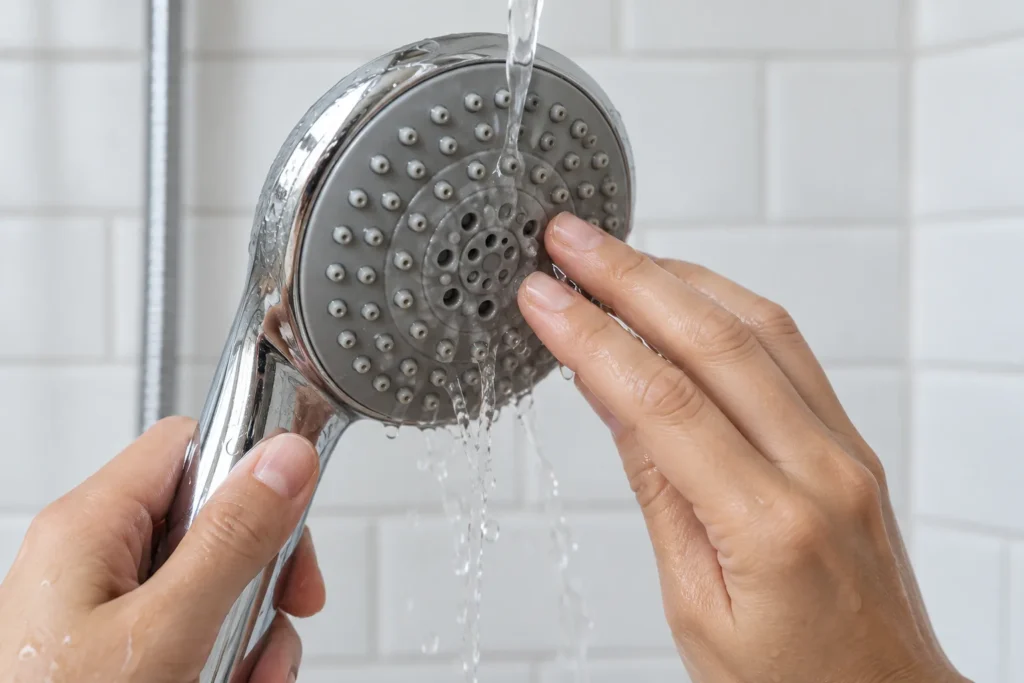
Wipe the spray face with a damp, non-abrasive sponge or soft cloth. For flexible rubber nozzles, gently rub each outlet as the maker permits; do not puncture them with a pin. A soft toothbrush can loosen surface deposits around the face and threads. Rinse with clean water and dry with a soft cloth. This low-risk step is often enough when the scale is light.
Removable showerhead: a controlled vinegar soak
If your instructions permit vinegar, remove the showerhead by hand where possible. Keep track of the rubber washer and any filter screen. Mix equal parts distilled white vinegar and water in a non-metal container, covering only the part intended for cleaning. Delta’s general guidance uses a 50/50 solution and a 30-minute soak for many models; check your own finish and manual instead of automatically extending the time.
- Soak for the stated period, then lift the head out rather than pouring solution over the fixture.
- Gently brush the spray face and accessible screen.
- Rinse the head and washer with clean water until no cleaner remains.
- Reassemble by hand, test for leaks and run water briefly to flush loosened deposits.
Do not use bleach, toilet cleaner, strong acids, scouring powder or wire brushes. Do not mix vinegar with bleach, ammonia or another cleaner. More time and a stronger chemical are not automatically safer or more effective.
Fixed showerhead or hand shower
Do not force a fixed head off the pipe. If the manufacturer permits the method, a small bag containing the compatible solution can be secured around the spray face, with the liquid kept off the wall finish and metal arm. A bag can leak or strain a fixture, so support it and keep the soak short. Remove it carefully, rinse the head and wipe the surrounding area dry. When in doubt, use the wipe-and-rub method or ask the brand’s support team.
Screen, flow restrictor and blocked jets
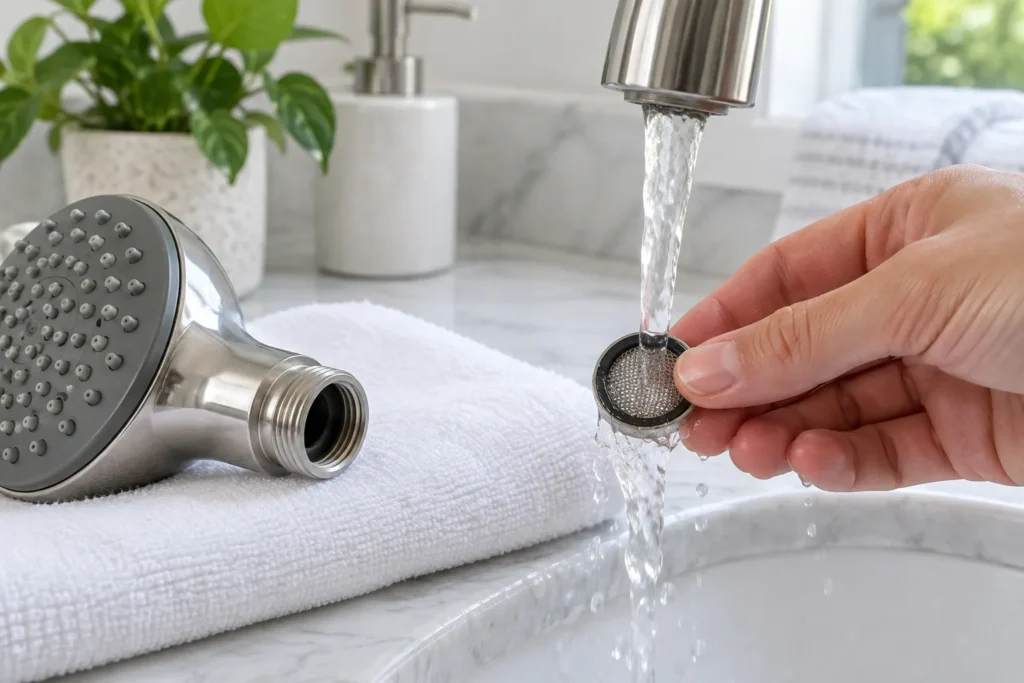
Some models have a screen at the inlet. Remove it only if the manual shows that it is user-serviceable, photograph the order of parts, and rinse debris under water. Do not remove a flow regulator just to increase pressure: it may be required for the product and plumbing system. If several fixtures have weak flow, a showerhead soak will not solve the underlying water-supply issue. A persistent single-fixture problem after cleaning can justify a plumber or the manufacturer’s service team.
When to replace or call for help
Stop and seek advice if you see cracked plastic, corroded metal, leaking hose connections, a damaged washer, a wall-arm leak, or a finish that is lifting. A sudden change in temperature, very low flow throughout the bathroom, or water leaking behind a wall is not a cleaning job. In a rental, follow the building’s maintenance process before dismantling fittings.
Prevent repeat buildup
After showering, a quick wipe of the spray face and hose removes droplets before they dry into marks. Clean lightly and regularly instead of waiting for blocked jets. If hard water affects several fixtures, obtain a water-quality report and discuss suitable treatment with a qualified installer rather than buying a filter on a promise. Reducing unnecessary hot-water use also fits with our guide to saving water at home; drying bathroom surfaces and correcting leaks supports our bathroom mold-cleaning guide prevention.
FAQ
Can I use lemon juice or citric acid?
Only if your showerhead manufacturer explicitly permits a compatible descaler. Product materials and finishes vary, so the manual takes priority over a universal recipe.
Why is the spray still weak?
Check the hose, screen, selector and other fixtures. The cause may be supply pressure or a valve, not mineral scale on the face.
Should I use a needle in each hole?
No. It can damage soft nozzles and coatings. Use the gentle rubbing method or the cleaning process the manufacturer recommends.
Visual guide
Sources
- Delta Faucet: cleaning a showerhead
- Drinking Water Inspectorate: hard water and limescale
- Stroud District Council: showerhead descaling
Related guides