Home cleaning, organization and lifestyle tips
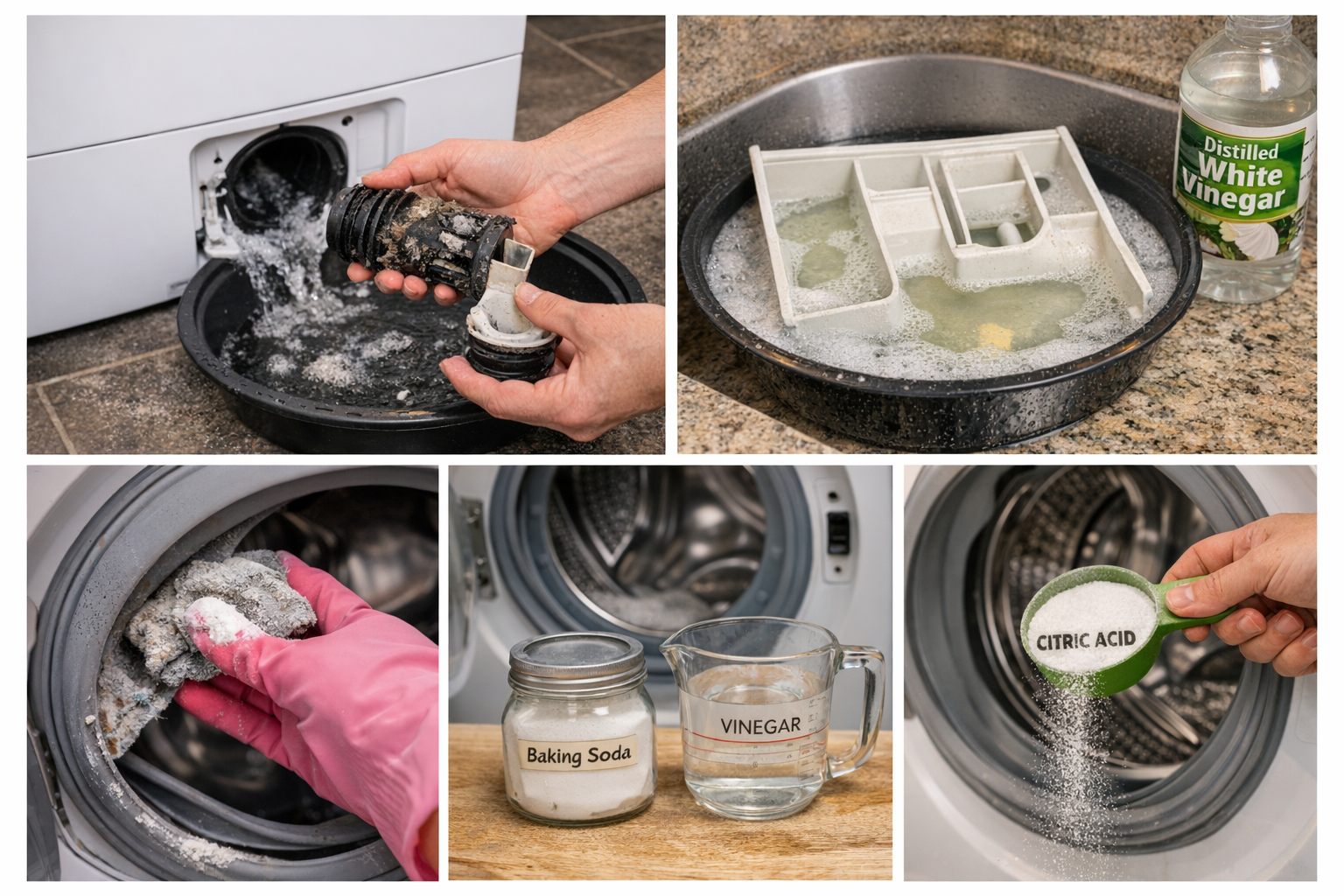

A musty washer, white mineral marks and clothes that still smell after a cycle can look like one problem, but they usually have different causes. Detergent residue and trapped moisture cause many odors; restricted drainage points to the filter or hose; true limescale is more likely in hard-water areas.
The safest cleaning method is not a universal cup of vinegar or a fixed dose of citric acid. Washer seals, coatings and cleaning programs differ by model. Start with the appliance manual, clean the user-accessible parts, then run the maintenance cycle with only the product and dose the manufacturer permits.
Quick answer: Empty the washer, clean the dispenser, door seal and accessible pump filter, wipe the drum, and run Drum Clean, Tub Clean or Self Clean according to the manual. Never mix bleach with vinegar, citric acid, ammonia or another cleaner.
First diagnose the problem
Check what you can see, smell or hear before choosing a cleaner. Descaling will not repair a blocked pump, and bleach will not remove mineral deposits.
| Symptom | Likely cause | Check first |
|---|---|---|
| Musty odor or slimy residue | Detergent, softener and moisture buildup | Drawer, gasket folds and maintenance-cycle reminder |
| Slow draining or water left in the drum | Blocked user-accessible pump filter or drain problem | Manual, filter access and drain hose |
| Chalky white deposits | Hard-water minerals | Local water hardness and the model’s descaling instructions |
| Black marks embedded in the seal | Persistent mold or stained rubber | Manual-approved treatment; replace the seal if damage remains |
| Leak, burning smell or electrical error | Fault rather than routine dirt | Stop the machine, unplug it and arrange service |
Safety rules before cleaning
- Find the model number and open its care section. Filter access, cycle names and approved products vary.
- Remove all laundry. Unplug the washer before cleaning a filter or reaching into a service opening.
- Let a recently used hot machine cool, prepare towels and a shallow tray, and drain residual water slowly.
- Wear gloves and ventilate the room when a product label calls for it.
- Never mix bleach with vinegar, citric acid, ammonia or any other cleaner. Dangerous vapors can form.
- Do not force a sealed panel or remove hoses unless the manual identifies the part as user-serviceable.
How to clean a washing machine in 6 safe steps
Work from visible, removable parts toward the internal maintenance cycle. This separates physical debris from residue and prevents one cleaner from being used for every problem.
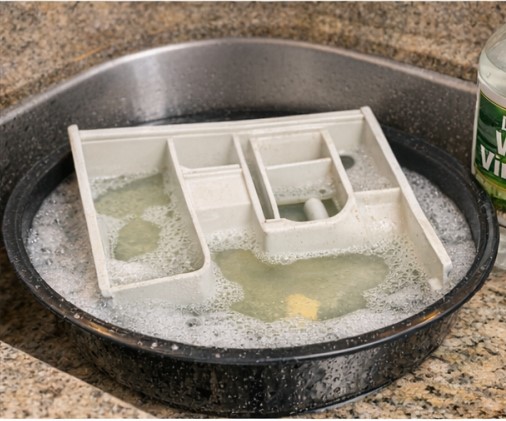
1. Wash the detergent drawer
Remove the drawer only as described in the manual. Warm water, a small amount of mild dish soap and a soft brush are usually enough for detergent and softener residue.
- Separate removable inserts.
- Brush the siphon caps and the drawer housing.
- Rinse away all soap.
- Dry the parts before reinstalling them.
2. Inspect and wipe the door gasket
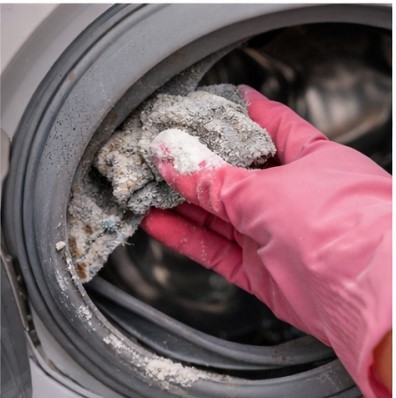
On a front loader, gently pull back each fold and remove lint, hair and small objects. Wipe with a damp cloth and mild soap, then wipe again with clean water and dry.
- Do not scrape rubber with a blade or stiff brush.
- Do not soak the seal in vinegar or acid unless the manual permits it.
- If mold is deep in cracked or permanently stained rubber, replacement may be safer than repeated chemical treatment.
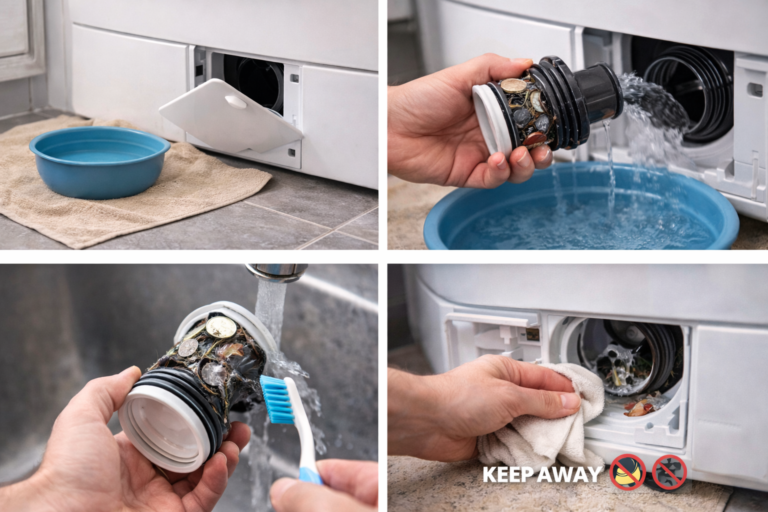
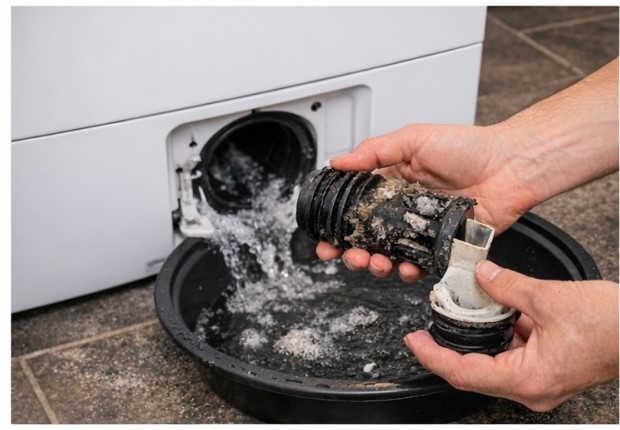
3. Clean the pump filter if your model has accessible service access
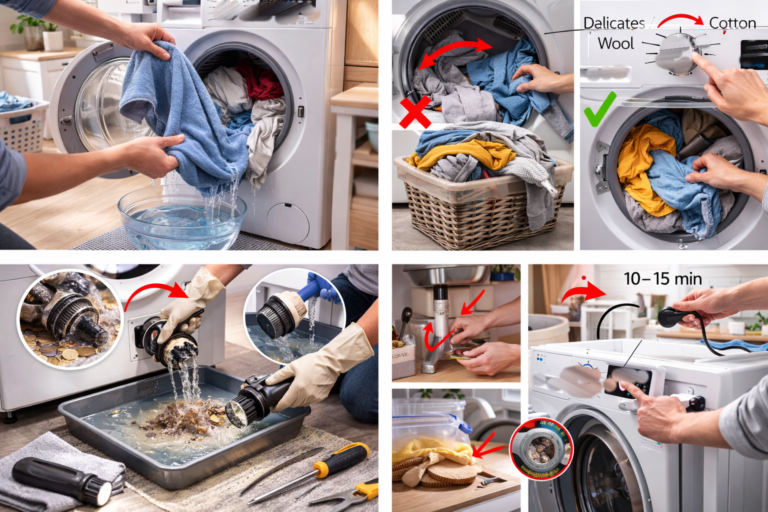
Some front loaders have a small drain hose and filter behind a lower flap; other models do not provide user access. Confirm the procedure first. Our washing-machine filter guide explains the common layout in more detail.
- Unplug the washer.
- Place a low container and towels under the opening.
- Drain through the small hose first, when present.
- Open the filter slowly, remove debris, rinse it and reinstall it firmly without overtightening.
4. Wipe the drum, door and accessible surfaces
Use a soft damp cloth to remove hair and visible residue. Keep excess water away from controls and electrical openings. Clean the outside with the method specified for its finish; abrasive pads can scratch coated surfaces.
5. Run the manufacturer’s maintenance cycle
With the drum empty, select the dedicated Drum Clean, Tub Clean, Self Clean or Clean Washer program. Some machines need no added cleaner; others specify a washer-cleaner tablet, approved descaler or a measured bleach dose. Use only the option listed for your model and never add detergent or a second chemical unless instructed.
- Do not interrupt the cycle unless necessary.
- If residue remains, run the rinse step recommended in the manual.
- A hot ordinary wash is not automatically equivalent to a dedicated maintenance program.
6. Dry and ventilate
When the cycle ends, wipe the door and gasket, remove any residue, and leave the door and dispenser slightly open when it is safe to do so. Promptly remove wet laundry after future washes so moisture does not remain trapped.
Citric acid, vinegar, baking soda and bleach: what is actually safe?
Household ingredients are often presented as interchangeable. They are not. Limescale, soap residue and mold require different treatments, and the same substance may be allowed by one manufacturer but prohibited by another.
Citric acid and descalers
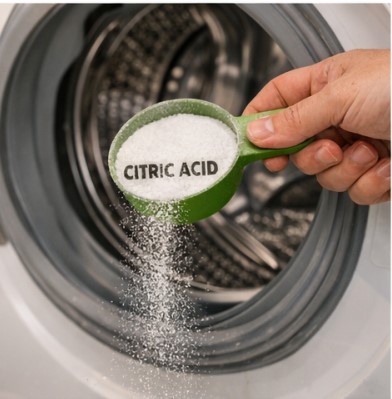
An approved descaler may contain citric acid, but its concentration and additives are designed for a stated appliance and dose. That does not make pantry citric acid universally safe. Bosch, for example, warns that household citric acid or vinegar can degrade rubber parts. If the manual does not authorize a DIY dose, use the recommended descaler instead.
Vinegar and baking soda
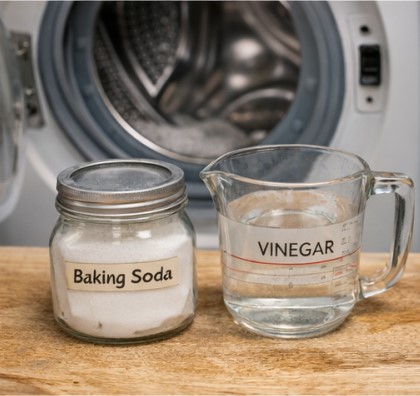
Vinegar can attack some seals and finishes. Baking soda and vinegar also react with each other, so the visible fizz is not proof of stronger cleaning. Do not pour both into the machine as a default recipe, and never use either alongside chlorine bleach.
| Product | Use only when | Avoid |
|---|---|---|
| Approved washer cleaner | The label and appliance manual match | Extra detergent or a second cleaner |
| Approved descaler | Hard-water scale is likely and the manual allows it | Guessing the dose or frequency |
| Citric acid or vinegar | The exact model instructions explicitly permit it | Routine use based on a generic online recipe |
| Chlorine bleach | The manual specifies the compartment, type and dose | Mixing with acids, vinegar, ammonia or cleaners |
A practical maintenance schedule
- After each wash: remove laundry promptly, wipe standing water and ventilate the drum.
- Regularly: rinse the drawer and inspect the gasket; increase frequency if softener or liquid detergent leaves residue.
- When prompted or at the manual’s interval: run the dedicated maintenance cycle.
- Every few months or as needed: clean an accessible pump filter according to the manual.
- In hard-water areas: descale only at the interval and with the product approved for the model.
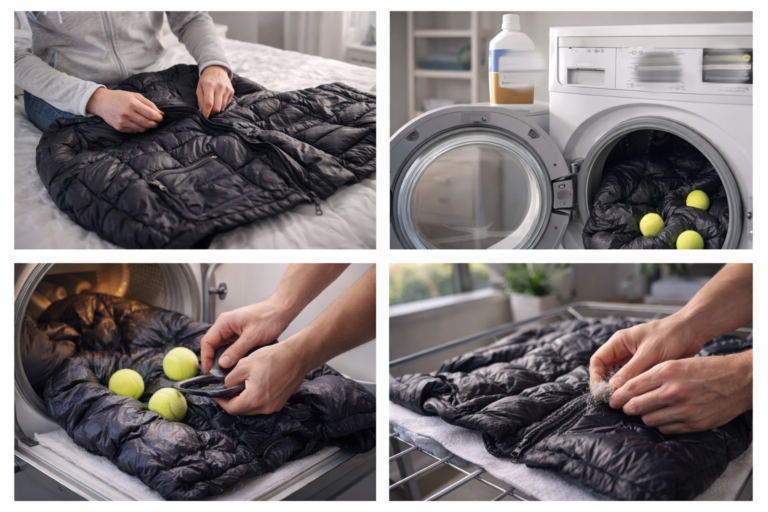
- Measure detergent for the load, water hardness and machine type. Our guides to washing white clothes and washing a down jacket explain why load-specific settings matter.
When cleaning is not enough
- Stop and arrange service for a burning smell, sparking, repeated electrical errors or a leak from inside the cabinet.
- If water still does not drain after the accessible filter is clear, check our guide to a washer that will not spin, then consult the manual or a technician.
- A recurring odor after two correctly completed maintenance cycles can indicate a drain, hose or inaccessible-tub problem.
- A door seal that is cracked, leaking or deeply contaminated may need replacement.
- Do not dismantle the heater, pump or outer tub as part of routine home cleaning.
Frequently asked questions
Can I clean my washing machine with vinegar?
Only if the manual for the exact model permits vinegar and specifies how to use it. Some manufacturers warn that repeated acid exposure can damage rubber parts.
Can I use citric acid to remove limescale?
Use it only when the appliance instructions authorize it. An approved descaler that contains citric acid is not the same as an arbitrary pantry dose.
Should I mix baking soda and vinegar?
No. Their reaction neutralizes much of the acidity and alkalinity. Use only one manual-approved product for the intended task, and never combine either with bleach.
How often should I run a cleaning cycle?
Follow the machine’s reminder and manual. Usage, detergent, water hardness and washer design matter more than a universal monthly rule.
Is the process the same for top loaders?
No. A top loader may have different filters, dispensers and a different Tub Clean process. Use the steps that match its model.
Sources and further reading
- Whirlpool: removing odors and running the Clean Washer cycle
- Whirlpool: cleaning an accessible drain-pump filter
- Samsung: using Self Clean and handling mold odors
- Bosch: why household citric acid or vinegar may damage seals
- CDC: never mix bleach with other cleaners
Related guides