Home cleaning, organization and lifestyle tips
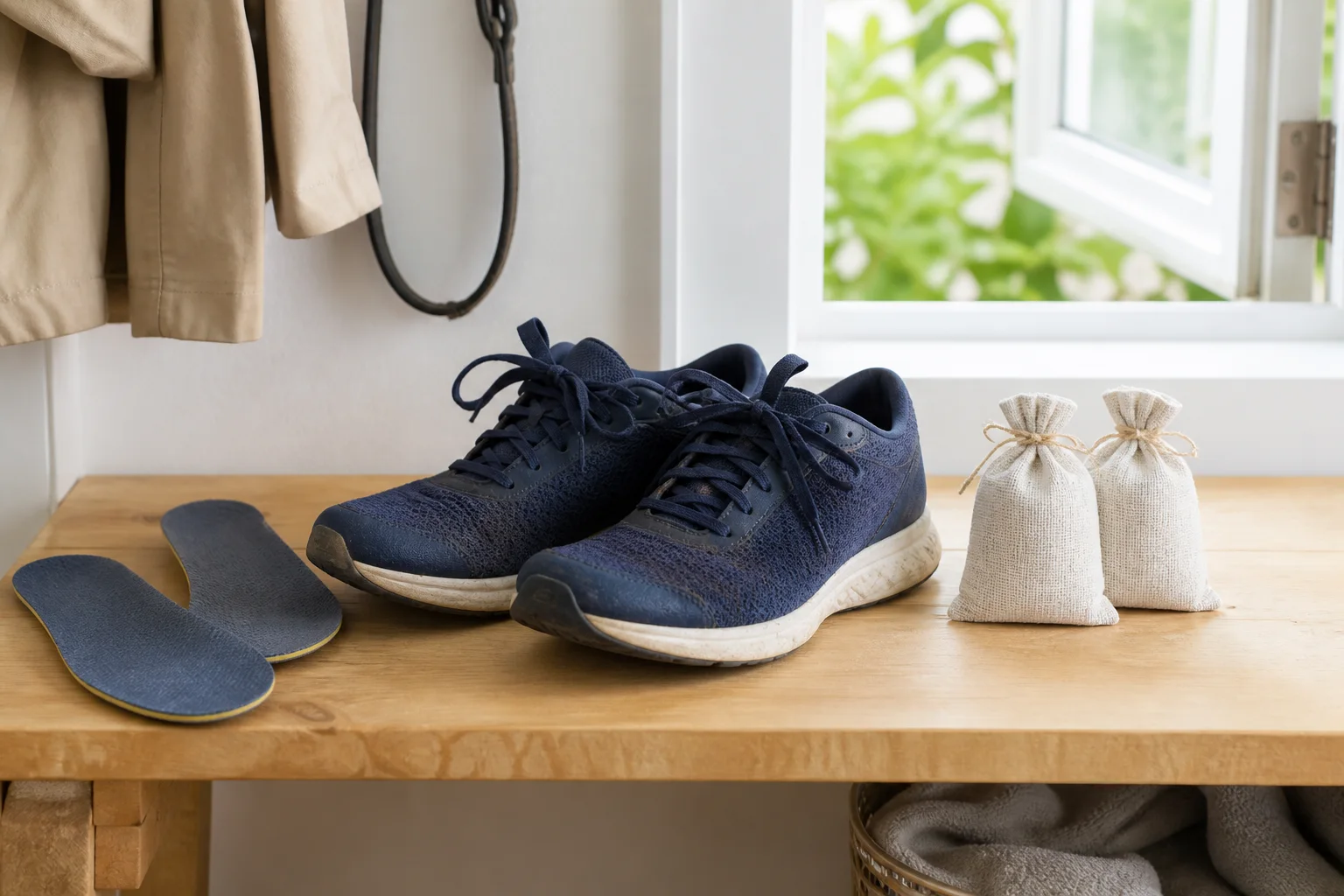

Short answer: remove the insoles, open the shoes as widely as possible and let everything dry at room temperature. For a mild smell, place baking soda in tied cloth sachets or use sealed activated-charcoal deodorizer bags overnight. If odor returns quickly, clean washable insoles with a mild solution approved for the material and deal with the moisture on your feet. Freezing can pause microbial growth, but it does not reliably disinfect shoes.
Shoe odor is usually a moisture problem before it is a fragrance problem. Masking it with perfume creates a stronger mixed smell; drying and removing the residue that microbes feed on addresses the cause. The steps below work for many fabric trainers, but the care label or manufacturer instructions always take priority for leather, suede, nubuck, waterproof membranes and glued footwear.
Why shoes start to smell
Fresh sweat has little odor. The familiar smell develops when sweat and skin debris remain in a warm shoe and bacteria break them down. Fungi can also contribute, especially when feet stay damp. The NHS lists sweat, bacteria and fungal infections such as athlete’s foot among the main causes of smelly feet.
- Moisture stays trapped: thick padding and closed uppers dry slowly.
- The same pair is worn every day: the lining never gets a full drying period.
- Insoles hold residue: foam absorbs sweat and is often the strongest-smelling part.
- Socks remain damp: non-wicking or unchanged socks move more moisture into the shoe.
Before you start: check the material
Look for a care label and, if possible, the manufacturer’s cleaning instructions. A method that is fine for a mesh sneaker can stain suede, dry leather, damage a waterproof finish or weaken adhesive. Test any damp-cleaning method on a hidden area and stop if color transfers, the surface changes texture or the glue line softens.
What you need
- A clean dry cloth and a soft brush.
- Old cotton socks or washable cloth pouches.
- Baking soda, optional, kept inside a closed sachet.
- Sealed activated-charcoal shoe deodorizers, optional.
- Mild soap and lukewarm water for washable removable insoles.
- A towel and a well-ventilated place away from direct heat.
Start with a 10-minute dry-out reset
- Untie the laces, pull the tongue forward and remove removable insoles.
- Brush out dry grit and wipe visible residue with a dry cloth.
- Blot damp lining with a towel; do not rub delicate finishes.
- Leave shoes and insoles separately in moving air until completely dry. Do not put them on a radiator or use a hot dryer.
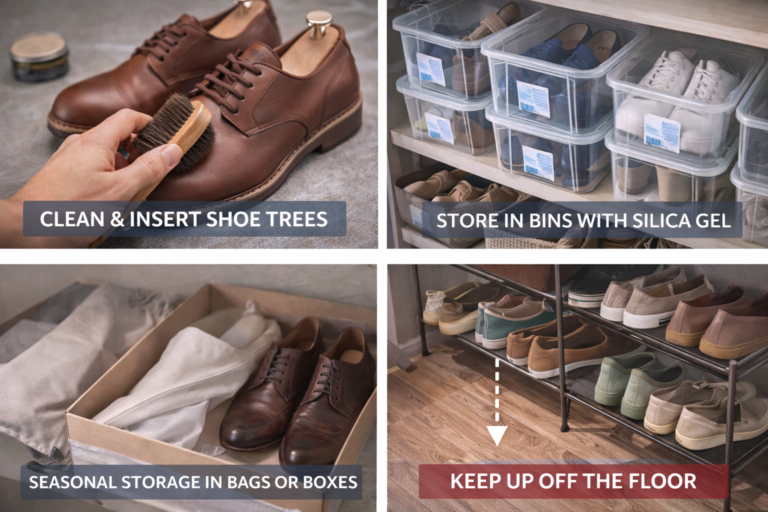
Often this step makes the biggest difference. For a durable routine, rotate pairs and follow the same dry-before-storage principle described in our guide to storing shoes properly.
Method 1: baking soda in a sachet
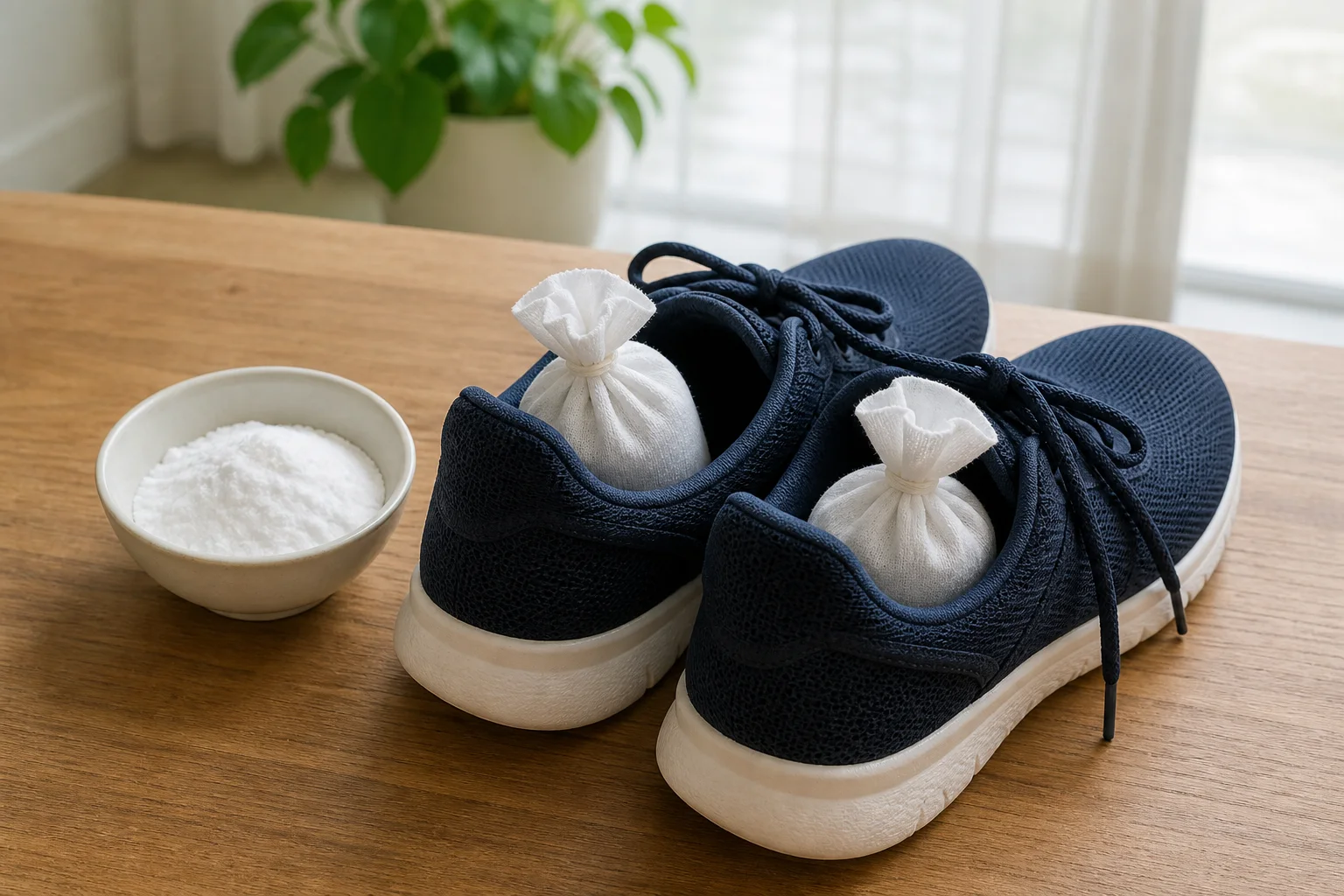
Baking soda can help absorb moisture and reduce odor, but it is not a disinfectant and it will not treat athlete’s foot. The low-mess approach is to put 1–2 tablespoons in each clean sock or pouch, tie it securely and place one sachet in each fully dry shoe for 8–12 hours.
- Use dry sachets only; damp powder clumps and is hard to remove.
- Do not pour powder directly onto suede, leather, dark fabric or a bonded insole.
- Keep the sachets away from children and pets, and replace the contents when they cake or stop helping.
Method 2: sealed activated-charcoal bags
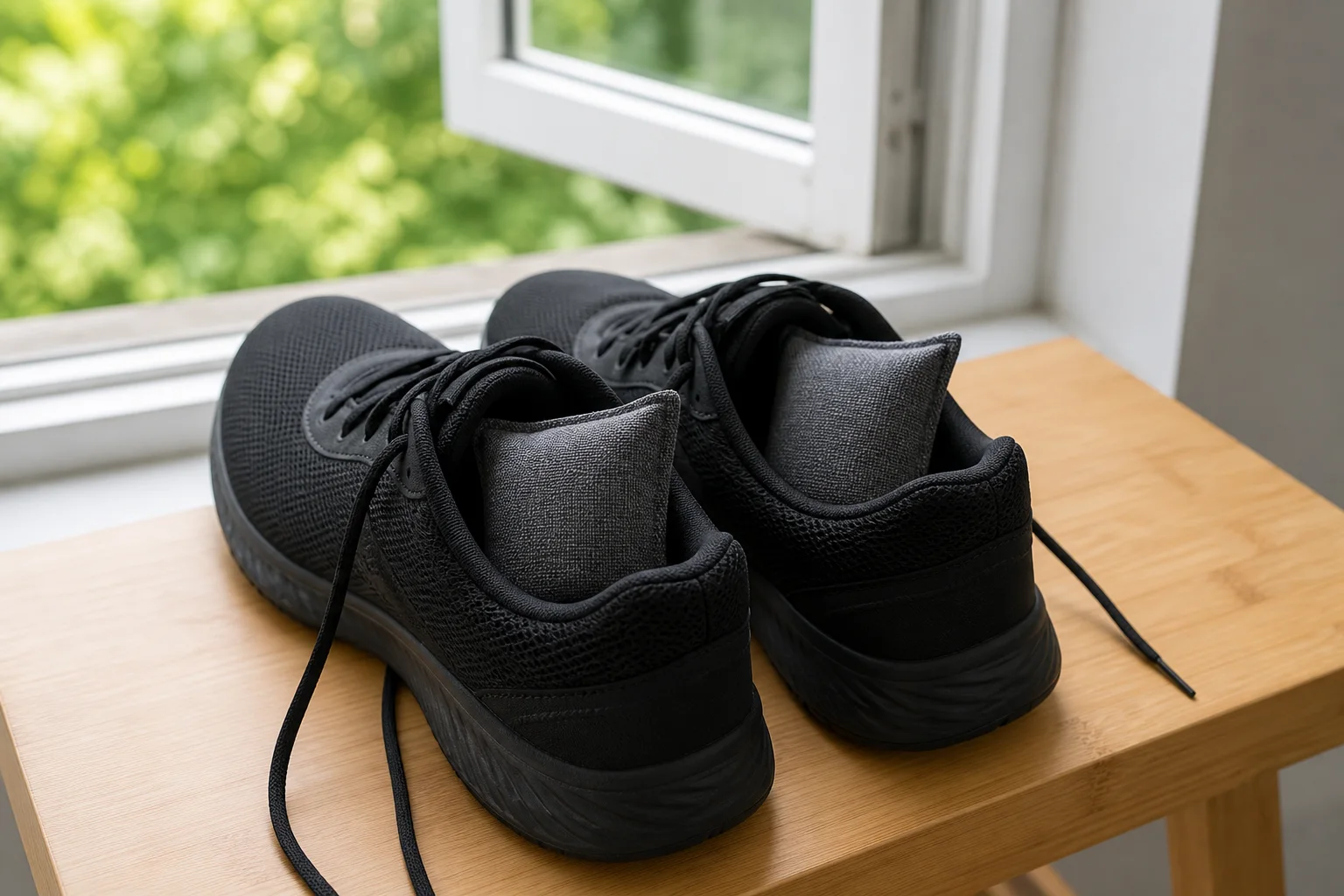
Activated carbon has a highly porous surface that adsorbs many odor-causing compounds. It does not kill bacteria, so use it after the shoes are dry, not as a substitute for cleaning. Place one intact, purpose-made pouch in each shoe and follow its replacement or reactivation instructions.
Do not crush charcoal tablets or pour loose carbon into footwear. Black dust is difficult to remove and may stain light linings. A worn or leaking pouch should be discarded according to its label.
Method 3: clean removable insoles
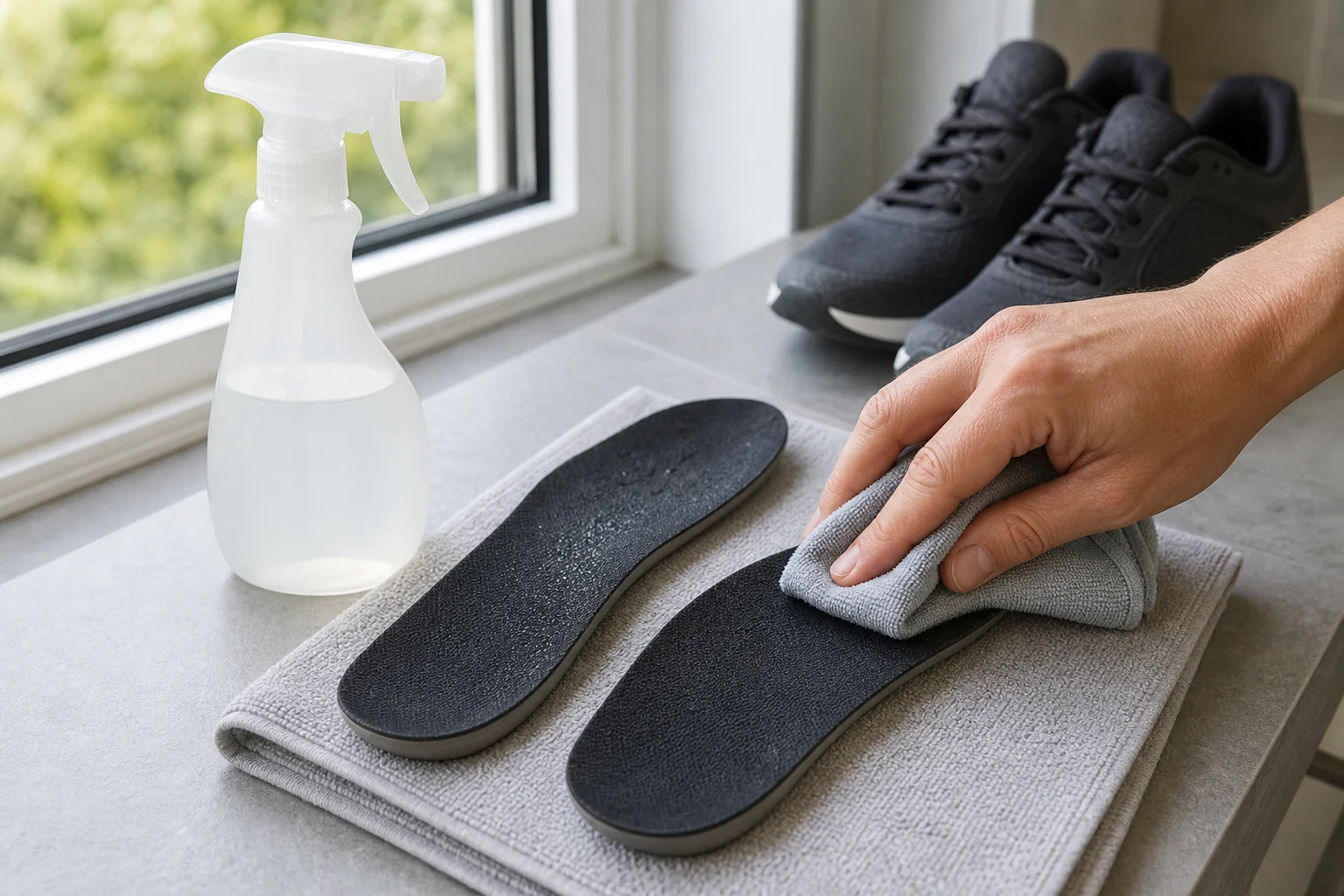
If odor returns after drying, the insoles are the first part to inspect. Nike’s general sneaker-care guidance recommends removing washable insoles, cleaning them with a mild solution and letting them air-dry completely. Your own brand’s instructions may differ.
- Mix a few drops of mild soap into lukewarm water.
- Dampen a cloth or soft brush; do not soak foam unless the care instructions allow it.
- Clean both sides gently, then wipe away soap with a second damp cloth.
- Press in a towel and air-dry flat. Reinsert only when the core is dry, not merely the surface.
Replace insoles that remain sour-smelling after careful washing, are compressed, cracked or separating into layers. Machine-wash the whole shoe only when its label allows it. If you also need to refresh the appliance, use our separate instructions for cleaning a washing machine safely.
Does the freezer method work?
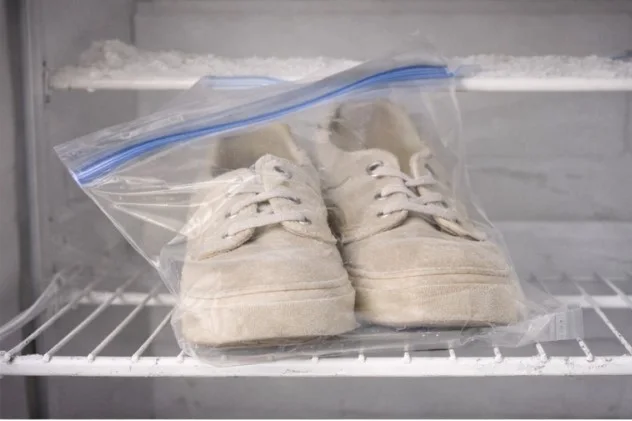
Do not rely on freezing to sanitize shoes. USDA guidance explains that freezing inactivates many microbes rather than destroying them; after thawing, they can become active again. Cold can also affect adhesives, patent finishes and some foams. Drying and material-appropriate cleaning are more dependable first choices.
If you still try freezing sturdy fabric shoes, first check the manufacturer’s advice, seal the dry pair in a clean bag away from food, and let them return to room temperature and dry fully before wear. Never present this as a treatment for a skin infection.
What about vinegar or rubbing alcohol?
Neither is a universal shoe cleaner. Acids can affect dyes and finishes; alcohol can dry leather, mark suede, harden some rubber and weaken certain cements. Alcohol is also flammable. Use a branded shoe-care product or a mild soap method approved for the material instead. If a manufacturer explicitly permits vinegar or alcohol, follow its dilution and application directions, ventilate the room, keep away from flames and test first.
Never mix household cleaners. In particular, do not combine bleach with vinegar, ammonia, alcohol or another product. Do not spray deodorizer onto irritated skin or inside a shoe immediately before wearing it.
Stop the odor from returning
- Wash and dry feet daily, including between the toes.
- Change socks every day and again after exercise; choose a moisture-wicking pair that suits you.
- Alternate shoes so each pair has roughly 24 hours to dry when possible.
- Air shoes before putting them in a closed cabinet or gym bag.
- Clean or replace removable insoles when odor persists.
- Use foot powder or antiperspirant only as directed; ask a pharmacist if sweating is excessive.
Odor control works best as part of the wider cleaning routine. You can also learn how to remove refrigerator odors without masking them and how to keep an apartment smelling fresh without overusing fragrance.
When shoe odor may need medical advice
A musty smell with itching, burning, peeling, cracking, white damp skin between the toes or a persistent rash can point to athlete’s foot. Strong odor that does not improve with self-care may also be linked to excessive sweating. Ask a pharmacist, podiatrist or clinician rather than repeatedly treating the shoes while ignoring the feet. People with diabetes, poor circulation or reduced immunity should seek individual medical guidance sooner.
Common mistakes to avoid
- Masking damp shoes with perfume or essential oil.
- Wearing the pair before the insole and lining are fully dry.
- Using a hair dryer, tumble dryer, radiator or direct sun on heat-sensitive materials.
- Saturating foam, leather, suede, electronics or light-up shoes.
- Using loose charcoal, thick powder or an untested solvent inside the lining.
- Assuming odor proves a shoe is disinfected or that a freezer has killed fungi.
Quick method comparison
| Method | Best use | Time | Main limitation |
|---|---|---|---|
| Air-dry with insoles removed | First step for any compatible shoe | Until completely dry | Needs airflow and time |
| Baking soda sachet | Mild odor in dry fabric shoes | 8–12 hours | Does not disinfect or treat fungus |
| Sealed charcoal pouch | Recurring odor after drying | Overnight or per label | Adsorbs odor; does not clean |
| Mild cleaning of insoles | Residue held in washable inserts | Cleaning plus full drying | Not suitable for every foam or finish |
| Freezer | Not a preferred method | Overnight plus thawing | Unreliable disinfection; material risk |
Frequently asked questions
Can I put baking soda directly in shoes?
It may be acceptable for some washable fabric shoes, but a tied sock or pouch is safer and much easier to remove. Avoid direct powder on suede, leather, dark linings and damp foam.
How long should shoes air out?
Until the lining and the center of the insole are fully dry. That may take several hours or a full day depending on padding, humidity and airflow. Do not judge only by the outer surface.
Can I wash sneakers in a washing machine?
Only when the care label allows it. Machine agitation can damage leather, suede, glued parts and structured foam. Hand cleaning is the safer default for unknown materials.
Why does the smell return after one day?
The insole may still be damp or contaminated, the shoes may be worn before drying, or the source may be sweaty feet or a fungal infection. Address both footwear and foot care.
Should I use a shoe disinfectant spray?
Use only a product labeled for your shoe material and follow its directions, contact time and ventilation warnings. Deodorizing and disinfecting are different claims.
Conclusion
For most everyday shoe odor, begin with complete drying, clean removable insoles and a low-mess absorber such as a baking soda sachet or sealed charcoal pouch. Skip heat, heavy soaking and the promise that freezing “kills everything.” If the odor comes with skin symptoms or keeps returning, treat the underlying foot problem with professional advice.
Sources and further reading
- NHS: Smelly feet.
- American Academy of Dermatology: How to prevent athlete’s foot.
- American Academy of Dermatology: Hyperhidrosis self-care.
- USDA: Freezing and food safety.
- Nike: How to clean shoes and insoles.
Related guides