Home cleaning, organization and lifestyle tips

You forgot to take meat out of the freezer, and you need to cook in an hour. Sound familiar? I once thawed chicken in hot water because I was in a huge rush. The chicken thawed, but it turned out rubbery and gross. And the worst part? I later learned it’s actually dangerous.
The good news? There are three safe ways to thaw meat that keep it both tasty and safe. The bad news? The fastest method isn’t always the best.
Why thawing the right way matters
| Problem | What happens |
|---|---|
| Bacteria growth | Left at room temperature, bacteria can multiply quickly and make meat unsafe. |
| Loss of juices | Wrong thawing pulls moisture out, so meat ends up dry. |
| Uneven thawing | The outside may warm up while the inside is still frozen, which makes cooking less safe. |
What you’ll need
| Method | Tools |
|---|---|
| Fridge thawing | Container or plate, plastic wrap |
| Cold water thawing | Leak-proof bag, cold water |
| Microwave thawing | Microwave with defrost setting |
Step-by-step guide
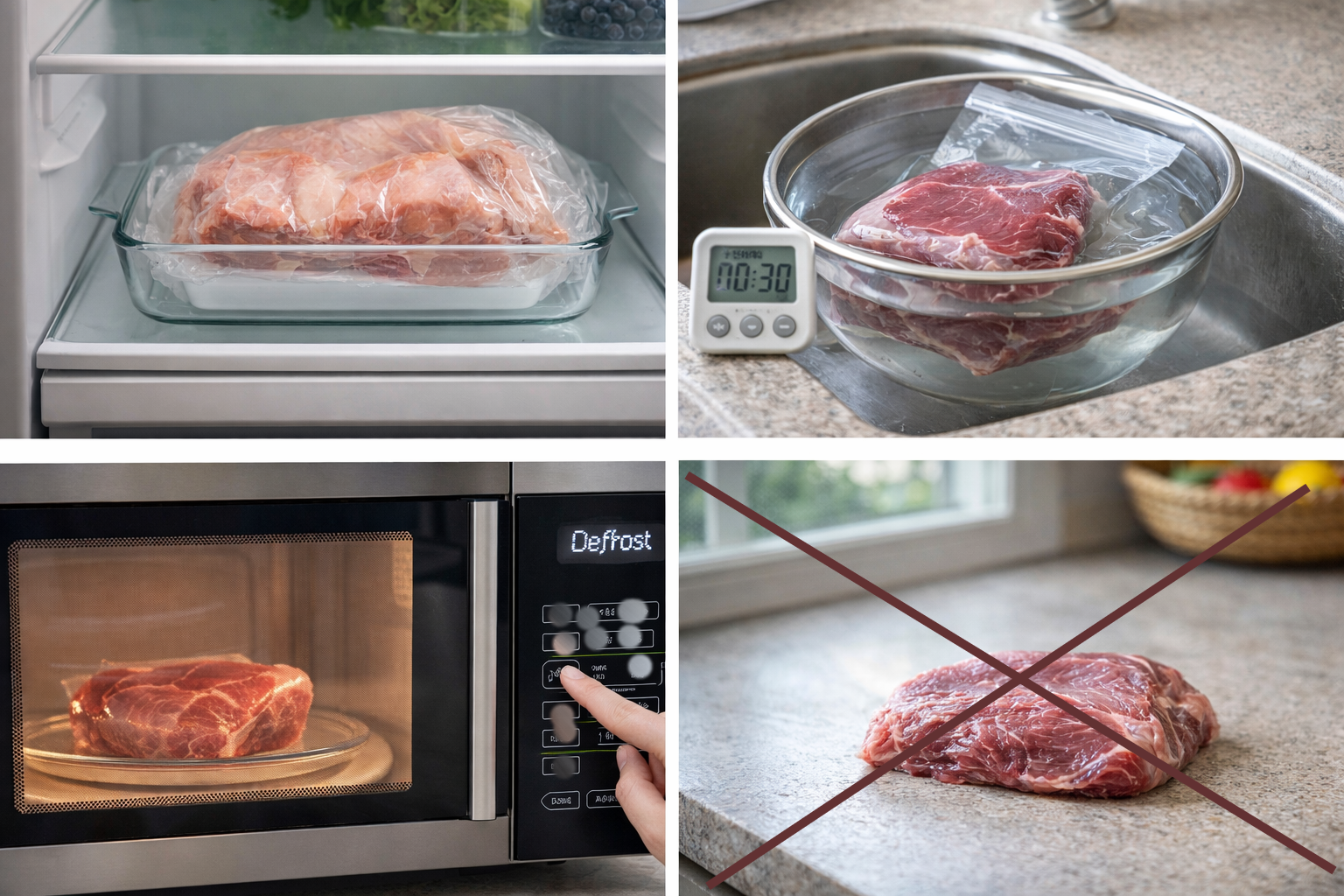
Method 1. Fridge thawing: the safest and best method
This method takes time, but it keeps the meat cold, safe, and juicy.
- Take the meat out of the freezer.
- Keep it in its packaging, or place it in a container to catch any drips.
- Put it on the bottom shelf of the fridge.
- Allow 12-24 hours, depending on the size of the cut.
Small cuts, such as chicken breasts or steaks, usually need about 12 hours. Larger cuts, such as a whole chicken or big roast, may need 24 hours or more.
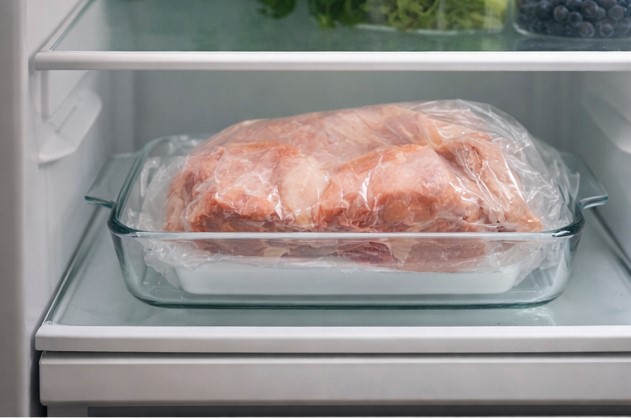
Once thawed, you can keep the meat in the fridge for another 1-2 days before cooking.
Pros: Safest method, meat stays juicy. Cons: You need to plan ahead.
Method 2. Cold water thawing: fast and safe
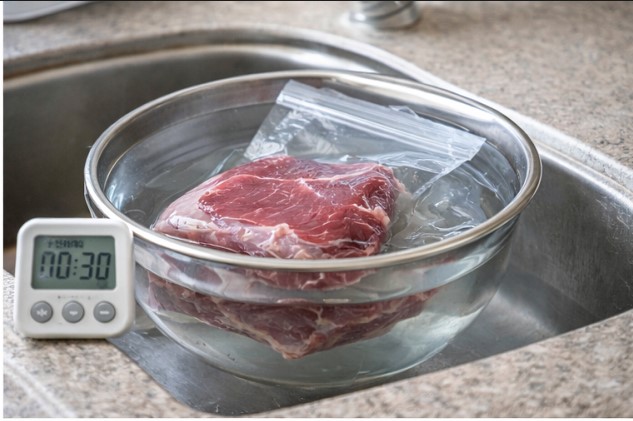
Forgot to take the meat out in advance? This method can save dinner, as long as the water stays cold.
- Seal the meat in a leak-proof bag. Make sure no water can get in.
- Fill a large bowl with cold water.
- Submerge the bag completely.
- Change the water every 30 minutes to keep it cold.
Small cuts usually thaw in 1-2 hours. Larger cuts may need 2-3 hours. Cook the meat immediately after thawing.
Pros: Faster than the fridge and still safe if you change the water. Cons: You have to keep an eye on it.
Method 3. Microwave thawing: emergency only
Use the microwave only when you’re in a real rush. It works quickly, but some parts of the meat may start cooking before the center is thawed.
- Remove the meat from its packaging.
- Place it in a microwave-safe dish.
- Use the defrost setting, or set power to 20-30%.
- Flip or rotate the meat every 2-3 minutes.
- Cook it immediately after thawing.
Timing depends on the weight and the microwave, but a common estimate is 5-10 minutes per pound.
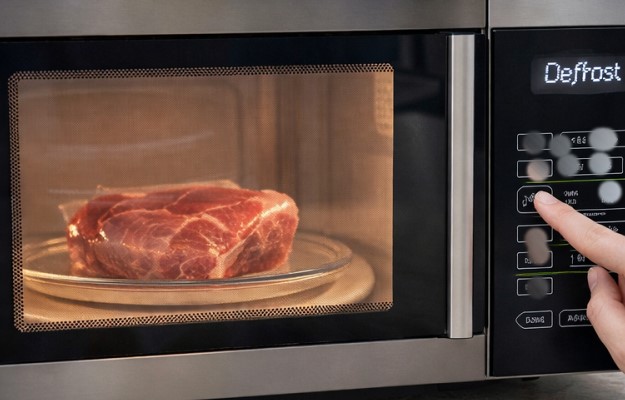
Pros: Very fast. Cons: Meat can partially cook, lose juices, and thaw unevenly, especially in large cuts.
Thawing time cheat sheet
| Weight | In fridge | In cold water | In microwave |
|---|---|---|---|
| 1 lb (500 g) | 12 hours | 1 hour | 5-7 minutes |
| 2 lb (1 kg) | 24 hours | 2-3 hours | 10-12 minutes |
| 4 lb (2 kg) | 36-48 hours | 3-4 hours | Not recommended |
What not to do
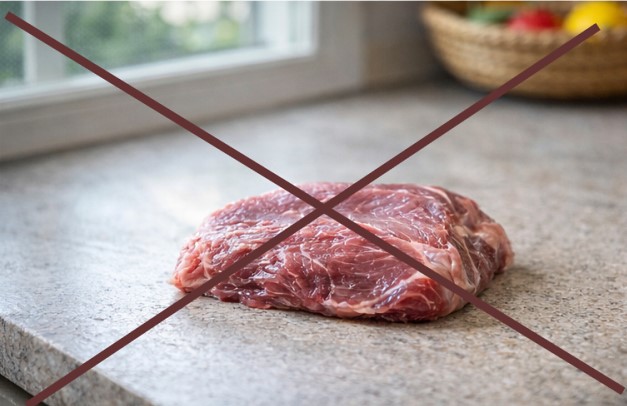
- Never thaw meat at room temperature. If it sits on the counter, the outside can enter the danger zone while the inside is still frozen.
- Don’t use hot water. The outside may start cooking while the inside stays frozen.
- Don’t refreeze raw thawed meat unless it was thawed safely in the fridge. For best quality and safety, cook it first, then refreeze the cooked meat if needed.
- Don’t keep thawed raw meat in the fridge for too long. Most thawed meat should be cooked within 1-2 days.
- Don’t wash meat before thawing. Splashing water can spread bacteria around the kitchen.
Prevention tips
- Plan ahead. Move meat from the freezer to the fridge the night before.
- Freeze in portions. Divide large cuts into smaller pieces before freezing.
- Label your packages. Write the date and weight on each one.
- Use vacuum-sealed bags. They help protect quality and reduce freezer burn.
How to tell if meat is thawed
- It feels soft but still cold.
- There are no ice crystals inside.
- When you press it gently, it gives instead of feeling rock-hard.
Can you cook meat without thawing?
Yes. Many dishes work fine straight from frozen, especially when the meat has time to heat through evenly.
- Soups and stews
- Braised dishes
- Burgers or meatballs, if they are already formed
- Oven-baked dishes with extra cooking time
Pan-frying frozen meat is not recommended. The outside can burn before the inside cooks through.
The bottom line
The golden rules of safe thawing are simple: use the fridge when you can, use cold water when you need a faster method, and use the microwave only in an emergency. Never leave meat on the counter. It is not worth the risk.
Tested in my own kitchen: since I stopped rushing, my meat comes out juicier, safer, and much easier to cook well.
How do you thaw meat? Ever had a thawing disaster? Share in the comments.
Related guides