Home cleaning, organization and lifestyle tips
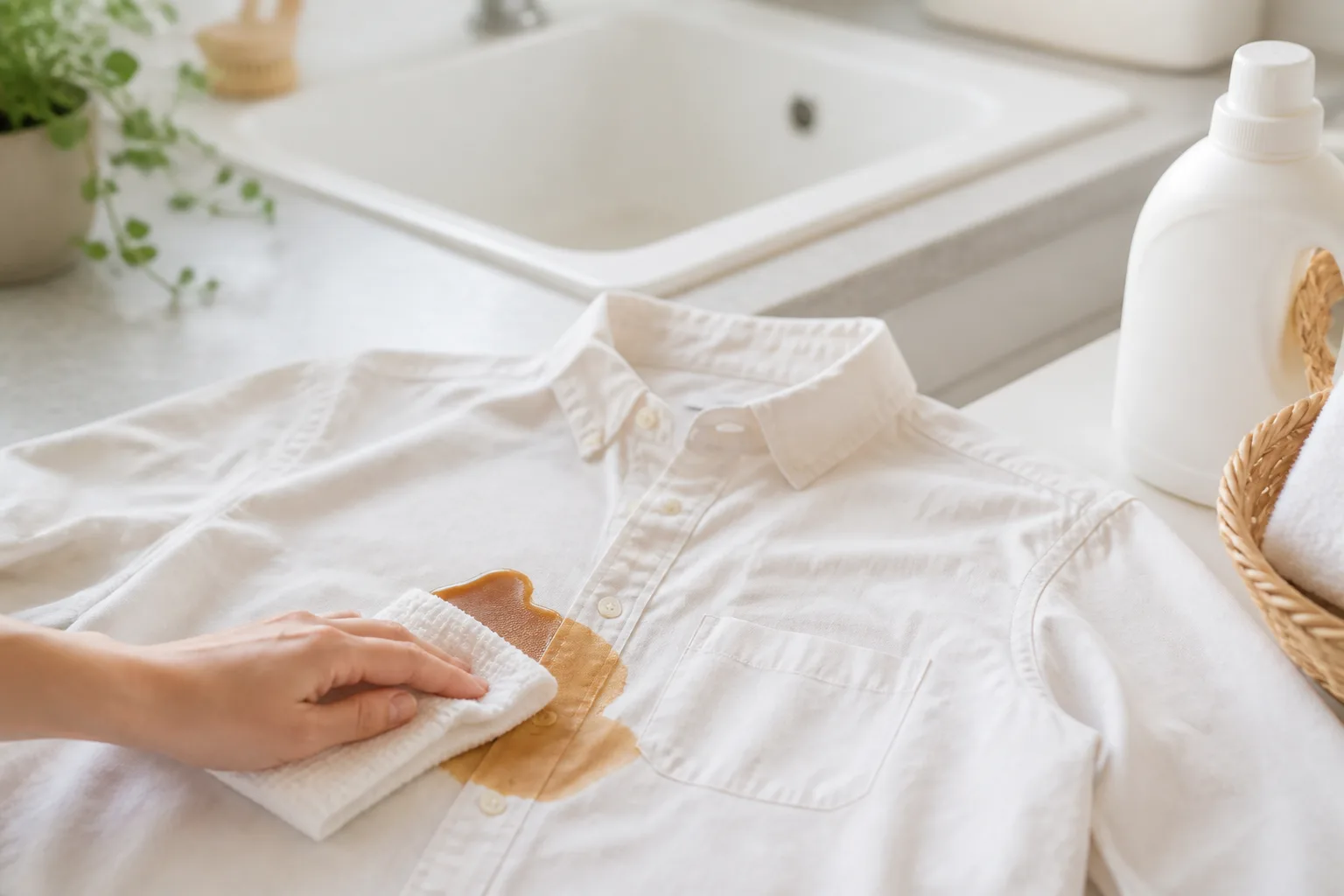

A coffee spill is easier to remove when you treat it promptly, but the right method depends on the care label, the fabric and whether the drink contained milk or cream. For most washable clothes, start with cool water, a suitable laundry detergent and a wash cycle that the garment label allows.
This guide avoids improvised chemical mixes. It explains what to do for a fresh or dried coffee stain, when to use an oxygen bleach and when a valuable garment should go to a professional cleaner.
Start with the garment label and the spill type
| Situation | Best first move | Avoid |
|---|---|---|
| Fresh stain on a washable item | Blot, then flush from the reverse side with cool water. | Rubbing or putting it straight into the dryer. |
| Coffee with milk or cream | Remove excess, rinse and use a laundry detergent or pre-treatment suitable for the fabric. | Assuming water alone will remove the oily residue. |
| Silk, wool, suede, leather or ‘dry clean only’ | Follow the label and contact a professional cleaner when in doubt. | Hot water, bleach or a home ‘recipe’. |
| Dried stain | Pre-treat or soak as the product and care labels allow, then wash and inspect. | Heat-drying before the mark has gone. |
Care labels are the decision point: they tell you the safest washing, bleaching and drying limits for that garment. Test any stain product on a hidden seam first, especially on coloured fabric.
Fresh coffee stain: a safe five-step response
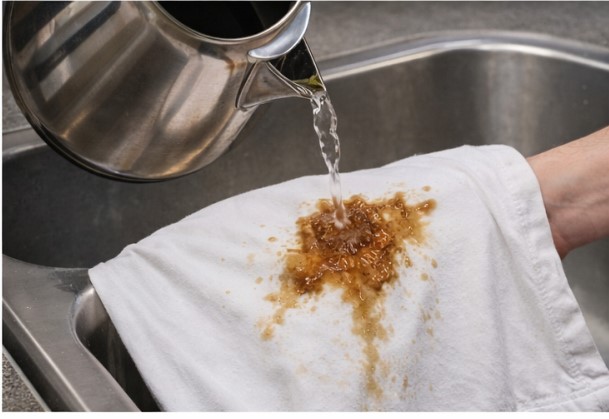
- Blot, do not scrub. Press a clean white cloth or paper towel onto the spill to lift liquid. Work from the outside toward the centre so the mark does not spread.
- Flush with cool water. For a washable garment, run cool water through the back of the stain. This pushes coffee out of the fibres instead of through them.
- Pre-treat. Apply a liquid laundry detergent or a fabric-safe pre-wash stain remover as its label directs. Coffee with milk, cream or sugar may need a detergent treatment rather than rinsing alone.
- Wash at the warmest setting the care label permits. Use the normal detergent dose and follow the product instructions.
- Inspect before drying. If the mark remains, repeat the pre-treatment and wash. Dryer heat can make a remaining stain much harder to remove.
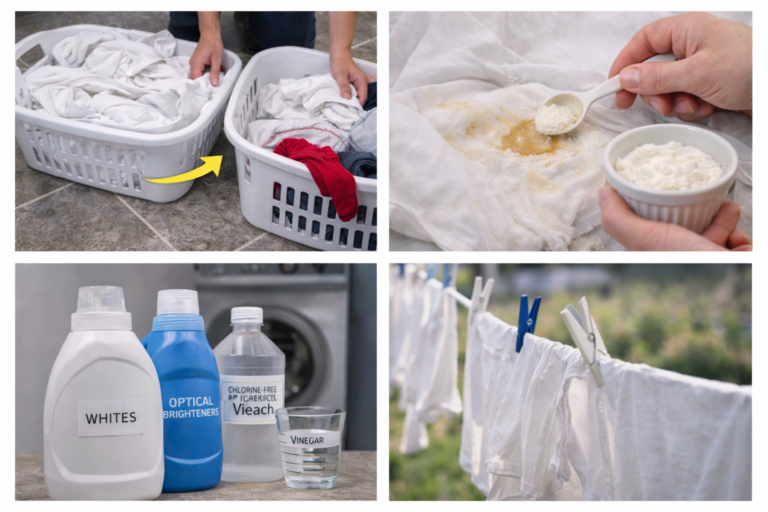
If the item is white, the white-clothes washing guide can help you choose a label-safe wash routine without damaging the fabric.
If the stain has dried
Dried coffee often needs more than one treatment. Re-wet the area with cool water, pre-treat with a laundry product suitable for the garment and leave it for the product’s stated contact time. Launder, inspect while the fabric is still wet and repeat if necessary. Patience is safer than increasing the concentration or combining cleaners.
Bleach, oxygen bleach and household mixtures
- Oxygen bleach: may help on a persistent stain when both the garment label and product label say it is safe. Follow the package dose and soak time exactly.
- Chlorine bleach: use only when the fabric-care label permits it and the bleach label gives a compatible method. It is not a default treatment for every white item.
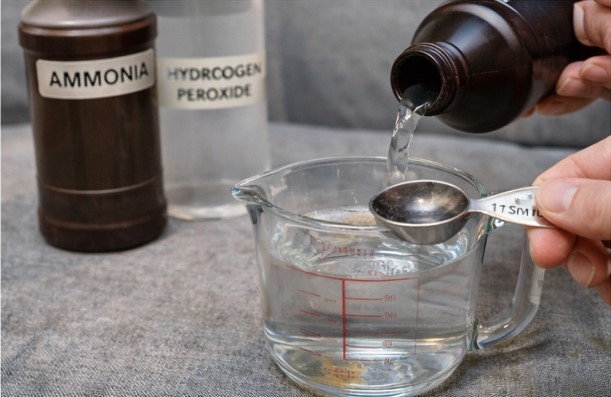
- Never mix cleaners. In particular, do not mix chlorine bleach with ammonia, vinegar, acids or other cleaning products. Use one method, rinse thoroughly and then decide whether another label-approved method is needed.
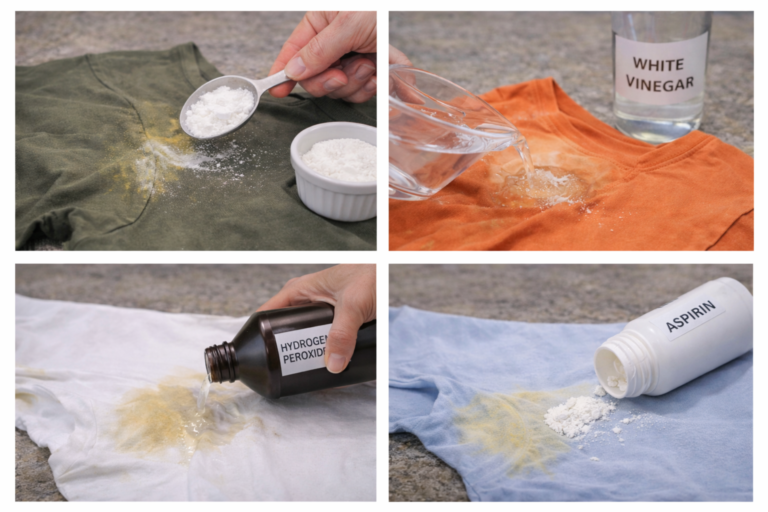
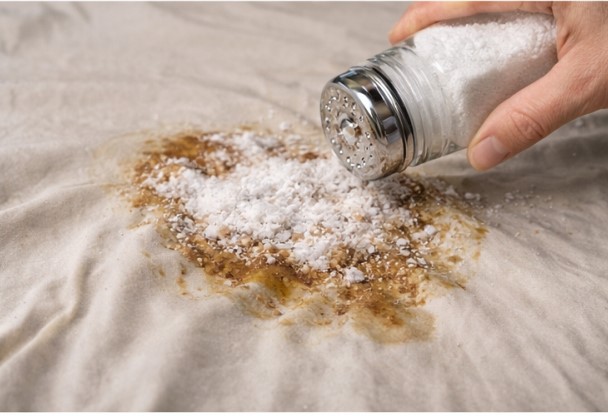
- Vinegar and baking soda: fizzing is not evidence that a mixture is right for every textile. Do not use a viral ‘one-size-fits-all’ recipe in place of the care label and a tested laundry product.
Coffee on a sofa, carpet or hard surface
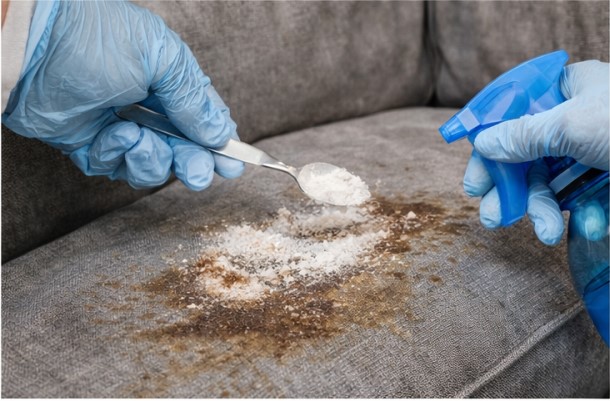
For upholstery and carpet, blot up as much liquid as possible with a clean white cloth. Check the manufacturer’s cleaning code before applying water or a product; excessive wetting can leave a ring or damage the backing. Use a cleaner approved for that surface, work in small amounts and blot rather than scrub. For a large spill, delicate upholstery or an old mark that keeps returning, professional cleaning is the safer choice.
On sealed hard surfaces, wipe the spill promptly with a damp cloth and a little mild detergent if needed, then wipe with clean water and dry. Do not let moisture sit on unfinished wood or stone.
Quick decision guide
| What you see | What to do now | What to check next |
|---|---|---|
| Fresh black coffee on washable cotton | Blot, cool-water flush, detergent pre-treatment. | Care label before washing. |
| Coffee with milk on a shirt | Blot, rinse from the back, use a suitable detergent pre-treatment. | Inspect before heat-drying. |
| Old mark on a coloured item | Test first, pre-treat and wash as the label allows. | Whether oxygen bleach is approved for the fabric. |
| Stain on a sofa or rug | Blot and consult the surface’s cleaning code. | Whether professional cleaning is recommended. |
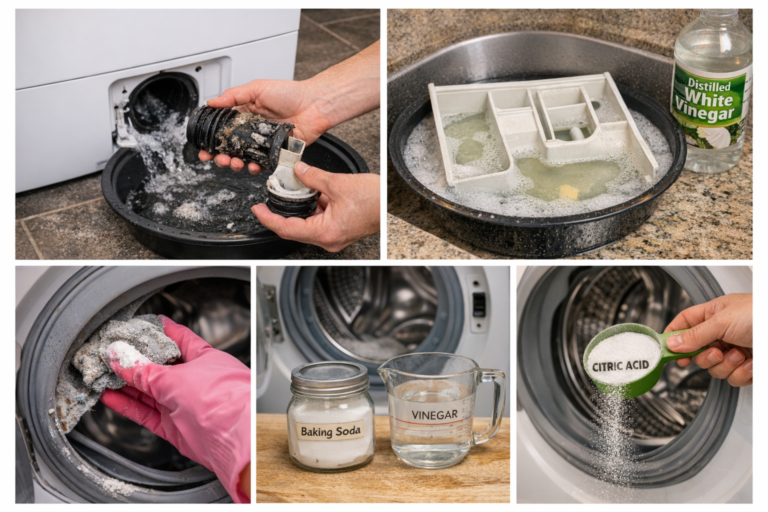
Keeping the washer clean also helps detergents perform as intended; see how to clean a washing machine safely. For another common laundry problem, read how to remove sweat stains.
FAQ
Should I use hot water on a coffee stain?
Start with cool water unless the garment label and a reliable product instruction specifically say otherwise. Hot water is not a universal solution and can be unsuitable for many fabrics.
Can I put the garment in the dryer after washing?
Only after checking that the stain is gone. If it is still visible, repeat the treatment first; drying can make the remaining mark more difficult to remove.
What changes when the coffee contains milk or cream?
Milk and cream add oily residue. Blot and rinse promptly, then use a laundry detergent or pre-treatment that is suitable for the fabric.
Is vinegar and baking soda safe for every fabric?
No. A household mixture is not a universal fabric-care method. Follow the care label, test in a hidden place and do not mix it with bleach or other cleaners.
When should I use a professional cleaner?
Choose a professional for dry-clean-only items, leather, suede, fragile silk or wool, valuable garments and stains that persist after label-approved treatment.
Sources and further reading
- American Cleaning Institute: Stain Removal Guide
- University of Georgia Extension: Coffee and Tea Stains
- Tide: How to Remove Coffee and Tea Stains
- FTC: Care Labeling Rule
- CDC: Cleaning and Disinfecting With Bleach
Related guides