Home cleaning, organization and lifestyle tips
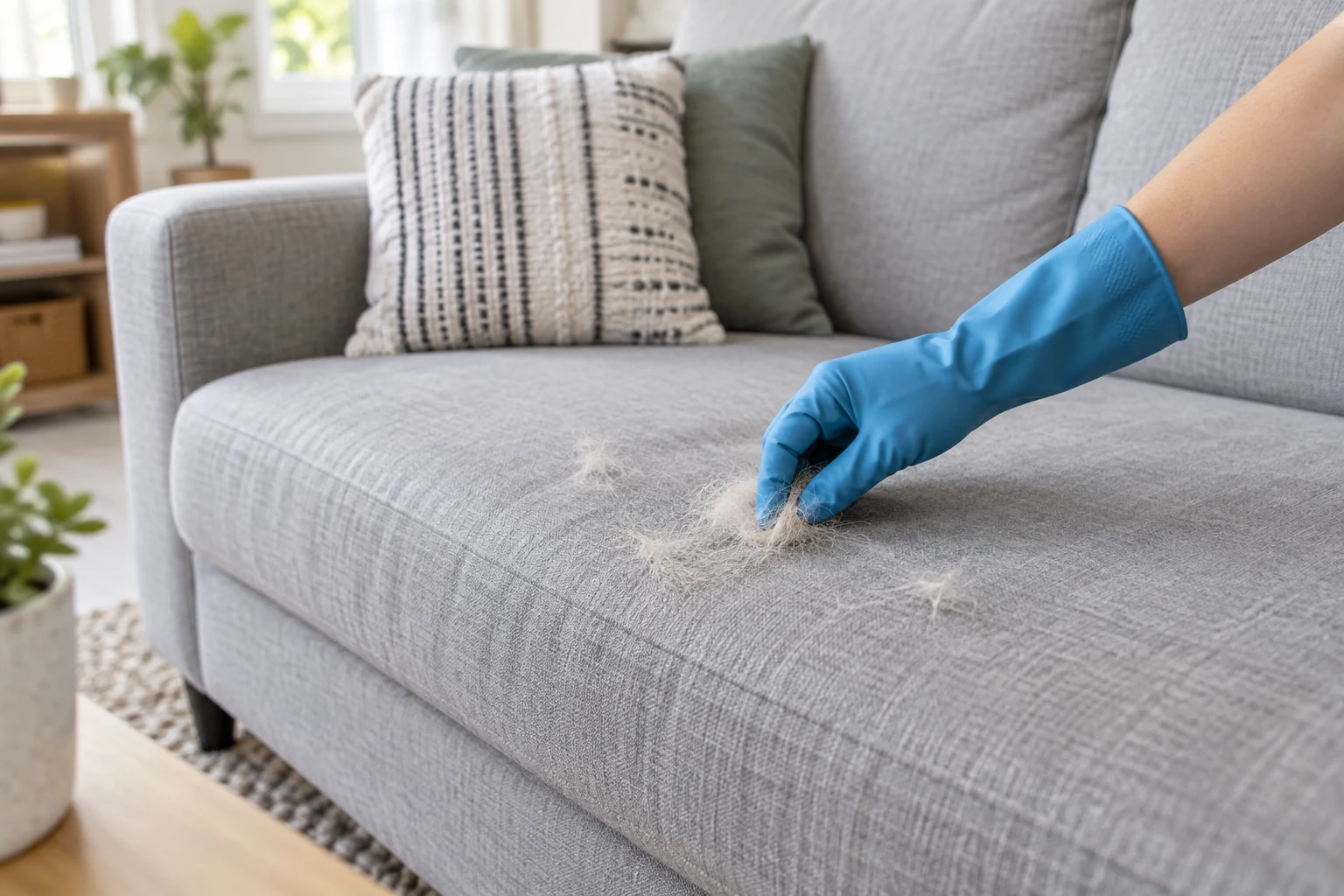

Quick answer: begin with the gentlest tool that suits the upholstery: a dry lint roller for a small patch, a barely damp rubber glove for durable woven fabric, or a vacuum upholstery attachment for seams and larger areas. Check the furniture care label first, work with a light touch, and stop if the fabric pills, transfers colour or becomes overly damp.
Pet hair is easiest to remove before it is pressed into the weave by people, paws and cushions. The goal is not to use one magic gadget; it is to match the tool to the fabric and to separate loose surface hair from hair caught in piping, tufting and crevices. This guide avoids harsh cleaners and gives each method a place in a repeatable routine.
Start with the upholstery care label
Look under a removable cushion or on the furniture tag for the manufacturer’s care code and instructions. A fabric marked for water-based cleaning may tolerate a barely damp cloth, while dry-clean-only or delicate materials need a dry method. Leather, suede, velvet, loose weave and performance fabrics each have their own limits. When the label is missing, use a dry tool first and test any moisture or product in a hidden spot.
Before cleaning, remove throws and cushions, open the room for light, and use your hand to locate seams where hair collects. Do not soak upholstery, scrub aggressively or use a stiff brush on a fragile pile. If you are also choosing a new machine, our our guide to choosing a vacuum cleaner explains the features worth comparing for a home.
1. Rubber glove for durable woven upholstery
A clean rubber dish glove can be very effective on a sturdy fabric sofa or chair because the slightly grippy surface gathers loose hair as you sweep in one direction. Put the glove on, dampen it very lightly and wring it out thoroughly. The glove should feel almost dry, never wet enough to leave the cushion damp.
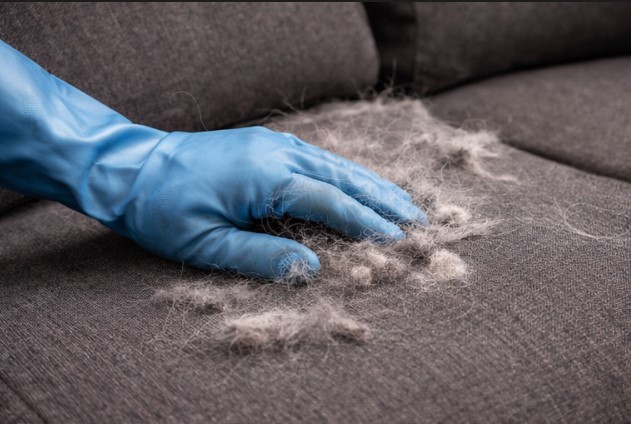
- Work one small panel at a time, from the top of the backrest down to the seat.
- Use long, light strokes or gentle circles; do not press hard enough to roughen the fabric.
- Pick up the clumps as they form and rinse the glove only when necessary.
- Allow the upholstery to air-dry completely before replacing cushions.
Skip this method on suede, silk, water-sensitive fabric or a surface that the maker says should stay dry. A dry rubber squeegee made for upholstery may be a safer alternative where water is not allowed.
2. Lint roller or tape for small areas
A lint roller is the cleanest option for a favourite chair, a narrow cushion edge or the last hairs left after vacuuming. Roll in straight overlapping passes and replace the sheet when it no longer lifts hair. Wide packing tape can work in a pinch: wrap a short length around your hand with the adhesive facing out, then press and lift rather than rubbing it across the fabric.
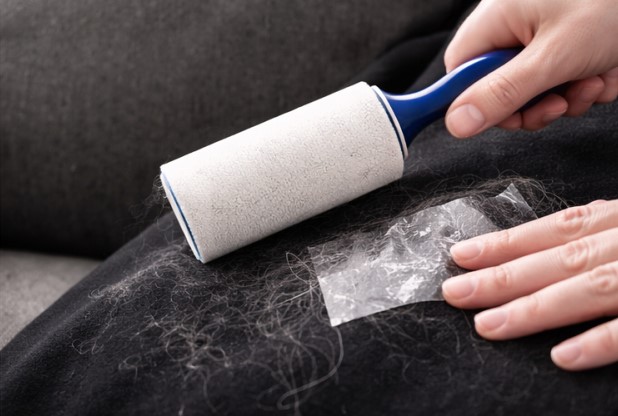
Use a fresh piece of tape for each section, and avoid strong tape on delicate, aged, loose or visibly fragile upholstery. It can pull fibres or leave adhesive behind. For washable covers, follow the label and remove loose hair before laundering; our our quick-cleaning guide includes a few practical habits that keep a cleanup from spreading through the whole room.
3. Vacuum seams and texture with the right attachment
For heavy shedding or a large sectional, vacuuming is the most efficient finishing step. Start with the upholstery nozzle or a clean motorized upholstery tool on the lowest setting the manufacturer permits. Use the crevice tool around seams, under cushion edges and beside buttons. A rotating brush can lift hair from some dense textiles, but it may snag loose threads or damage delicate pile, so test an inconspicuous area first.
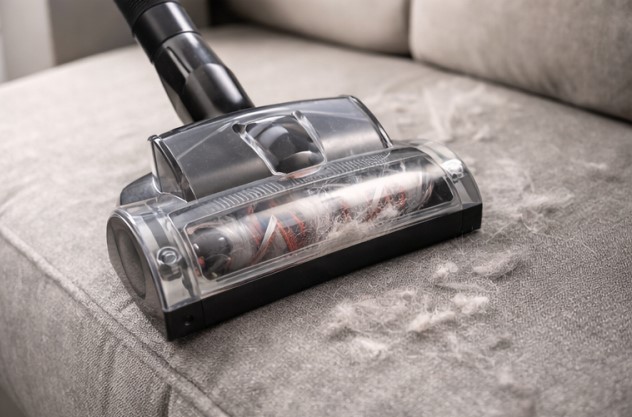
Move slowly in more than one direction and empty the bin or clear the tool when airflow drops. Do not use a dirty floor head on the sofa. If a cushion cover is removable and washable, vacuum it first, close zippers and follow its washing and drying instructions rather than assuming every cover can go in a machine.
4. Use a dry microfiber cloth on smooth surfaces
For smooth faux leather, sealed leather or a tightly woven surface, a dry microfiber cloth may collect loose hair without introducing moisture. Fold it into a clean face, make gentle passes, and shake it outside or vacuum it before continuing. Use leather cleaner or conditioner only when the furniture maker recommends it; household sprays and wet wipes can leave residue or change the finish.
5. Reduce static carefully, not with a homemade recipe
Static can make fine hair cling after a dry day, but fabric softener, perfume and general-purpose cleaners are not universal upholstery treatments. If static is a recurring issue, choose a fabric-care or antistatic product that explicitly names your material, follow its label and spot-test it where it will not show. Spray the cloth rather than saturating the furniture if the label allows, and keep the product away from pets until the surface is fully dry.
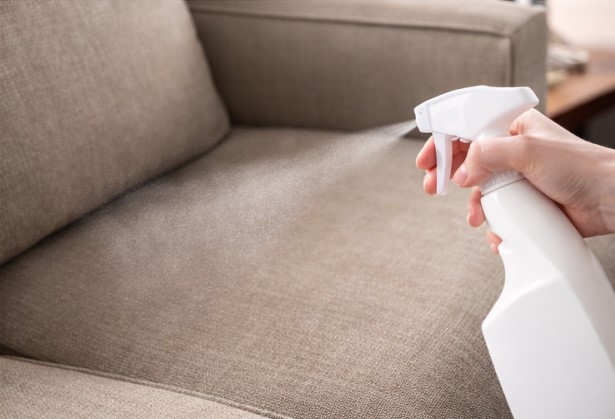
Ventilate the room and avoid aerosol products near flames, heaters or a pet’s face. A washable throw in a high-use pet spot is often a simpler preventive choice than adding a product to the whole sofa.
A routine that keeps hair from building up
Spend two minutes on the pet’s favourite resting spot several times a week: lift loose hair, vacuum seams when needed and wash the throw or pet blanket according to its label. Regular brushing can reduce the amount of loose hair reaching the furniture; the ASPCA notes that grooming needs vary by coat type and recommends regular brushing. For a cat that also uses the sofa as a scratching place, pairing the routine with a suitable scratching post can help redirect the behaviour.
Hair that comes away in normal grooming is expected. If you notice sudden heavy shedding, bald patches, irritated skin or persistent scratching, this is not a furniture-cleaning issue—contact a veterinarian. Keep cleaning products and sticky tape out of a pet’s reach.
Common mistakes to avoid
- Using a soaking-wet glove or cloth on upholstery that should remain dry.
- Scrubbing velvet, suede, loose weave or worn fabric with a stiff brush.
- Using powerful adhesive on a fragile cover without a hidden-area test.
- Spraying fragrance, fabric softener or cleaner without checking the care label.
- Ignoring seams, under-cushion edges and pet blankets, where hair returns to the sofa.
FAQ
What removes pet hair from a microfiber couch?
Start dry: use a lint roller or vacuum upholstery tool. If the care label permits water-based cleaning, a barely damp glove or cloth can be tested in a hidden spot. Avoid saturating the fabric.
Can I use a regular vacuum on a sofa?
Yes, with a clean upholstery or crevice attachment suited to the fabric. Do not drag a dirty floor head across cushions, and use a rotating brush only if the furniture instructions allow it.
Does a fabric softener spray prevent pet hair?
Do not assume it is safe for upholstery or pets. Choose a product made for the material, follow its label, and spot-test first. A washable throw and regular grooming are lower-risk options.
How often should I clean a pet sofa?
Lift loose hair from favourite spots several times a week and vacuum more thoroughly as needed. The right frequency depends on the pet, coat, fabric and shedding season.
Sources
Related guides