Home cleaning, organization and lifestyle tips
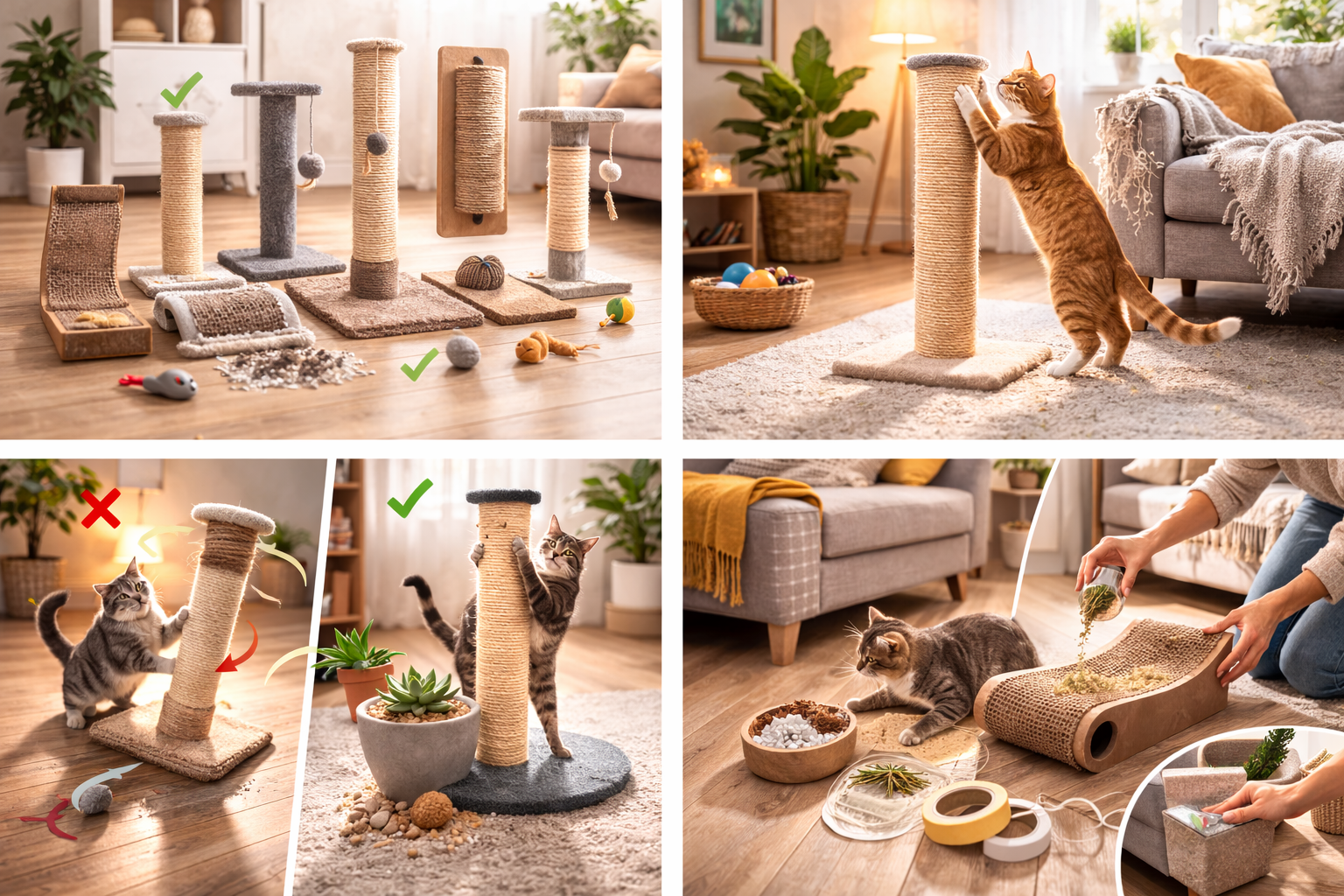

When we got our kitten, I loved how playful he was — right up until he started shredding the couch. I yelled, I sprayed him with water, but he kept going back to that same corner. I had to figure out scratching posts, fast. Turns out, picking the right one solves the problem for good.
The good news? Get a post your cat actually likes, and your furniture is safe. The bad news? Pick the wrong one, and your cat will ignore it completely.
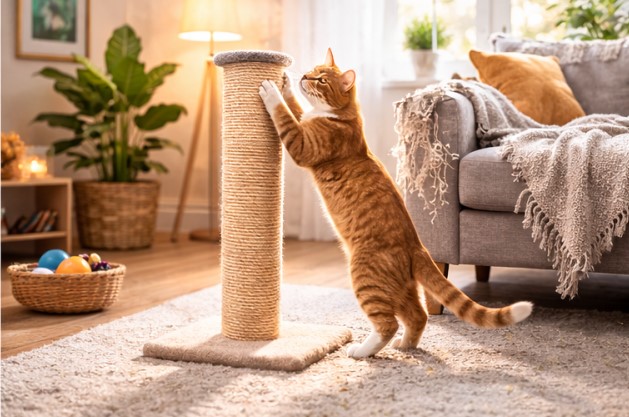
Why the right scratching post matters
| Reason | What Happens |
|---|---|
| Wrong height | Cat can’t stretch fully, so he hits the couch |
| Unstable design | Cat gets scared and won’t use it |
| Unpleasant material | Feels bad on the paws = no interest |
| Placed in the wrong spot | Cat doesn’t connect it with scratching |
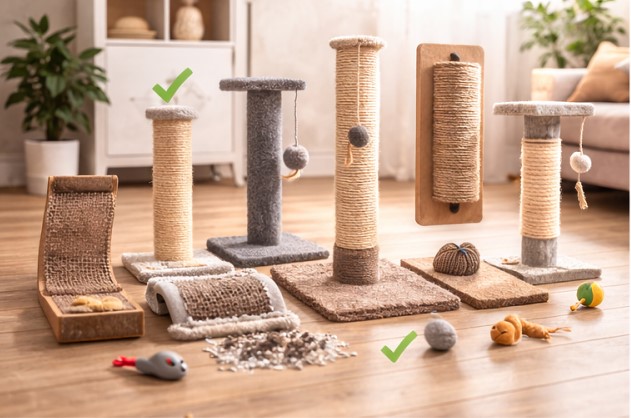
Main types of scratching posts
| Type | Description | Pros | Cons |
|---|---|---|---|
| Vertical post | A column wrapped in rope, often with a base | Classic, saves space | Can tip if too light |
| Wall-mounted | Attaches to the wall, saves floor space | Super stable, won’t tip | Requires drilling into walls |
| Horizontal | A flat board or pad on the floor | Great for cats that scratch rugs | Takes up floor space |
| Cat tree or condo | A whole structure with perches and posts | Lots of functions, cats love them | Expensive, takes up room |
| Corner post | Fits into a corner, very stable | Space-saving, sturdy | Not every cat likes corners |
What to look for
1. Material
- Sisal — natural fiber, super durable, most cats love it. This is the gold standard.
- Jute — similar to sisal but softer, wears out faster.
- Cardboard — cheap, great for horizontal scratchers, but doesn’t last long.
- Carpet — hit or miss. Some cats like it, many don’t.
2. Height
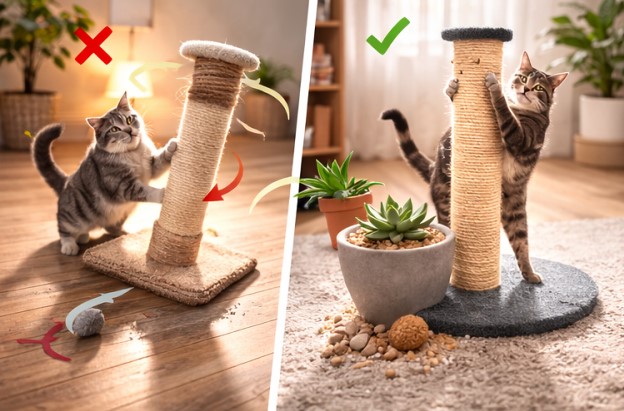
A cat needs to fully stretch to scratch properly. Go for at least 24–32 inches (60–80 cm). If you have a big cat, get a taller one.
3. Stability
The base should be wide and heavy. If the post wobbles, your cat won’t trust it. Give it a good shake in the store — if it moves easily, keep looking.
4. Cat’s age and size
Kittens can start with a shorter post, but think ahead. Senior cats often prefer horizontal or slightly tilted scratchers so they don’t have to stretch as much.
5. Placement
Put the post where your cat already likes to scratch — usually near the furniture they’ve been attacking. Don’t hide it in a corner or a high-traffic area where they won’t feel comfortable.
How to get your cat to use it
- Place it right next to the spot they’re currently shredding.
- Reward any interest — treats, toys, praise.
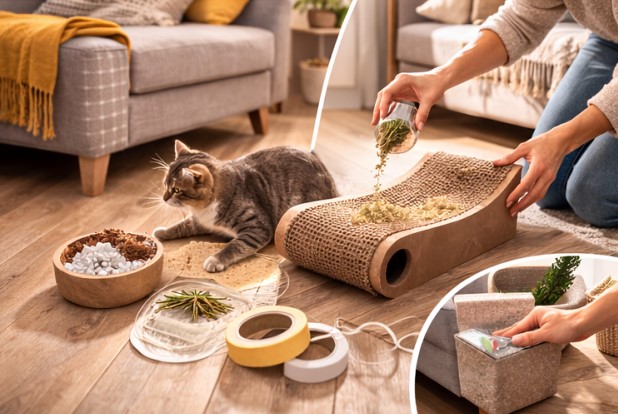
- Rub a little catnip on it to make it more appealing.
- If they still go for the furniture, cover that spot temporarily (double-sided tape or plastic) and redirect them to the post.
What NOT to do
❌ Don’t buy a flimsy, lightweight post — it’ll tip over and scare your cat.
❌ Don’t put it in a noisy hallway — cats need privacy, too.
❌ Don’t yell at your cat for scratching furniture — it just stresses them out.
❌ Don’t toss their favorite old scratcher — if they love it, just re-wrap it instead.
Maintenance tips
- Check the post for wobbling once a month. Tighten screws if needed.
- If the rope gets frayed, you can buy replacement sisal rope and rewrap it yourself.
- Keep your cat’s nails trimmed — it reduces the urge to scratch.
The bottom line
The perfect scratching post is tall, rock-solid, wrapped in sisal, and parked in your cat’s favorite spot. Invest a little time in choosing right, and your couch will thank you.
Tested on my own cat: after I put a tall sisal post next to the couch, he forgot the sofa existed.
Does your cat have a favorite scratching post? What kind did you get? Share in the comments!
Related guides