Home cleaning, organization and lifestyle tips

Introduction
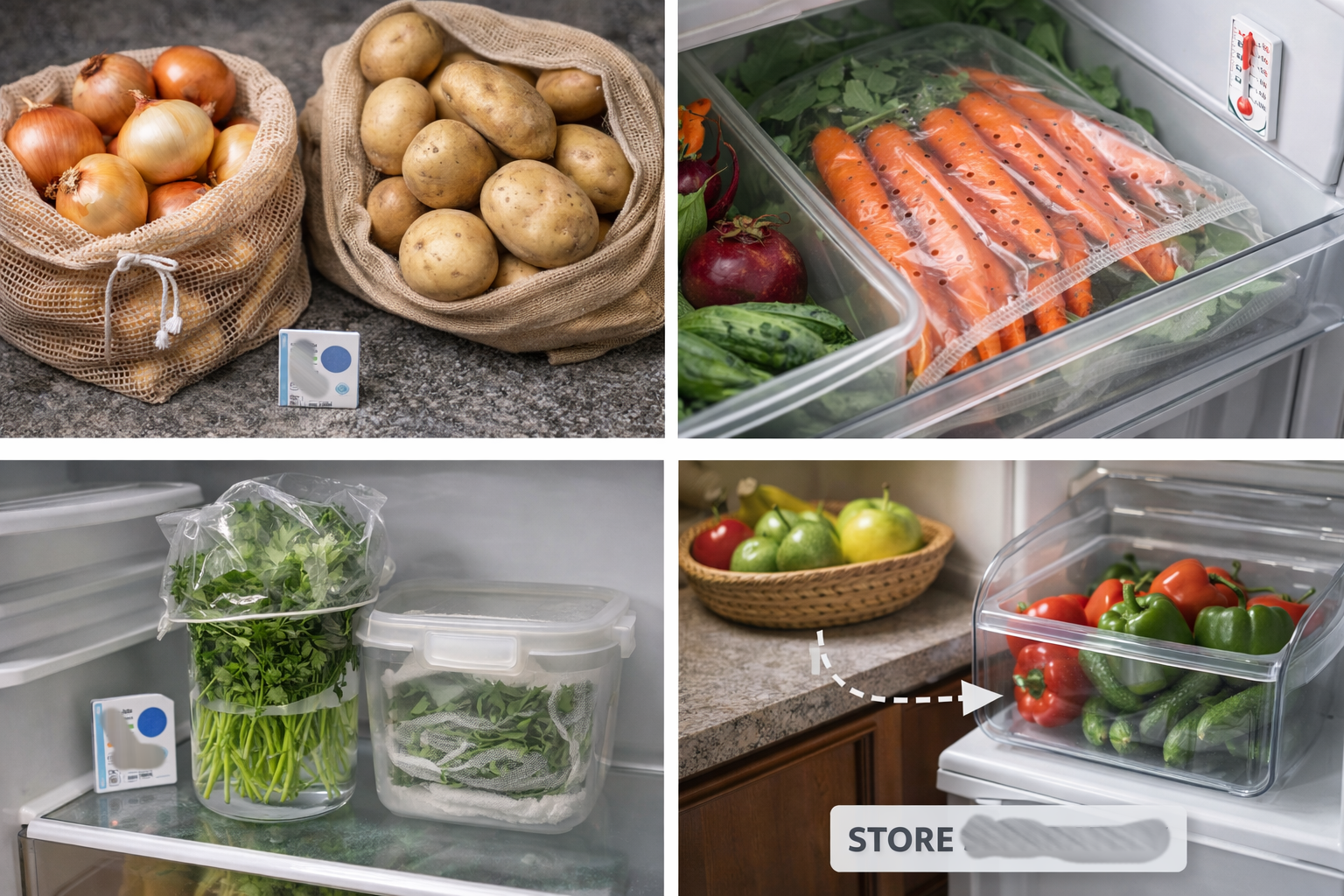
You bought fresh vegetables, and three days later the potatoes have sprouted, the carrots have gone limp, and the onions are rotting? Yeah, been there. This used to happen to me all the time until I figured out that each vegetable needs its own treatment. Turns out, potatoes and onions are enemies, and carrots love humidity.
The good news? You don’t need any special equipment to store vegetables properly. Just a few simple rules.
Why Vegetables Go Bad
| Cause | What Happens |
|---|---|
| Wrong temperature | Potatoes sprout in warmth, freeze in cold |
| Too much or too little humidity | Vegetables wilt or rot |
| Ethylene gas from fruit | Apples and bananas speed up spoilage |
| Damage | Bacteria get in through cuts and bruises |
| Poor air circulation | Mold grows in sealed bags |
What You’ll Need
| Tool | Purpose |
|---|---|
| Mesh bags | For onions, garlic, potatoes |
| Perforated plastic bags | For carrots, beets |
| Airtight containers | For herbs in the fridge |
| Paper towels | To absorb excess moisture |
| A cool, dark place (basement or root cellar) | For long-term storage |
Step-by-Step Guide
Step 1. Sort Right After Buying
- Go through all your vegetables.
- Remove any that are damaged, bruised, or starting to rot – they’ll spoil the rest.
- Don’t wash vegetables before storing (except for herbs).
Step 2. Group Them Correctly
Group 1. Root Vegetables (Potatoes, Carrots, Beets, Turnips)
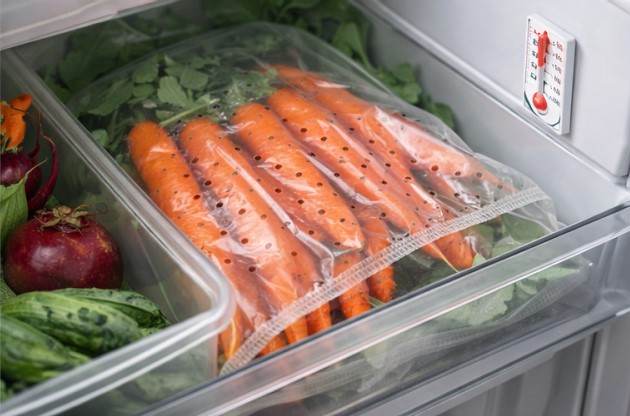
- They like it cool (35-40F / 2-4C) and humid.
- Store in a dark place (basement, cellar, insulated garage).
- Only keep them in the fridge if you have no other option.
Group 2. Onions and Garlic
- They like it dry and cool (32-50F / 0-10C).
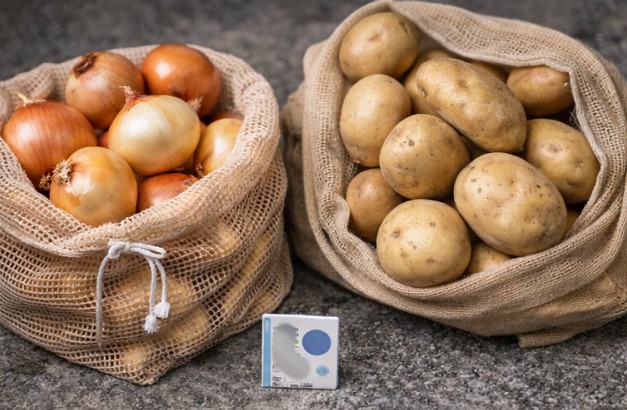
- Store in mesh bags or woven baskets with good airflow.
- Keep them away from potatoes — onions spoil faster when they’re together.
Group 3. Tomatoes, Cucumbers, Peppers
- They don’t like the cold (below 50F / 10C).
- Store at room temperature, away from direct sunlight.
- Ripe tomatoes can go in the fridge, but take them out an hour before eating.
Group 4. Cabbage
- Likes it cool (32-36F / 0-2C) and humid.
- Wrap in plastic wrap or paper to keep it fresh longer.
Group 5. Herbs
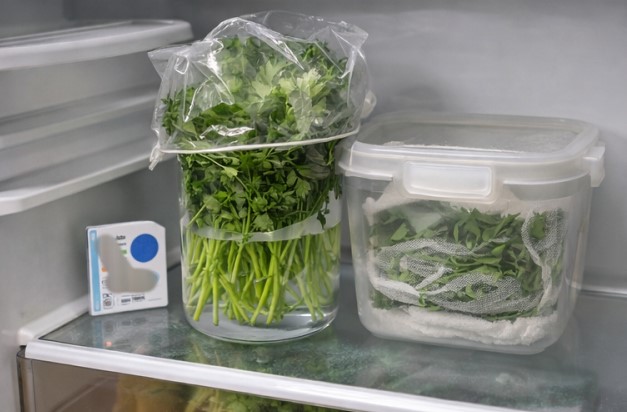
- Store in the fridge like a bouquet: put them in a glass of water and cover with a bag.
- Or wrap in a damp paper towel and place in a container.
Step 3. Control the Humidity
| Vegetable | Humidity Level | How to Maintain It |
|---|---|---|
| Potatoes | High | Natural fiber bag |
| Carrots | Very high | In a box with sand or a perforated bag |
| Onions, Garlic | Low | Mesh bag, dry, well-ventilated spot |
| Cabbage | High | Wrap in plastic |
Step 4. Keep Them Away from Fruit
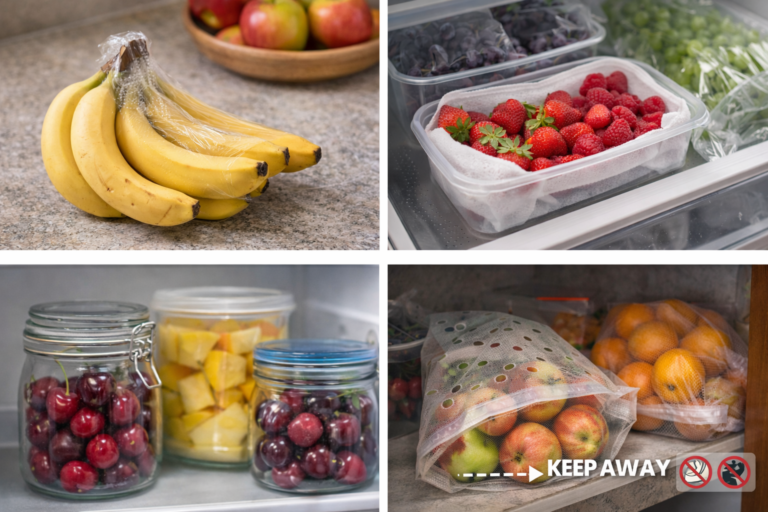
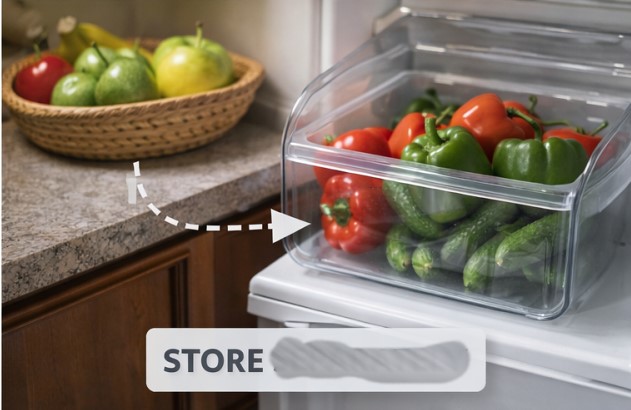
Apples, pears, and bananas release ethylene gas, which speeds up ripening and spoilage in vegetables. Store them separately.
Step 5. Check Regularly
Once a week, go through your stash. Remove anything that’s starting to rot before it spreads to the rest.
Vegetable Storage Chart
| Vegetable | Temperature | Humidity | Packaging | Shelf Life |
|---|---|---|---|---|
| Potatoes | 40-50F (4-10C) | High | Paper bag, dark place | 2-4 months |
| Onions | 32-50F (0-10C) | Low | Mesh bag, basket | 1-3 months |
| Garlic | 32-50F (0-10C) | Low | Mesh bag, dry spot | 2-4 months |
| Carrots | 32-40F (0-4C) | Very high | In sand or perforated bag | 2-4 months |
| Beets | 32-40F (0-4C) | High | In a box, covered with sand | 2-3 months |
| Cabbage | 32-36F (0-2C) | High | Wrapped in plastic | 2-3 months |
| Tomatoes (green) | 54-64F (12-18C) | Medium | Single layer, not in fridge | 1-2 weeks |
| Tomatoes (ripe) | 46-50F (8-10C) | Medium | In fridge, take out before eating | 3-5 days |
| Cucumbers | 50-54F (10-12C) | High | In fridge, not in a sealed bag | 5-7 days |
| Bell Peppers | 46-50F (8-10C) | Medium | In fridge, in a perforated bag | 1-2 weeks |
| Zucchini | 46-50F (8-10C) | Medium | In a cool spot, not in fridge | 1-2 weeks |
| Winter Squash | 50-59F (10-15C) | Low | In a dry, cool place | 2-6 months |
| Fresh Herbs | 36-40F (2-4C) | High | In a glass of water or damp towel | 5-7 days |
What NOT to Do
- Don’t store potatoes and onions together — they’ll spoil faster.
- Don’t wash vegetables before storing — moisture speeds up rot.
- Don’t keep veggies in sealed plastic bags — they need air.
- Don’t leave tomatoes and cucumbers in the fridge for more than 2-3 days — they lose their flavor.
- Don’t leave damaged vegetables in with the good ones — they’ll contaminate the rest.
How to Prevent Spoilage
- Buy only what you can eat in a week.
- For long-term storage, choose varieties meant for it (like winter potatoes and cabbage).
- Use moisture absorbers (like silica gel packs) in containers with herbs.
- Keep vegetables in the dark — potatoes turn green and toxic when exposed to light.
The Bottom Line
The golden rules for storing vegetables:
- Each vegetable needs its own temperature and humidity.
- Potatoes and onions are enemies – keep them apart.
- Ethylene from fruit kills veggies – store them separately.
- Regular checks prevent rot from spreading.
- Containers need to breathe.
Tested in my own basement: now my potatoes last until spring, and my onions don’t rot.
Got your own vegetable storage tricks? Share them in the comments!
Related guides