Home cleaning, organization and lifestyle tips
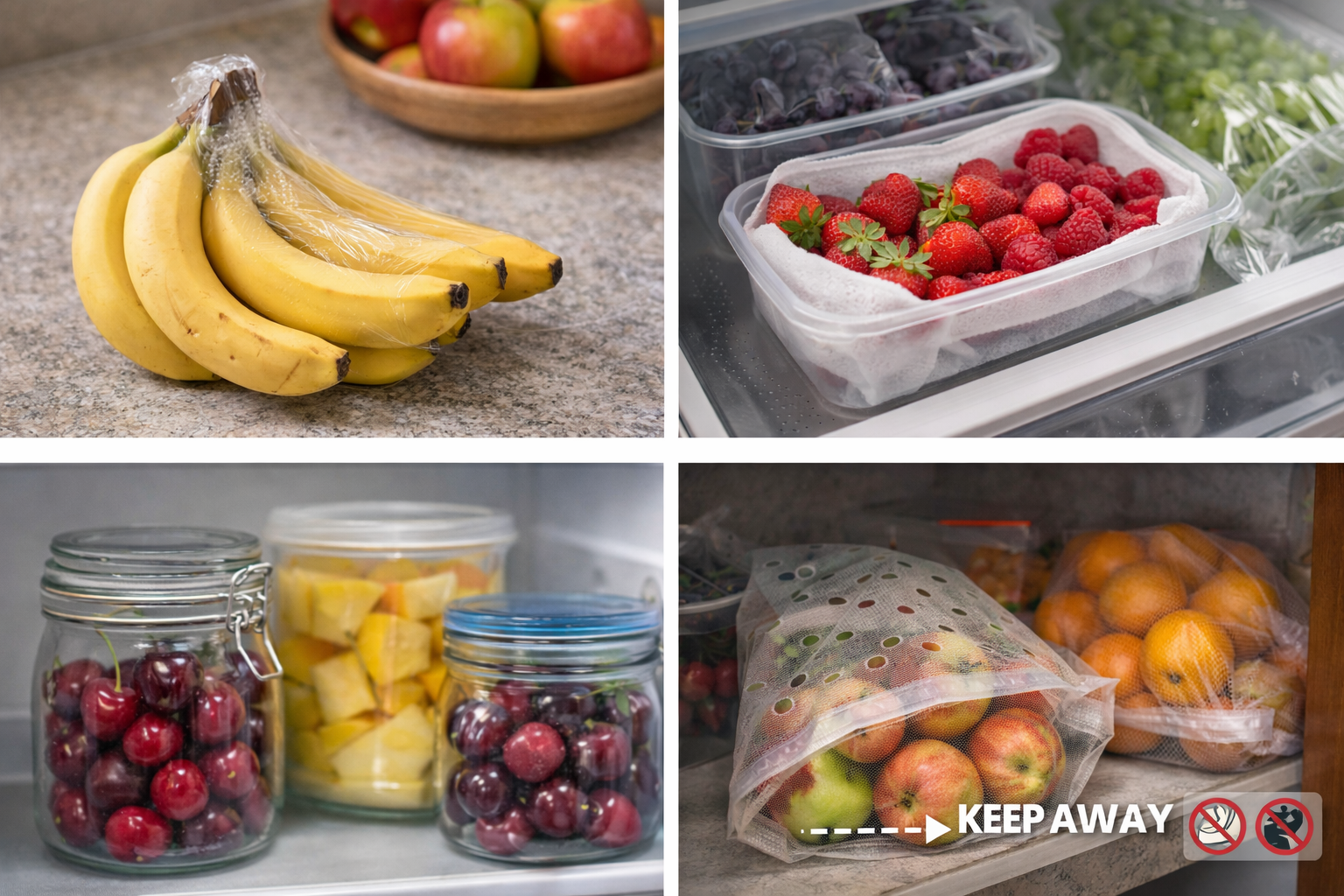

Fruit lasts longer when its storage matches its stage of ripeness. Keep delicate fruit cold, let fruit that still needs to ripen sit at room temperature, and keep strong ethylene producers away from produce that is easily affected by them.
This guide focuses on practical home storage rather than promising a fixed number of days. Variety, ripeness at purchase, fridge temperature, and even a small bruise can all change how long fruit stays good.
Quick answer: where should fruit go?
| If the fruit is… | Best first move | Why |
|---|---|---|
| Delicate and already ripe: berries, grapes, cherries | Refrigerate promptly | Cool temperatures slow deterioration. |
| Firm and still ripening: bananas, pears, peaches, avocados | Leave at room temperature | It can ripen before chilling. |
| Ripe but not ready to eat | Move it to the refrigerator | This buys time; it does not stop ripening forever. |
| Cut or peeled | Cover and refrigerate | Cut fruit is more perishable than whole fruit. |
A refrigerator should stay at or below 40°F (4°C). Its temperature is not identical on every shelf, so a small fridge thermometer is more useful than guessing by the drawer label. The USDA also notes that placement matters: colder zones are usually toward the back, while the door is warmer.
Start with a five-minute check after shopping
- Separate damaged fruit. A soft, leaking, or moldy piece should not sit against sound fruit. Use it immediately if it is still safe, or discard it.
- Leave fruit dry for storage. Do not soak or wash berries before putting them away; extra surface moisture encourages mold. Wash fruit under running water just before eating or preparing it—never with soap.
- Do not seal everything in an airtight bag. Condensation is a warning sign. Use the original vented container or a breathable, loosely covered container where appropriate.
- Put the ripest fruit where you will see it first. Eat ripe berries, peaches, and avocados before firm apples or citrus.
Ethylene: separate the fast ripeners
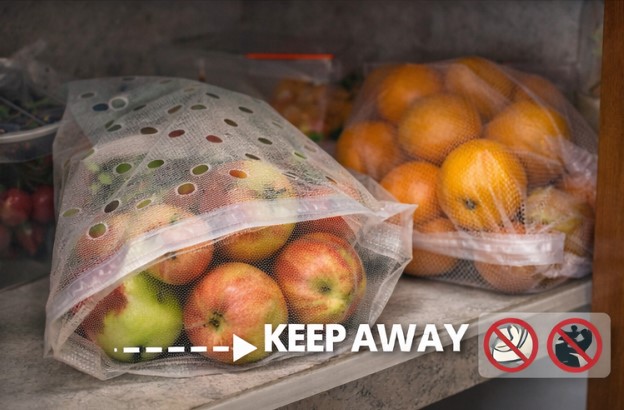
Ethylene is a natural ripening gas. Apples, bananas, pears, stone fruit, and ripe avocados are common producers. They do not need to be treated as enemies, but placing them right next to sensitive produce can make nearby food age faster. Give them a separate bowl, drawer, or shelf.
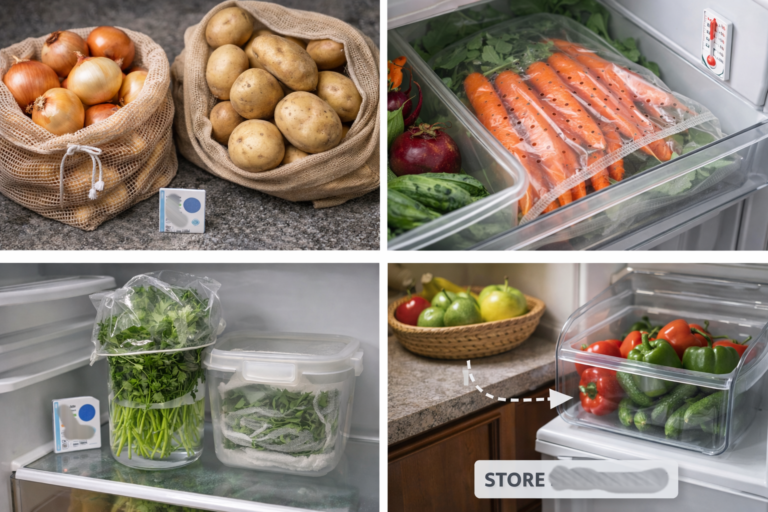
This matters beyond fruit, too: if your fridge is crowded, keep apples and bananas away from leafy vegetables. For a companion guide to the rest of the produce drawer, see how to store vegetables the right way.
Storage notes for common fruit
Berries
Keep strawberries, raspberries, blackberries, and blueberries in the refrigerator in a shallow, ventilated container. Remove any damaged berry promptly. A paper towel can help manage visible moisture, but replace it if it becomes wet. Wash only the portion you are about to use.
Apples and pears
Apples generally keep well chilled. Keep them away from produce that is sensitive to ethylene. Pears can ripen on the counter; once they yield slightly near the stem, refrigerate them if you need a little extra time before eating.
Bananas, peaches, nectarines, and avocados
Let these ripen on the counter first. When they reach the texture you want, refrigeration can slow further ripening for a short period. Bananas may develop a dark peel in the refrigerator; that is a quality issue with the skin, not an automatic sign that the flesh is unsafe.
Citrus, grapes, cherries, and melons
Grapes and cherries benefit from refrigeration and should stay dry until use. Citrus can sit out briefly for aroma and convenience, but refrigeration usually extends its usable life. Keep whole melons cool; after cutting, cover and refrigerate them promptly.
Cut fruit: treat it differently
Once fruit is cut, its protective peel is gone. Transfer it to a clean covered container and refrigerate it rather than leaving it on the counter. If it has been left out for a long time, smells fermented, feels slimy, or shows mold, do not try to rescue it by trimming around the problem.
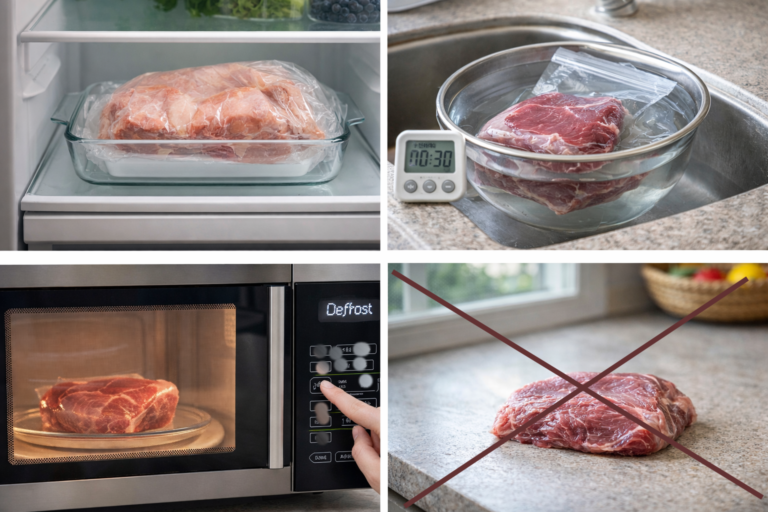
Use clean hands, knives, and boards when preparing fruit. The same habit matters when handling other perishables; our guide on how to safely thaw meat explains why fridge temperature and clean preparation surfaces are worth paying attention to.
Freeze ripe fruit instead of racing to finish it
If fruit is ripe now but you will not use it soon, freezing is often the better option. Wash it, remove pits or stems as needed, dry it well, and freeze pieces in a single layer first. Once frozen, move them into a labeled freezer-safe container. Frozen fruit is ideal for smoothies, baking, sauces, and compotes; expect its texture to be softer after thawing.
Three habits that waste fruit fastest
- Buying more ripe fruit than you can use. Mix ripe fruit for today with firmer fruit for later in the week.
- Forgetting what is in the drawer. Keep the most perishable fruit at eye level and plan it into breakfast or snacks.
- Using storage containers without a system. Clear space and shallow containers make it easier to notice moisture and bruising. A better layout helps too—see these ideas for organizing a small kitchen.
FAQ
Should I wash fruit before storing it?
Usually, no. Keep it dry during storage and rinse under running water right before eating or preparing it. Do not use soap, detergent, or produce wash.
Can I store all fruit together in one bowl?
You can, but it is not the best choice for fruit that will sit for several days. Keep bananas, apples, pears, and ripe avocados apart from more sensitive produce, and refrigerate berries and grapes.
Is fruit with a dark spot safe to eat?
A small bruise is not automatically unsafe, but inspect the fruit closely. Discard it if you find mold, slime, leakage, an off smell, or extensive soft decay.
Sources and further reading
- USDA Food and Nutrition Service: storing fresh produce
- University of Minnesota Extension: how to freeze fruit safely
Bottom line: buy for the week in stages, keep delicate fruit cold and dry, let firm fruit ripen before chilling it, and separate strong ethylene producers. Those small choices do more than any single “fruit storage hack.”
Related guides