Home cleaning, organization and lifestyle tips
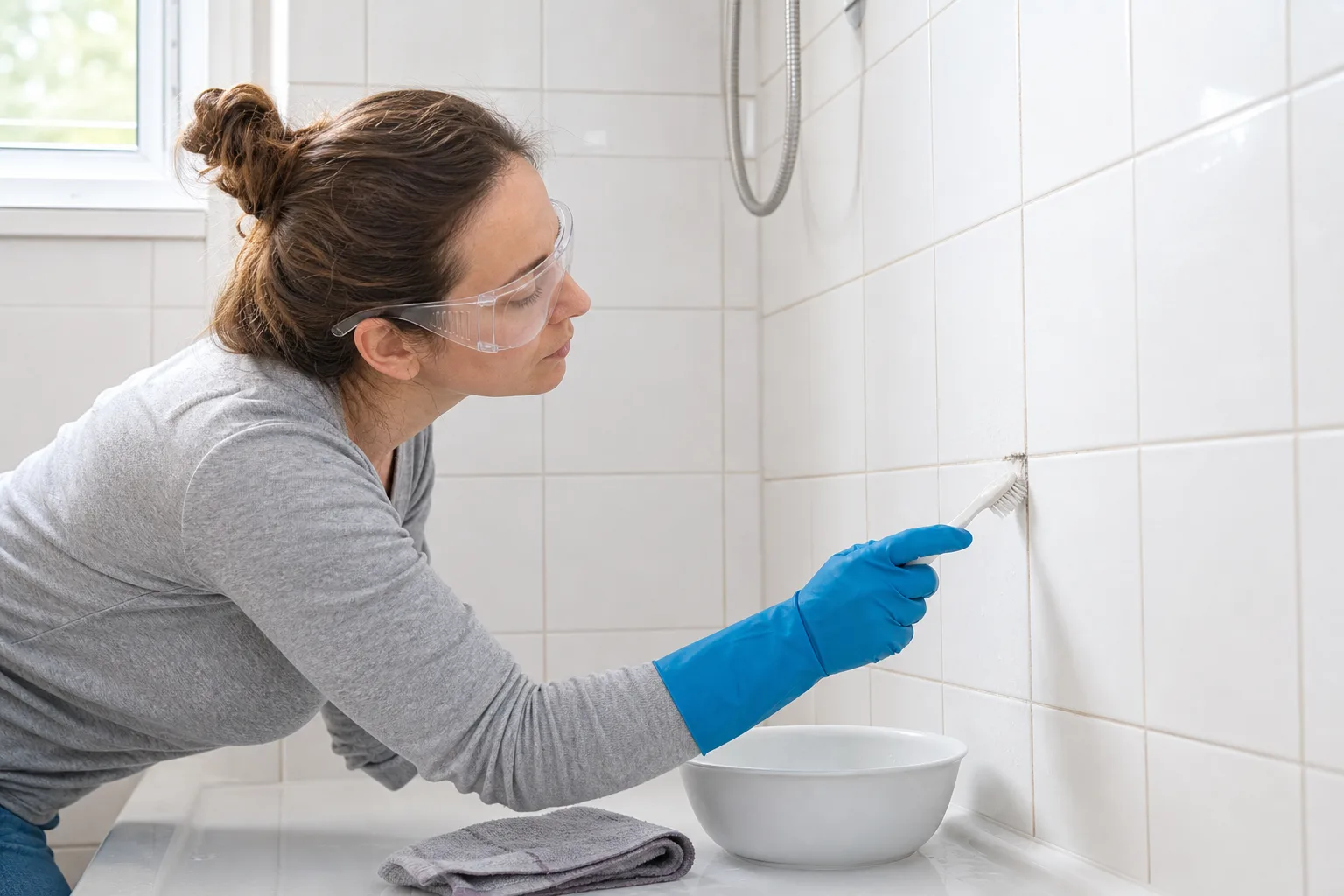

Short answer: For a small visible patch on tile, glass or another hard bathroom surface, first stop the moisture source. Wear gloves and eye protection, clean with detergent and water, then dry the area completely. Do not mix cleaners.
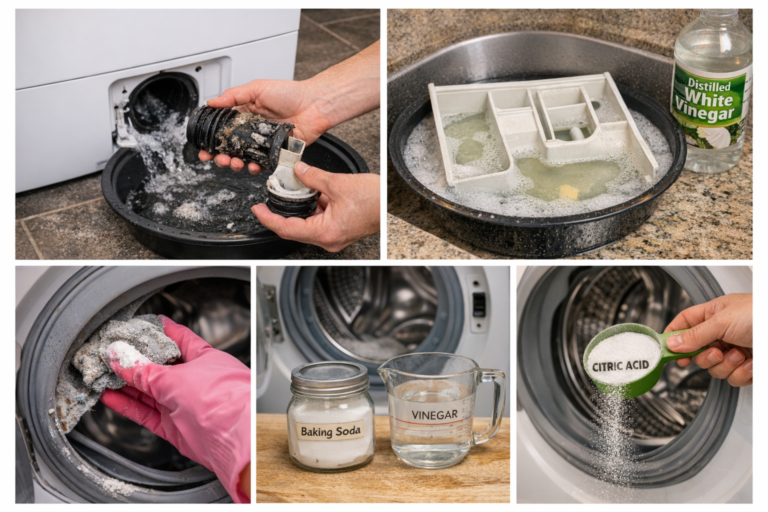
Bathroom mold is a moisture problem before it is a product-choice problem. The dry-after-use habit in our safe washing-machine cleaning guide also helps here, while prompt leak repair belongs in practical home water-saving guide.
Decide whether this is a small cleaning job
This guide is for a small, accessible patch on a hard, non-porous surface. Color does not identify a mold species, so there is no need to diagnose “black mold” before addressing visible growth and the dampness that supports it. Drywall, insulation, carpet, ceiling tiles and crumbling caulk may hold growth below the surface. EPA uses roughly 10 square feet as a point to consider professional remediation.
Prepare safely
Open a window or run the exhaust fan. Keep children, pets and people with breathing or immune-health concerns away from the work area. Use gloves and splash-proof eye protection. Read every label and use one cleaner at a time.
- Use a soft nylon brush, microfiber cloth, mild detergent and clean water.
- Never mix bleach with ammonia, vinegar, acids or any other cleaner.
- Do not dry-brush a large patch or open a wall as routine home cleaning.
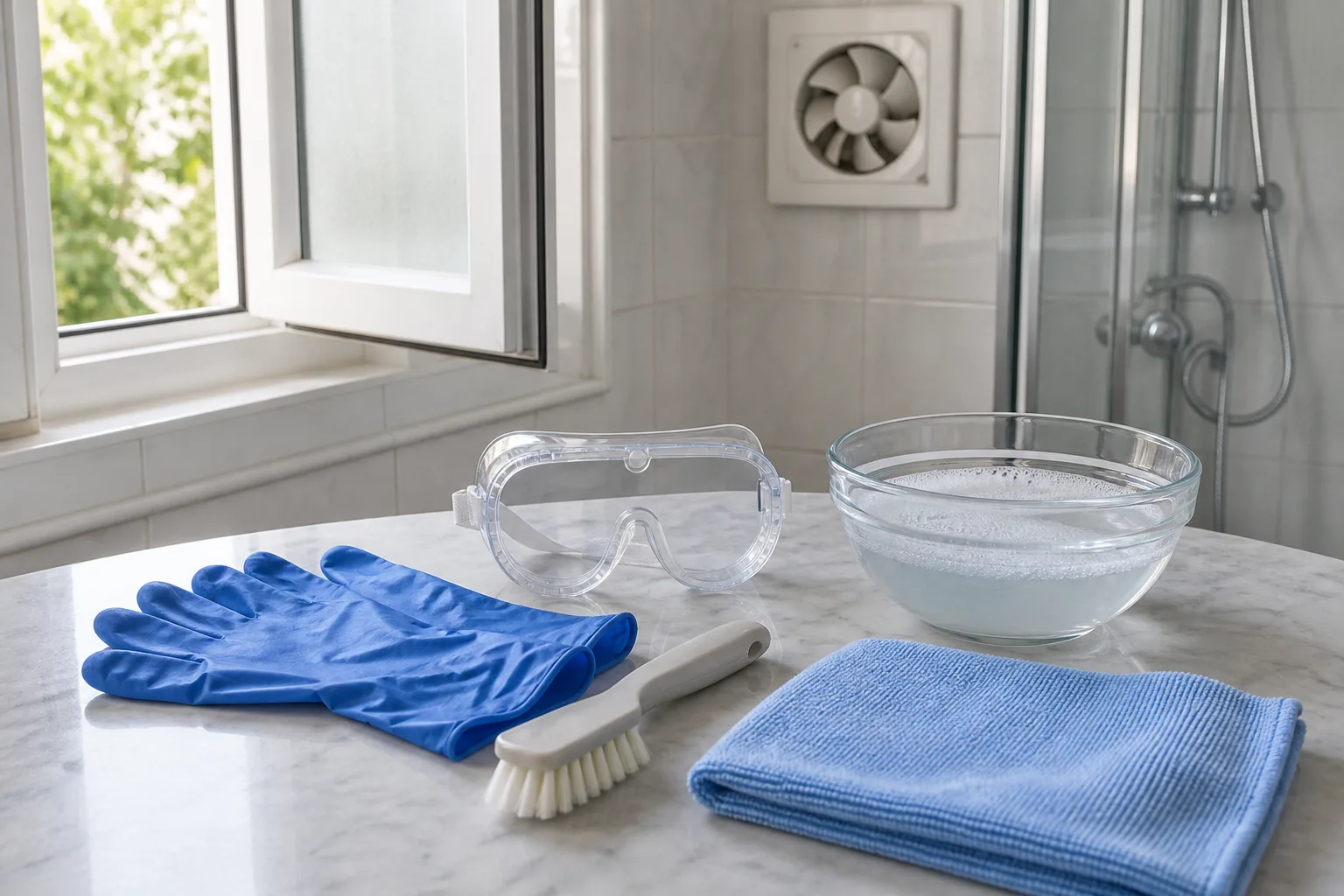
Clean a small patch on a hard surface
1. Stop the water
Check for a dripping pipe, loose shower seal, standing water or a fan that does not move air. Do not clean over an active leak; water from behind a wall or fixture needs repair.
2. Scrub, rinse and dry
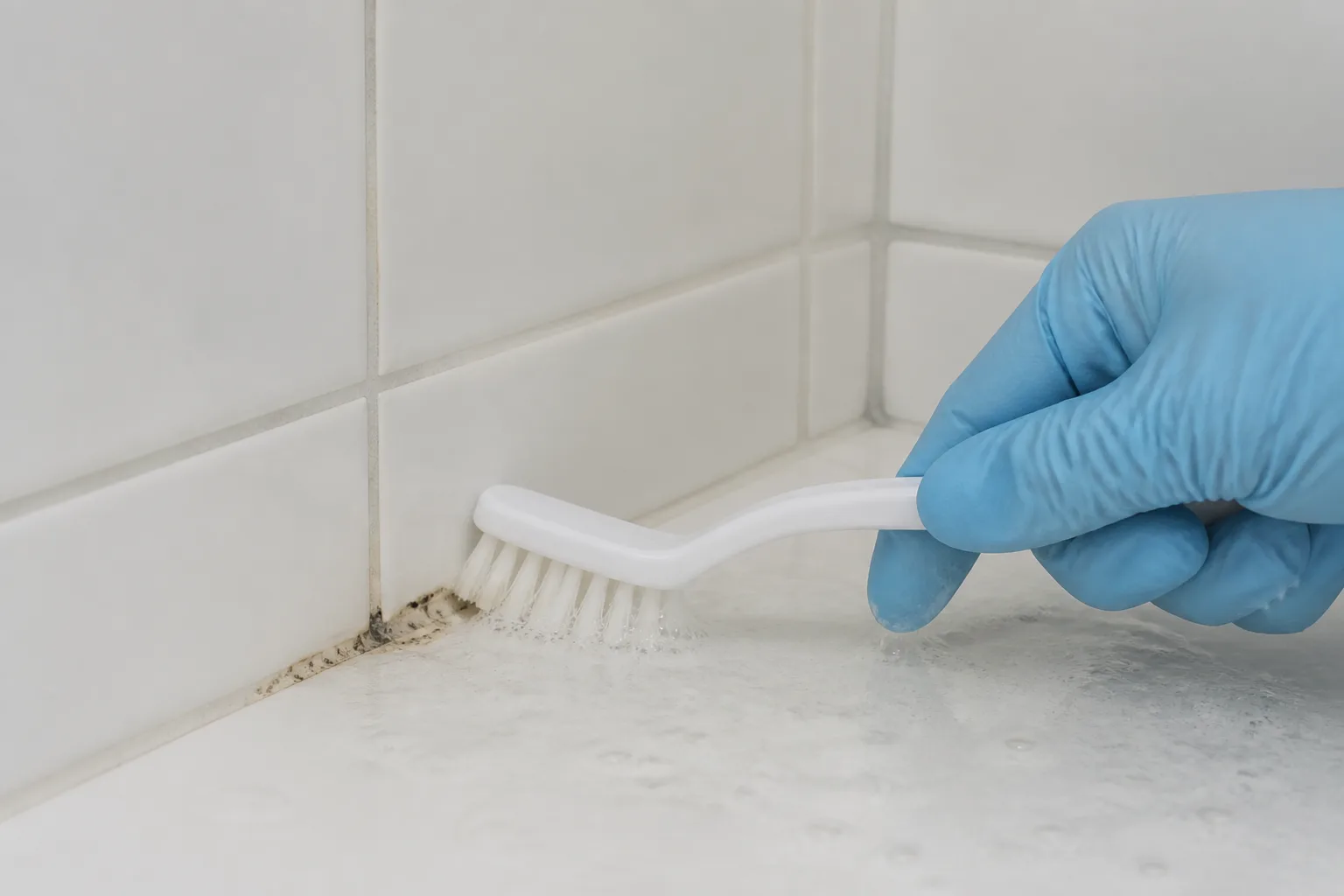
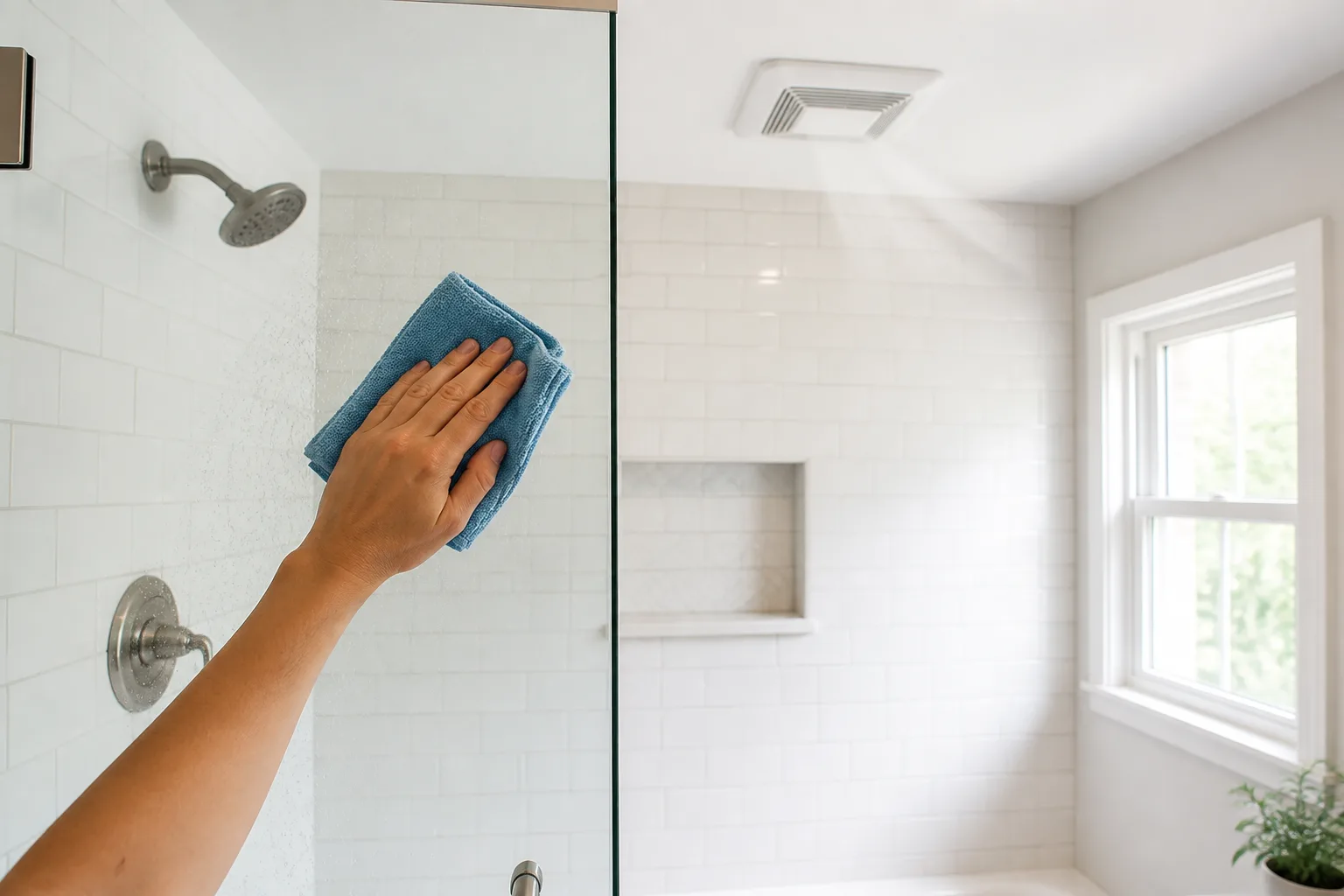
Move towels and toiletries away. Apply detergent and water to the hard surface, then work gently with a soft brush or cloth. Rinse if the detergent label requires it. Bag disposable wipes before discarding them and wash reusable cloths promptly. Dry the tile, grout line, sill or fixture with a clean cloth and keep ventilation running.
Skip chemical “hacks”
Vinegar-and-baking-soda reactions, peroxide and copper sulfate are not a reliable replacement for moisture control and mechanical cleaning. Improvising or combining chemicals adds avoidable exposure and surface-damage risk. Do not use copper sulfate or an unlabeled pesticide in a bathroom, exceed a product label’s dilution or contact time, or paint and caulk over visible mold or a damp surface.
Repair materials that keep holding water
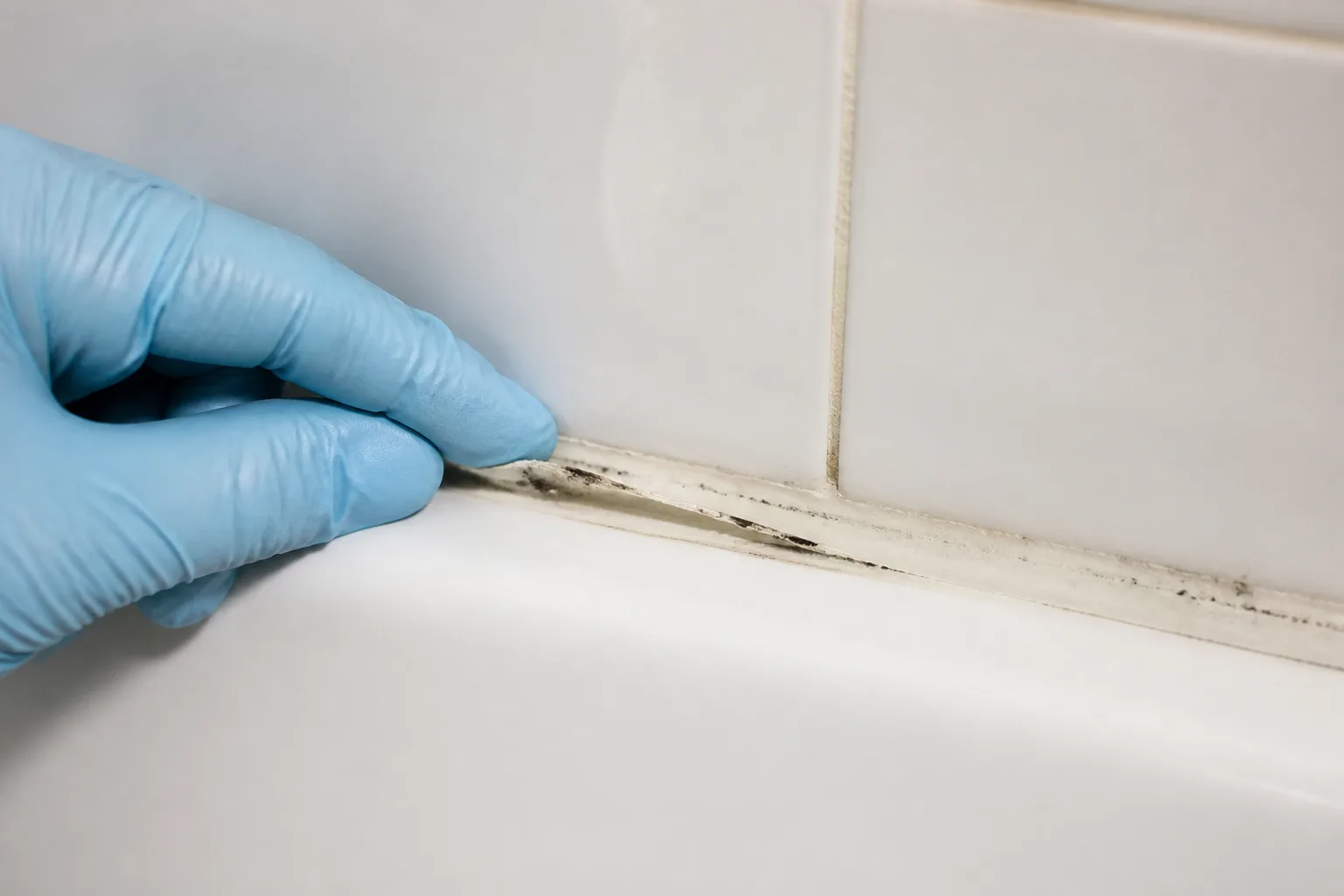
Silicone caulk that is split, loose or stained through its depth can keep trapping moisture. After the underlying area is dry, it may need replacement. Moldy porous materials can be difficult or impossible to clean completely, so repair or replacement is often safer than repeated scrubbing.
Prevent the return
Prevention is mostly routine, not fragrance: clean the source of a musty smell rather than masking it, as in our guide to removing fridge odors. Use a method suited to the surface—bathroom tile is not an oven interior, as our safe oven-cleaning guide explains.
- Run the fan during showers and until humidity is gone; open a window when practical.
- Wipe pooled water from glass, the shower ledge, grout and window sills.
- Hang towels and mats so they dry fully, and repair drips and failed seals quickly.
When to call a professional
Seek a qualified remediation or repair professional for a visible area around or above 10 square feet, repeated growth, likely hidden growth, flooding, sewage contamination, structural water damage, an electrical risk, or wet and damaged porous material. If you have asthma, COPD, immune suppression or symptoms that worsen near the area, ask a health professional for personal advice.
Sources
Related guides