Home cleaning, organization and lifestyle tips

Shoes are an investment. A good pair of boots or dress shoes costs real money, and it’s such a letdown when they lose their shape or get moldy after just one season. I once left a pair of suede boots in a damp basement over the summer — pulled them out in the fall and straight into the trash they went. Now I know how to store shoes the right way, and they actually last for years.
The good news? Proper storage doesn’t require a ton of space or money. The bad news? Most people just toss their shoes in a pile and call it a day.
Why proper shoe storage matters
| Reason | What it does |
|---|---|
| Keeps their shape | Prevents shoes from getting misshapen or drying out |
| Protects from moisture and mold | No nasty smells or fungus |
| Saves you money | Your favorite pairs last way longer |
| Keeps your entryway tidy | Less visual clutter, more calm |
What you’ll need
| Tool | Purpose |
|---|---|
| Shoe trees (wooden) or plain paper | To maintain shape |
| Shoe boxes or clear plastic bins | To store pairs together and keep off dust |
| Moisture absorbers (silica gel packs) | Protection against dampness |
| Shoe brush and conditioner | For pre-storage prep |
| Shoe organizers (shelves, racks) | To store multiple pairs neatly |
Step-by-step guide
Step 1. Prep your shoes for storage
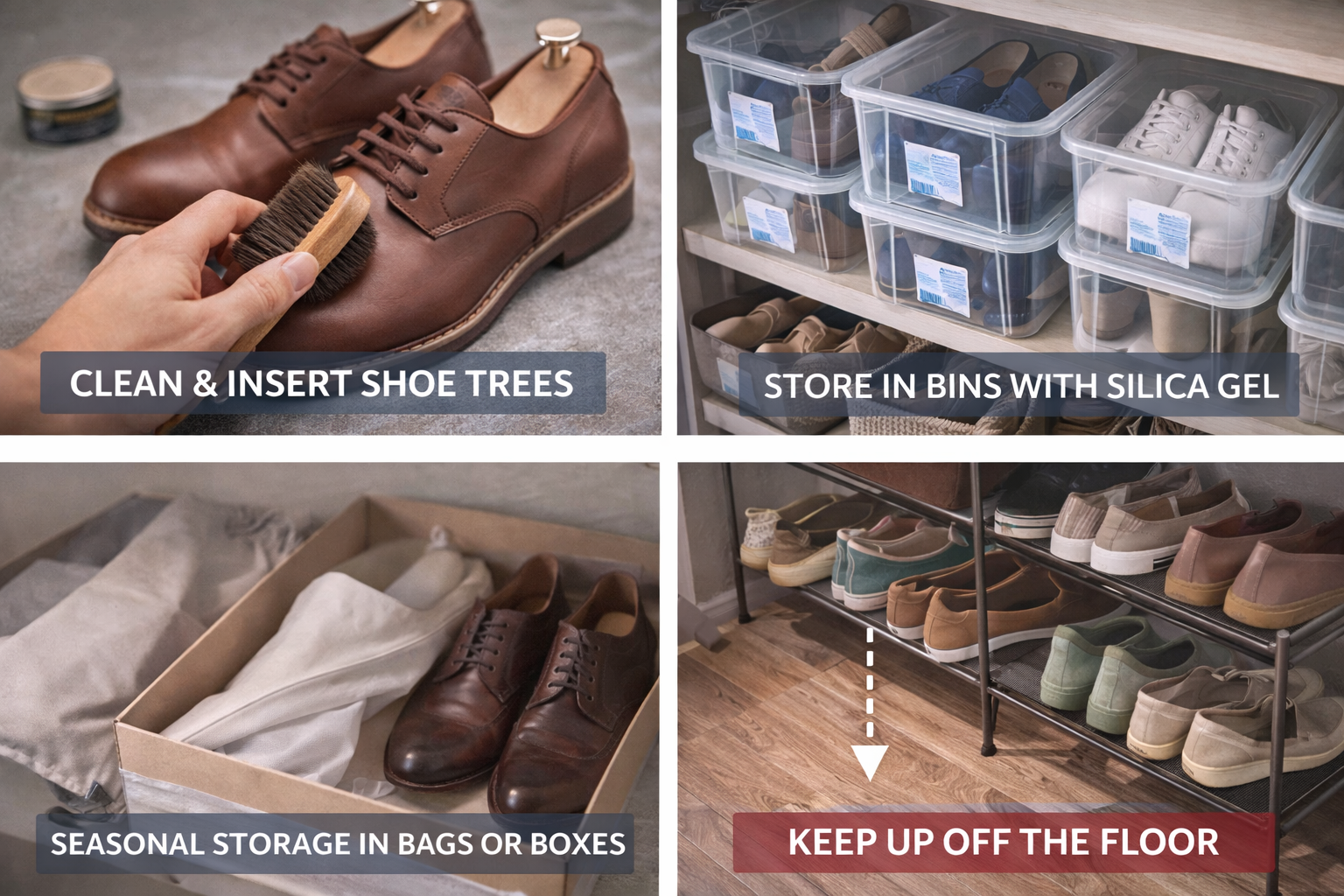
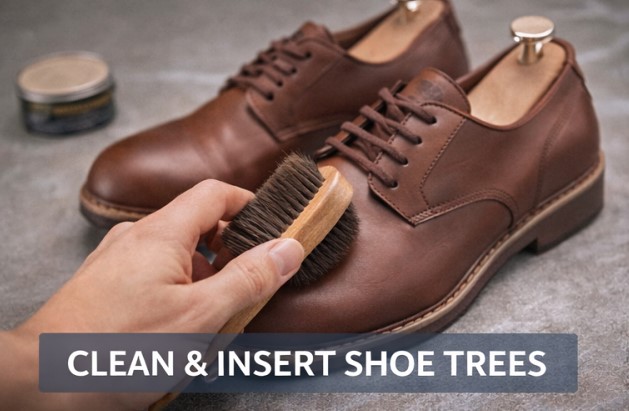
- Clean them. Remove all dirt and dust. Condition leather, and use a protectant spray on suede or nubuck.
- Dry them completely. Never put away damp shoes — mold will take over. Let them air dry naturally, away from direct heat.
- Insert shoe trees. No trees? Stuff them with plain white paper (not newspaper — the ink can transfer). This keeps their shape.
Step 2. Pick the right spot
| Where | Best for | Notes |
|---|---|---|
| Open shelf in entryway | Everyday shoes you’re wearing now | Needs good airflow |
| Closed closet in entryway | Seasonal shoes you’re currently using | Protects from dust |
| High shelves, hall closet | Off-season storage (boots in summer, sandals in winter) | Use boxes or bins |
| Basement or storage room | Rarely used shoes | Only in sealed boxes, with moisture protection |
Step 3. Use boxes or clear bins
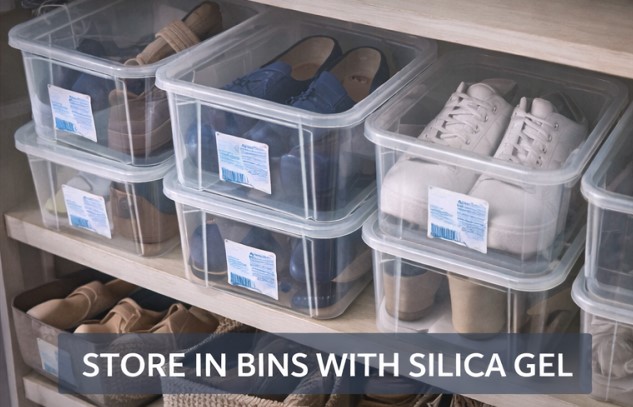
The best option is clear plastic bins with lids. You can see what’s inside at a glance, and they keep out dust and moisture. If you use the original shoe boxes, label them clearly or tape a photo on the front so you’re not opening twenty boxes to find your black heels.
Step 4. Toss in moisture absorbers
Drop a silica gel pack in each box (save the ones that come with new shoes). You can also buy packs of them at hardware stores or online. They’re cheap and they work.
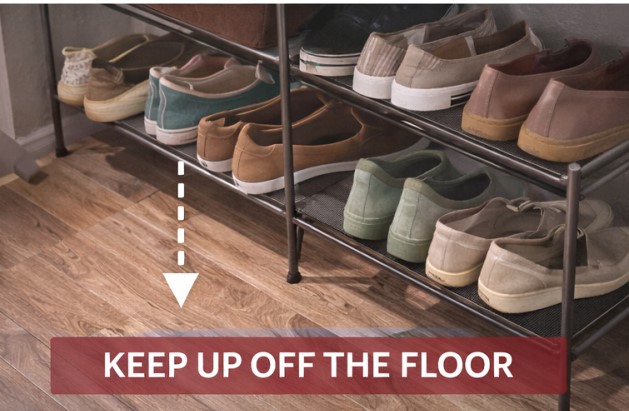
Step 5. Never store shoes in plastic bags
Plastic bags trap moisture. No air circulation + trapped condensation = mold magnet. Use paper or fabric shoe bags instead.
Step 6. Seasonal storage
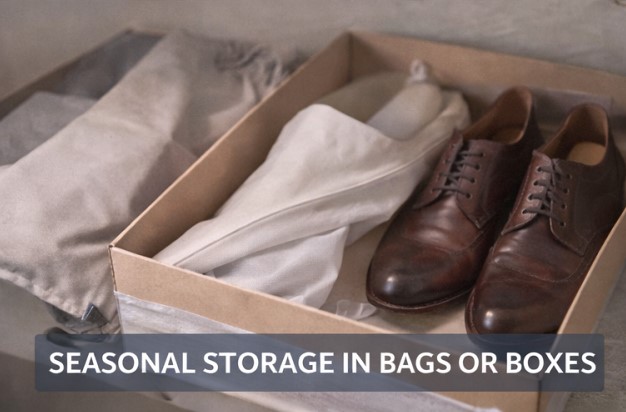
- Winter boots before summer: Clean, dry, stuff with paper, and store up high.
- Summer sandals before winter: Same deal.
- Don’t put boxes directly on the floor if your basement or storage area is damp. Use shelves or pallets.
What NOT to do
❌ Don’t put wet shoes in the closet — they’ll ruin everything on that shelf.
❌ Don’t use newspaper for stuffing — the ink can stain light-colored shoes.
❌ Don’t cram shoes together — they’ll get crushed and deformed.
❌ Don’t skip cleaning before storage — dirt and salt will eat away at the material over time.
Prevention tips
- Air out your shoe boxes once a month, especially if you’re storing them in a basement or closet.
- Treat shoes with protective sprays at the end of each season before putting them away.
- If shoes get soaked, let them dry for at least 24 hours before storing.
- Use shoe deodorizers to keep bacteria and smells from developing inside.
The bottom line
Storing shoes the right way comes down to four things: clean, dry, shaped, and protected. Set aside an afternoon at the end of each season to put your shoes to bed properly, and they’ll thank you by lasting years longer.
Tested on my own footwear: since I started using shoe trees and moisture absorbers, my leather boots have stopped stiffening up and are still going strong after five years.
Got your own favorite shoe storage tricks? How do you keep mold away? Share in the comments!
Related guides