Home cleaning, organization and lifestyle tips
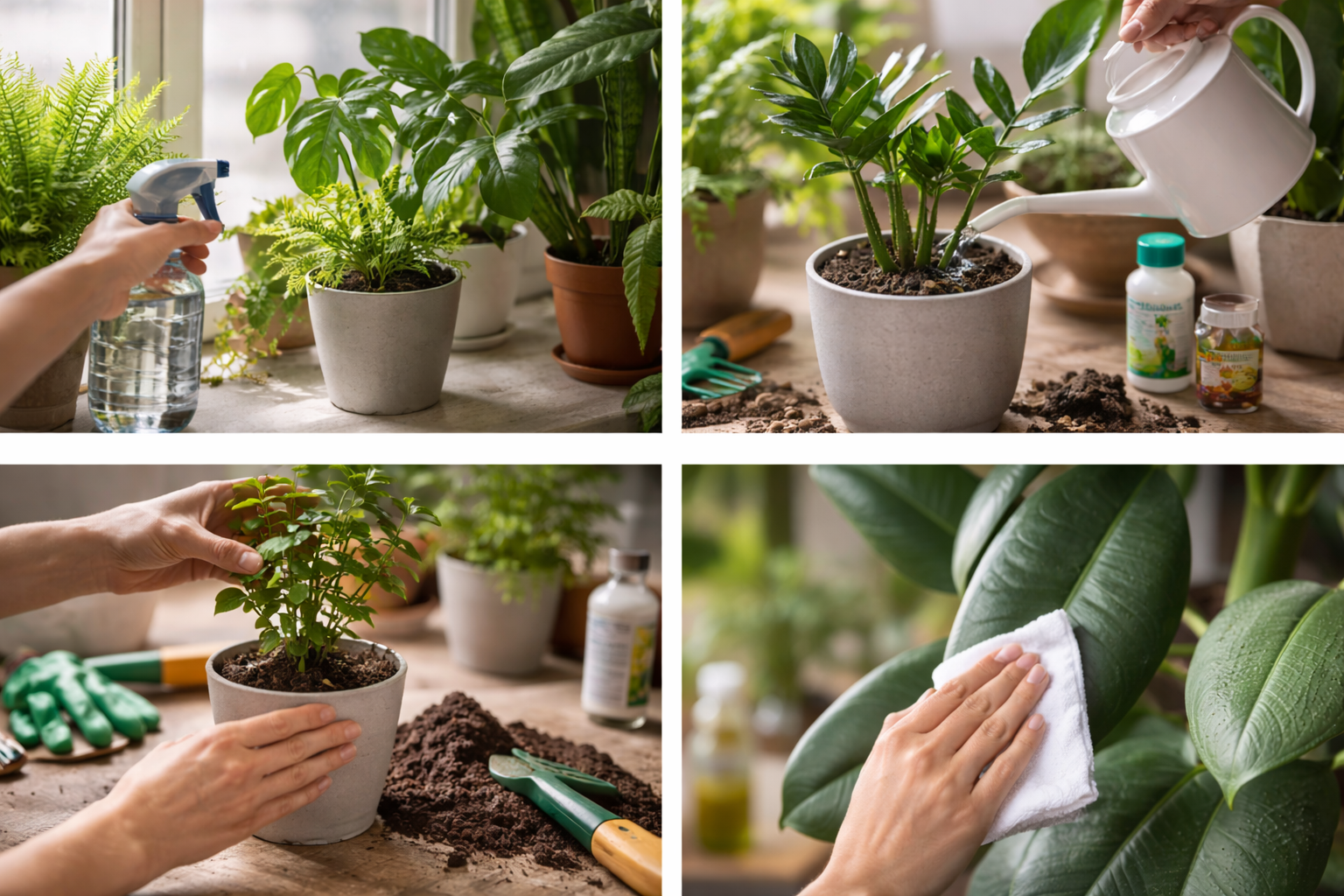

When I first got into houseplants, I killed everything. I overwatered my cacti, stuck my ficus in a dark corner, and then wondered why they were all droopy. I nearly destroyed a peace lily someone gave me for my birthday before I finally realized — every plant needs its own approach. Since then, I’ve learned the basics, and now my green collection actually thrives.
The good news? Even if you’ve got a “black thumb,” the rules are pretty simple. The bad news? You do have to pay attention and learn what each plant needs.
The key factors for healthy plants
| Factor | What Matters | Common Beginner Mistakes |
|---|---|---|
| Light | Direct sun, bright indirect, or shade | Putting everything on a south window or in a dark corner |
| Watering | How often, how much, water temperature | Overwatering or underwatering; using ice-cold water |
| Humidity | Misting, pebble trays, humidifiers | Ignoring dry winter air from radiators |
| Temperature | No sudden swings or drafts | Opening a freezing window next to plants in winter |
| Fertilizer | Spring/summer feeding, less in winter | Over-fertilizing or never feeding at all |
Step-by-step care guide
Step 1. Know your plant type
You can’t treat every plant the same. Group them by their needs:
- Sun lovers (cacti, succulents, oleander) — need several hours of direct sun daily.
- Shade tolerant (ferns, snake plants, aglaonema) — do well in low light.
- Moisture lovers (sweet flag, papyrus) — like consistently damp soil.
- Drought tolerant (jade plant, aloe) — need water only occasionally.
Step 2. Give them the right light
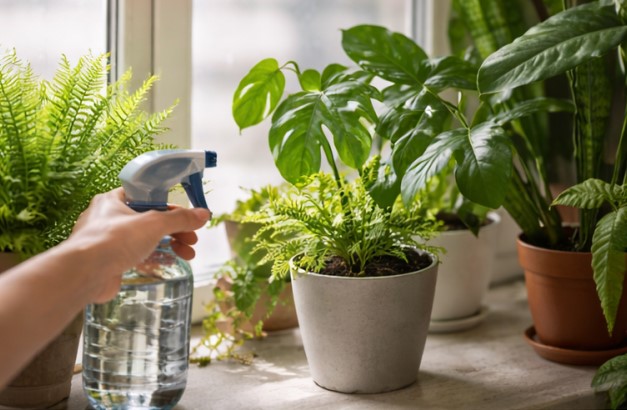
- South-facing windows — for cacti, succulents, citrus. Just provide some shade at high noon.
- East or west-facing windows — the sweet spot for most houseplants.
- North-facing windows — only for shade lovers (ZZ plant, spider plant). In deep shade, plants get leggy and sad.
Step 3. Watering wisdom
The golden rule: when in doubt, underwater. Most plants die from too much love (and too much water).
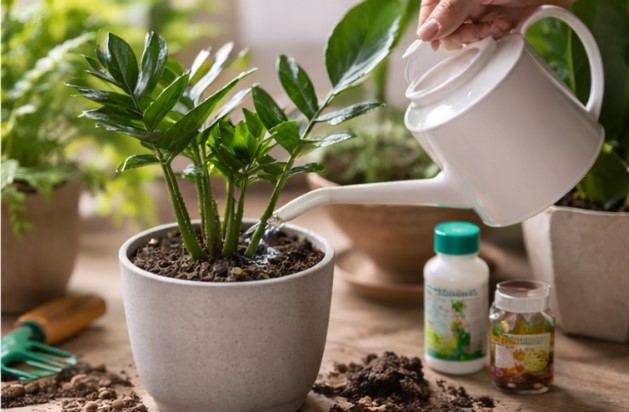
- Stick your finger an inch into the soil. If it’s dry, it’s time to water.
- Use room-temperature water that’s been sitting out (to let chlorine evaporate).
- 10–15 minutes after watering, empty the saucer so roots aren’t sitting in water.
- Water more in summer, less in winter (most plants rest then).
Step 4. Humidity matters
Winter heating turns your apartment into a desert. Tropical plants (ficus, calatheas, ferns) suffer.
- Mist leaves regularly with soft water (hard water leaves white spots).
- Set pots on trays filled with pebbles and water.
- Run a humidifier — your plants (and your skin) will thank you.
Step 5. Fertilizing
- Feed only during the growing season (spring through summer), about every 2–3 weeks.
- In winter, cut back to once a month or stop entirely.
- Use the right fertilizer for the plant type (succulents, leafy plants, flowering plants).
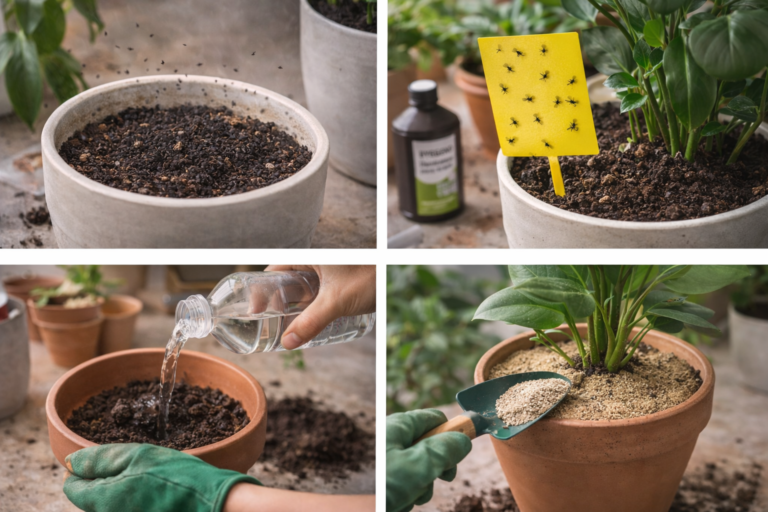
Step 6. Pest and disease prevention
- Check leaves (top and bottom) once a week.
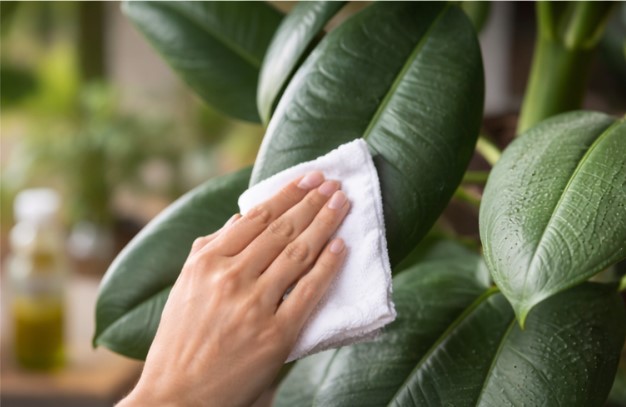
- Wipe dust off leaves with a damp sponge — clean leaves = happy leaves.
- Spot pests (aphids, spider mites, scale)? Deal with them immediately.
Care schedule cheat sheet
| Task | Frequency |
|---|---|
| Check soil moisture | Daily for moisture lovers; every 3–5 days for others |
| Water | When soil is dry to the touch |
| Misting | Daily or every other day (for humidity lovers) |
| Fertilizing | Spring–summer: every 2–3 weeks; winter: once a month or less |
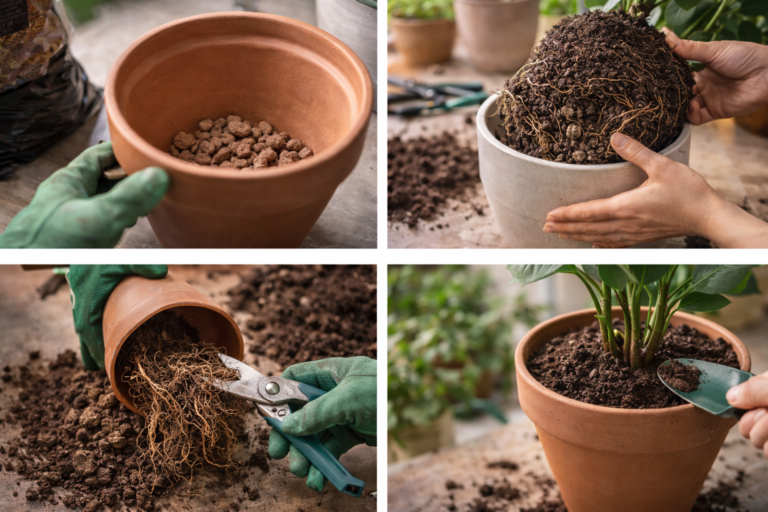
| Repotting | Young plants: yearly; mature plants: every 2–3 years |
| Wiping leaves | Every 1–2 weeks |
What NOT to do
- Don’t overwater. Roots need to breathe.
- Don’t put plants in drafty spots or directly under AC vents.
- Don’t use cold tap water — it shocks them.
- Don’t fertilize sick plants or ones you’ve just repotted.
- Don’t ignore warning signs (yellowing, spots, drooping).
Prevention tips
- Group plants with similar needs — makes care so much easier.
- Keep a simple log (when you watered, fertilized, etc.).
- Check for pests regularly — catch them early.
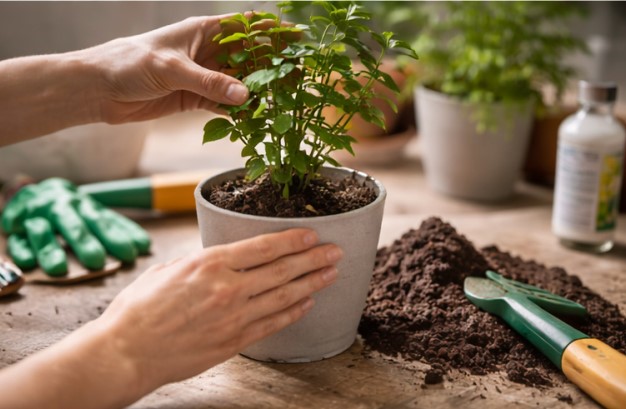
- Every spring, see if it’s time to repot.
The bottom line
Houseplant care isn’t about luck — it’s a system. Light, water, humidity, fertilizer — those are the four pillars. Start by observing, and your green friends will reward you with lush leaves and maybe even flowers.
Tested on my own ficus: after I moved it to an east window and started misting, it put out 5 new leaves in a month.
Got your own plant care secrets? Share them in the comments!
Related guides