Home cleaning, organization and lifestyle tips
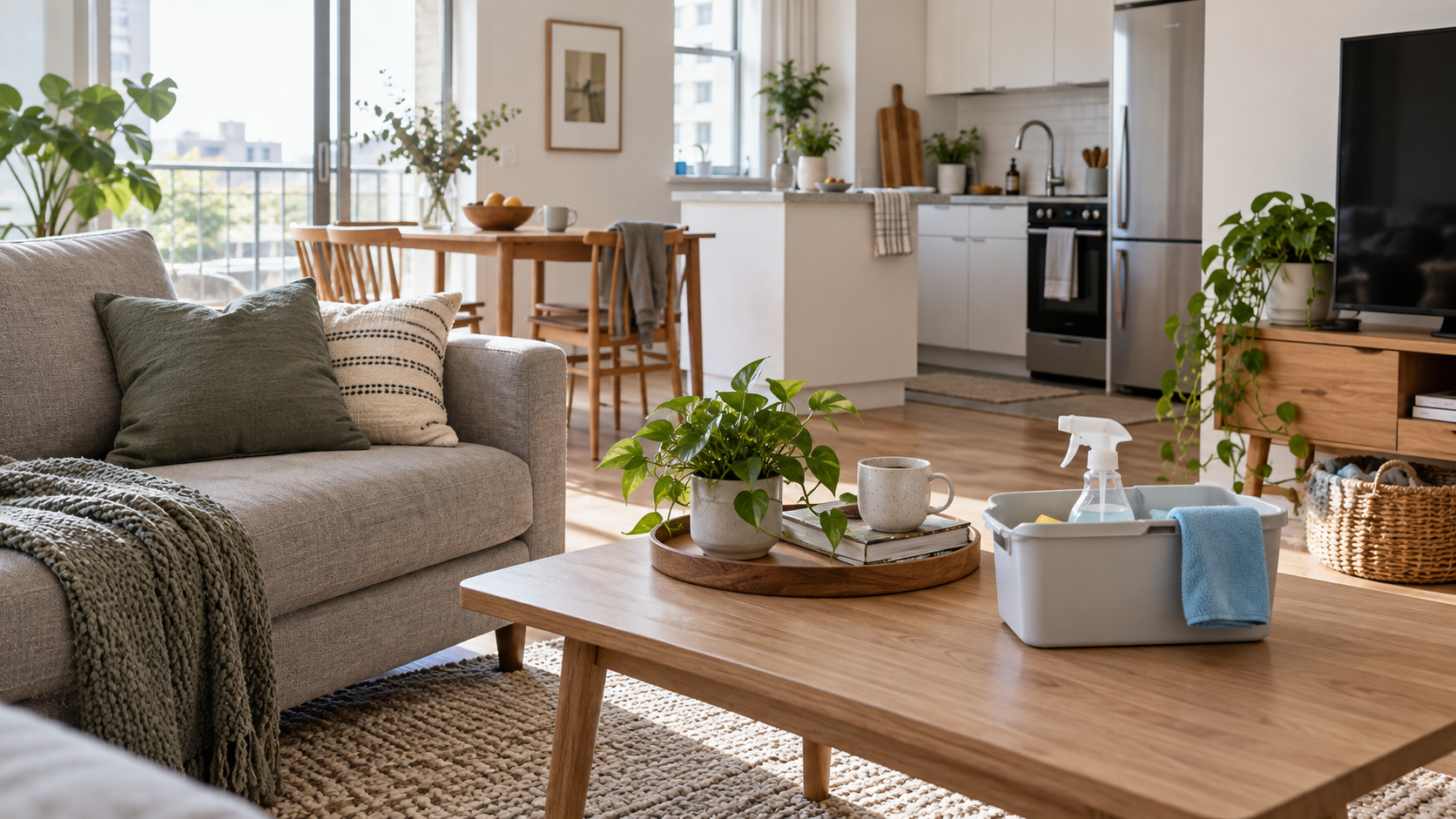

Quick answer: a 15-minute apartment clean is a focused reset, not a deep clean. Spend the first minute gathering a basket, rubbish bag and two cloths. Use three minutes to collect clutter, four on the kitchen, three on the bathroom, three on the most visible living areas and the final minute on floors, rubbish and returning supplies. Work from dry tasks to wet ones, clean high-touch surfaces with a product suitable for them and stop when the timer ends.
The method succeeds because it limits decisions. You are not reorganising cupboards, scrubbing grout or chasing every speck of dust. You are removing rubbish, restoring usable surfaces, handling the most obvious hygiene points and making the next proper clean easier. In a very untidy home, completing just the first stages is still useful; speed should never require unsafe lifting, running on wet floors or mixing chemicals.
What a 15-minute reset can realistically achieve
Expect clearer walking routes, an empty sink or controlled dish stack, a wiped bathroom basin, tidier seating and a quick pass over visible crumbs or debris. Do not promise yourself a spotless apartment. Baked-on grease, mould, limescale, stained upholstery and a full floor wash need their own methods and contact times. The timer is a boundary that protects the routine from expanding into an exhausting project.
Choose one outcome before you start: “comfortable for tonight,” “ready for a visitor” or “safe enough to cook.” That decision changes priority. A visitor reset emphasises the entrance, toilet and living room. A weekday reset may prioritise dishes, food waste and tomorrow’s clothes. Visible dirt or a spill always outranks decorative straightening.
Minute 0–1: prepare without overloading the kit
Take a lightweight basket for misplaced objects, a rubbish bag, two colour-separated microfiber cloths and one mild multipurpose cleaner approved for the surfaces you will touch. Add a vacuum or broom only if it is ready to use. Put on any protection required by the product label. Open a window or use an exhaust fan when conditions allow, especially if a cleaner produces vapour or spray.
Do not carry several open bottles from room to room. Never mix products. EPA guidance recommends following labels, ventilating during cleaning and avoiding chemical mixtures; the CDC notes that ordinary cleaning with soap or detergent is enough in many routine situations, while disinfection is generally reserved for illness or specific risks. If disinfection is needed, cleaning comes first and the label’s wet contact time cannot be compressed to fit the timer.
Minutes 1–4: remove rubbish and collect wandering items
Walk one circuit through the apartment. Put obvious rubbish in the bag, dishes near the sink and laundry in its hamper. Place everything that belongs in another room into the basket. Do not open drawers, sort paperwork or decide where every cable should live. Those choices consume the whole session.
Clear seats, the main table and walking paths first. Straighten sofa cushions and fold one throw. Return only items whose home is within arm’s reach; leave the basket in a designated place for a later five-minute put-away round. If food waste, broken glass, pet mess or a leaking container appears, handle it safely before continuing.
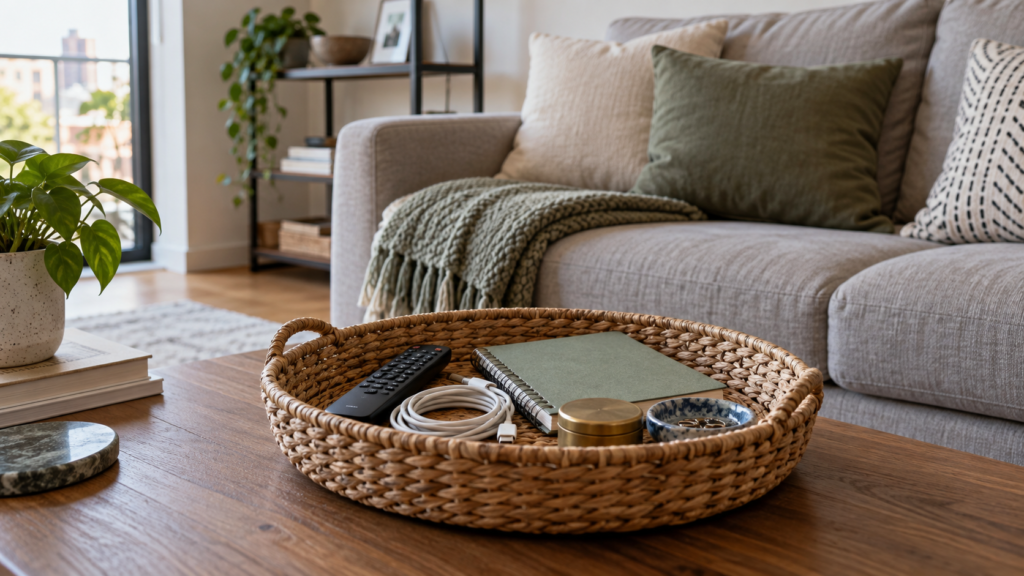
A catch basket is temporary, not hidden storage. Empty it later so clutter does not merely move between rooms. For a broader list of small habits, see our quick-cleaning guide.
Minutes 4–8: reset the kitchen
Scrape food into the bin or compost according to local rules, load the dishwasher or stack dishes neatly, and leave sharp knives visible rather than submerged. Put perishable food away. Wipe the dining surface and the clear sections of countertop with a product suitable for the material. Work around appliances without spraying switches, sockets or food.
Rinse and wipe the sink, then use a separate clean area of the cloth for handles and the refrigerator grip. Food-contact surfaces may require rinsing after a cleaner; follow its label. Skip oven racks and cupboard interiors. If grease is bonded to cabinetry, schedule the material-specific process in our guide to cleaning greasy kitchen cabinets.
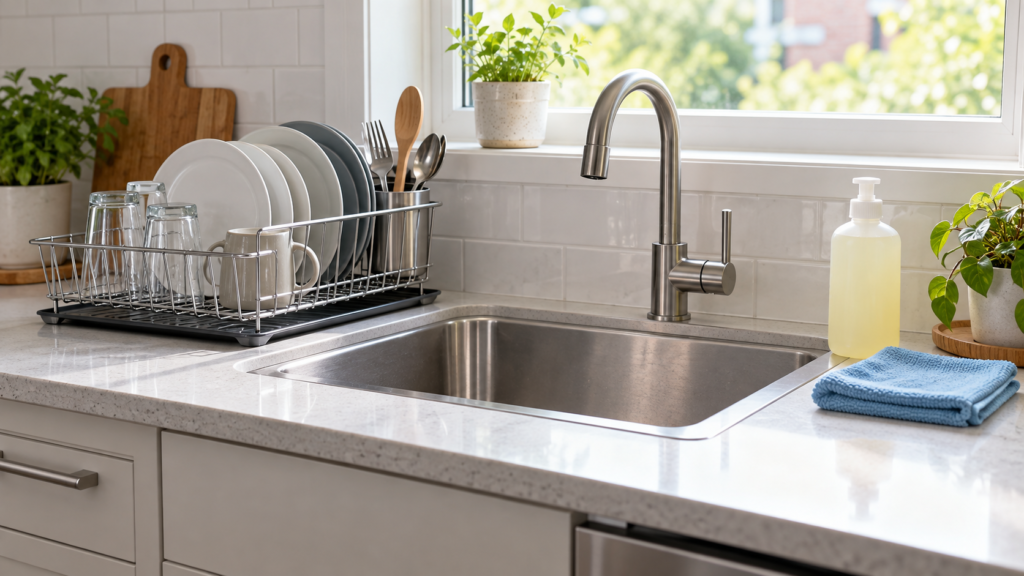
If the sink is full, define success as a safe stack and enough clear space to wash hands or prepare breakfast. Starting a dishwasher counts. Hand-washing every pan does not need to fit inside this reset.
Minutes 8–11: make the bathroom usable
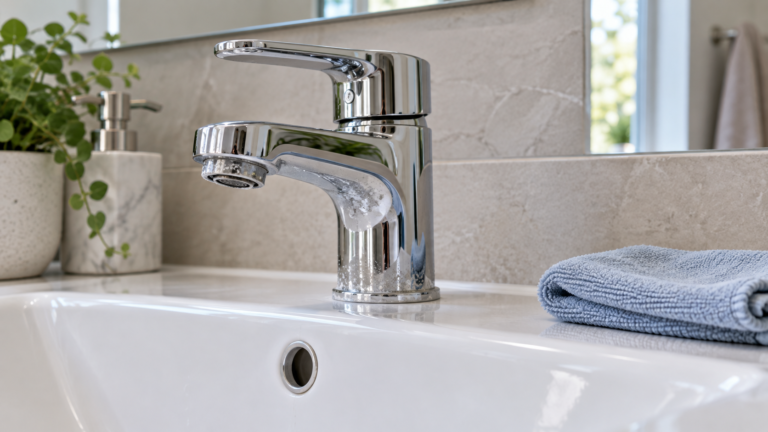
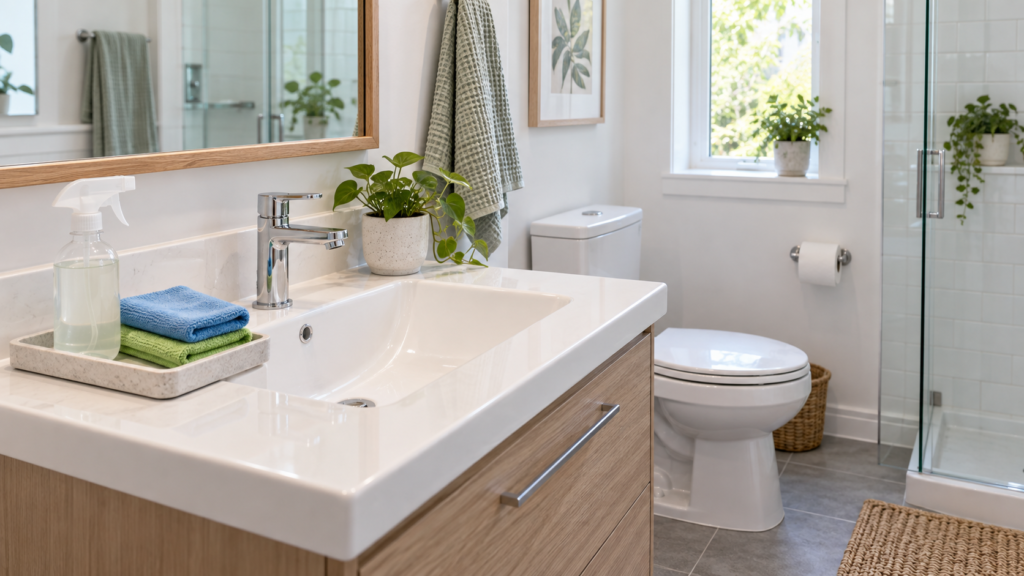
Put toiletries back, hang the towel and remove visible rubbish. Use a bathroom-only cloth to wipe the basin, faucet and an obvious splash on the mirror. Clean the toilet seat and frequently touched flush control with the appropriate product and a separate cloth or disposable material. Work from cleaner surfaces toward dirtier ones, then wash your hands.
Do not wipe the toilet and then carry the same cloth to the kitchen. Do not combine toilet cleaner with bleach, vinegar or another product. A disinfectant must remain wet for its labelled contact time, so apply it only when you can complete the instructions. Persistent black spotting, damaged sealant or a spreading damp patch needs more than a speed wipe; use our bathroom mould guide.
Minutes 11–14: focus on visible and high-touch areas
In the living room and bedroom, dust or wipe only clear, prominent surfaces: the coffee table, bedside table and exposed shelf edge. Clean frequently touched handles, switches or remote controls only with a method compatible with the material and electronics maker. Spray a cloth rather than an electronic device. Make the bed by pulling up the duvet and arranging pillows; changing linen belongs in a longer session unless that is today’s priority.
Do not push dry dust around after wetting every surface. Use a folded cloth and expose a clean side as it becomes dirty. If dust is heavy, a deliberate top-to-bottom clean later will work better than frantic polishing. For rugs with visible crumbs when the vacuum is unavailable, our carpet guide explains safer alternatives.
Minutes 14–15: floors, rubbish and a clean finish
Vacuum or sweep only the main traffic route, kitchen crumbs and the entrance. Avoid a full wet mop unless a small spill makes it necessary; a damp floor at the buzzer is not a successful shortcut. Tie the rubbish, place it by the exit without blocking the route, return the cleaning product to secure storage and put used cloths aside for laundering.
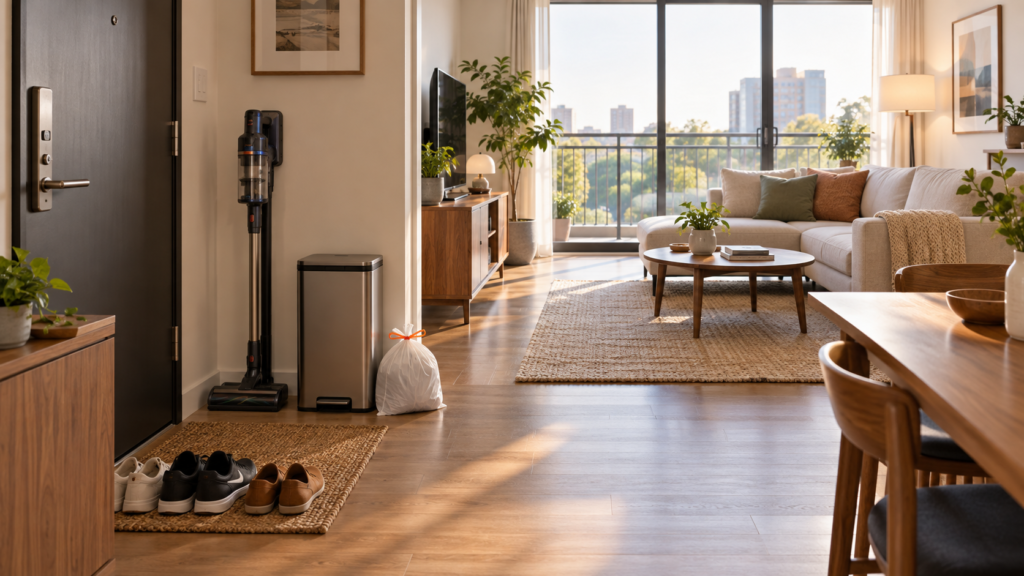
Take ten seconds to scan the room from the doorway. Remove one item that breaks the visual calm, then stop. Open windows should be secured before leaving, and cleaning products must remain out of reach of children and pets. The apartment should now function better even if it is not finished.
Change the order when the situation changes
Guests arrive in 15 minutes
Prioritise the entrance, toilet, seating and one clear surface for drinks. Close doors to private rooms only after removing hazards; do not sweep clutter into a shower or oven.
You need to cook
Start with food waste, dishes, sink and one preparation area. Skip the bedroom. Keep raw-food contamination separate and clean the relevant food-contact surface properly rather than rushing it.
The apartment is very cluttered
Use the whole session for rubbish, laundry and a safe walking route. Cleaning around piles creates little benefit and can hide sharp or damp objects. One filled basket plus a clear floor is meaningful progress.
Common speed-cleaning mistakes
- Starting five jobs and completing none. Finish one timed zone before moving.
- Using one cloth everywhere. Separate kitchen and bathroom materials.
- Spraying fragrance to imitate cleanliness. Remove the source of odour and ventilate safely.
- Mixing cleaners or ignoring labels to save time. Chemistry does not speed up safely.
- Vacuuming before collecting cables and small objects. Clear the route first.
- Hiding wet towels or food in a basket. Separate anything that can leak, smell or develop mould.
Make the next 15-minute clean easier
Give frequently used objects simple homes near where they are used. Keep one small, labelled cleaning set in a secure place and wash cloths after the session. Empty bins before they overflow, deal with dishes after meals and perform a two-minute evening collection. These habits reduce setup time without turning every evening into a cleaning marathon.
Once a week, choose one task excluded from the timer: vacuum under furniture, wash the shower, treat limescale or organise the catch basket. A short reset maintains function; a rotating deeper task prevents neglected work from accumulating.
Frequently asked questions
Should I set exactly 15 minutes?
Yes if a firm boundary helps you start. Pause for a dangerous spill or product contact time; safety is more important than the alarm. Stop at the end and note the first priority for next time.
Should I disinfect every high-touch surface daily?
Usually not. CDC guidance says routine cleaning is enough in many homes; disinfection is more relevant when someone is ill or at higher risk. Follow current public-health and product directions for your situation.
What if I have children or pets?
Secure chemicals, keep them out of wet work areas, collect choking hazards first and avoid leaving buckets or cords across walkways. Use products only as labelled for the intended surface and household.
Sources
- CDC: When and How to Clean and Disinfect Your Home
- US EPA: Improving Your Indoor Environment
- US EPA: Cleaning products, ventilation and indoor air
Related guides