Ev temizliği, düzenleme ve yaşam tarzı ipuçları
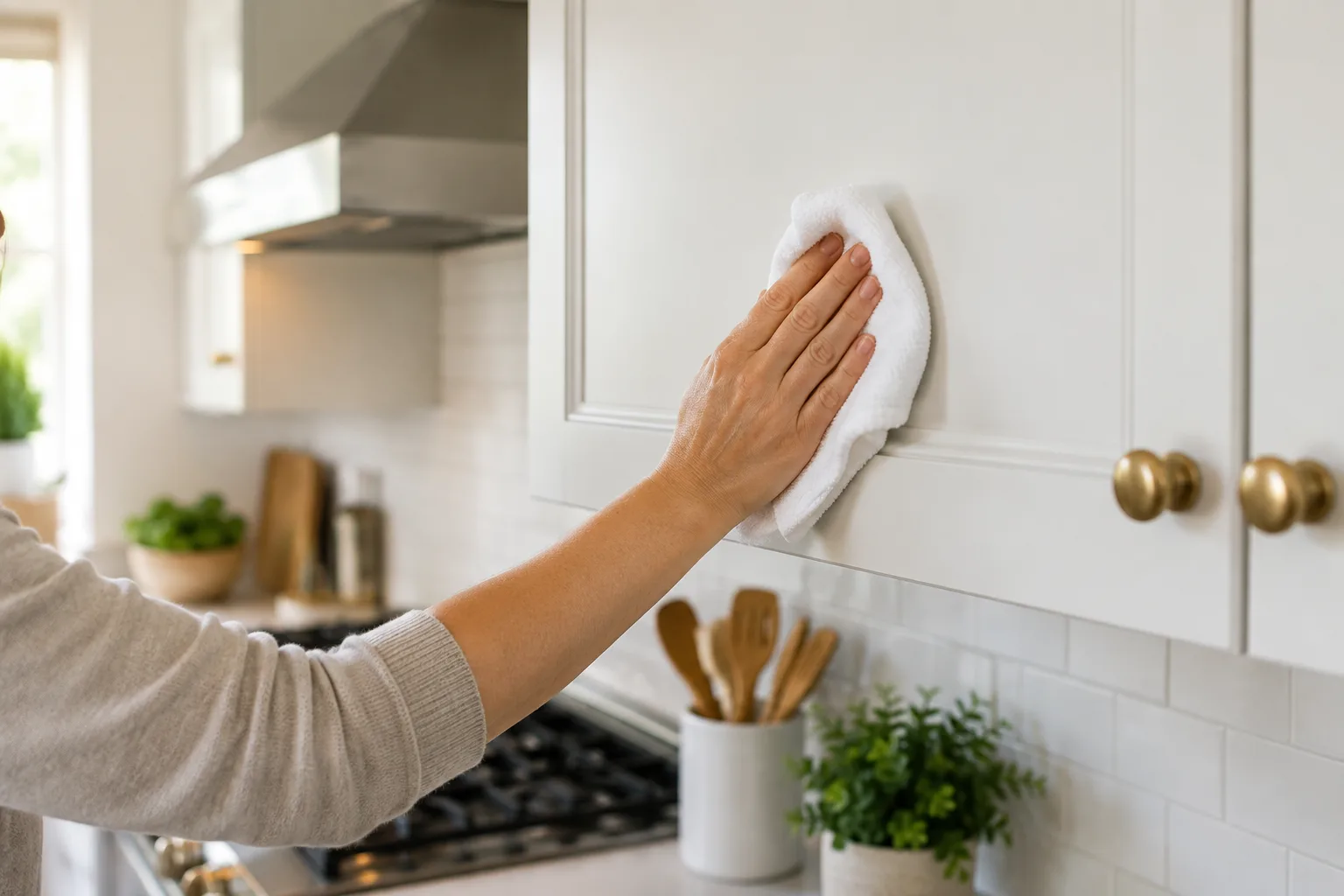
Short answer: use a soft lint-free or microfiber cloth that is only lightly damp, start with warm water, and use a mild cleaner only when the cabinet maker permits it. Work on a small area, then dry it immediately with a second clean cloth.
Kitchen grease is mixed with dust and moisture, but the finish matters more than the “strongest” remedy. The careful surface-first approach in our safe washing-machine cleaning guide and home water-saving guide is useful here too.
Identify the finish and test first
Painted wood, stained wood, laminate, thermofoil and high-gloss fronts do not all tolerate the same products. Read the maker’s care information when available. Test any cleaner on a hidden inside edge, wait for it to dry, and stop if color, sheen or texture changes.
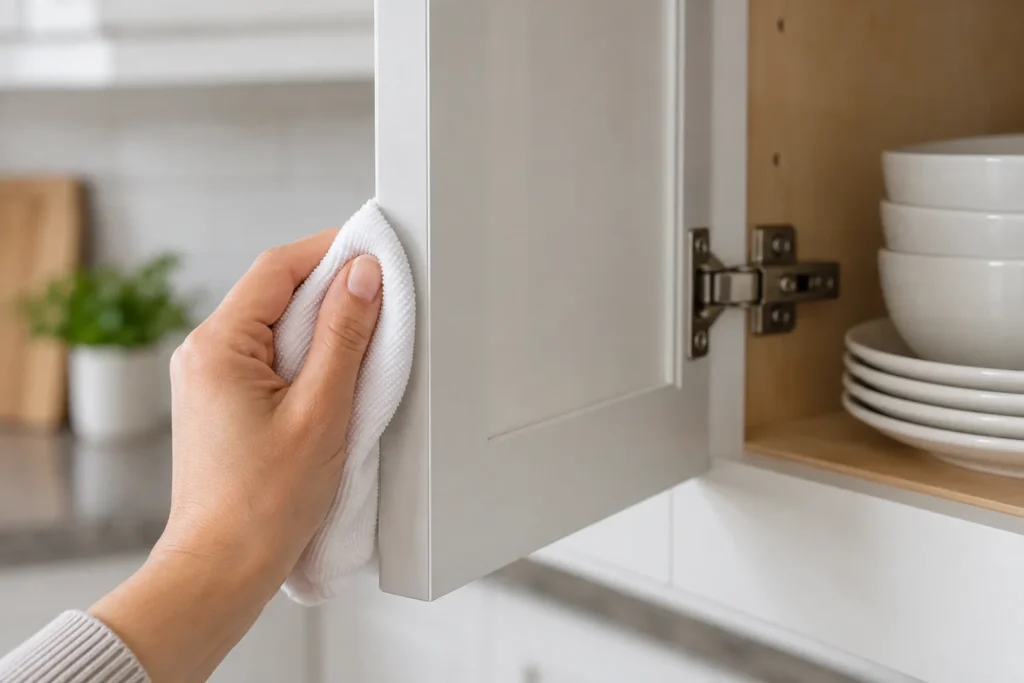
A safe routine for light grease
- Dust the door and handle with a clean dry cloth.
- Dampen a soft cloth with warm water and wring it out well.
- For residue, use a small amount of mild dishwashing liquid in water only if the cabinet instructions allow it.
- Wipe gently in the direction of the grain or finish, remove any residue with a clean damp cloth, then dry immediately.
Do not spray liquid directly on doors, seams, hinges or glass inserts. Moisture can enter edges and joints.
Stubborn spots, grooves and hardware
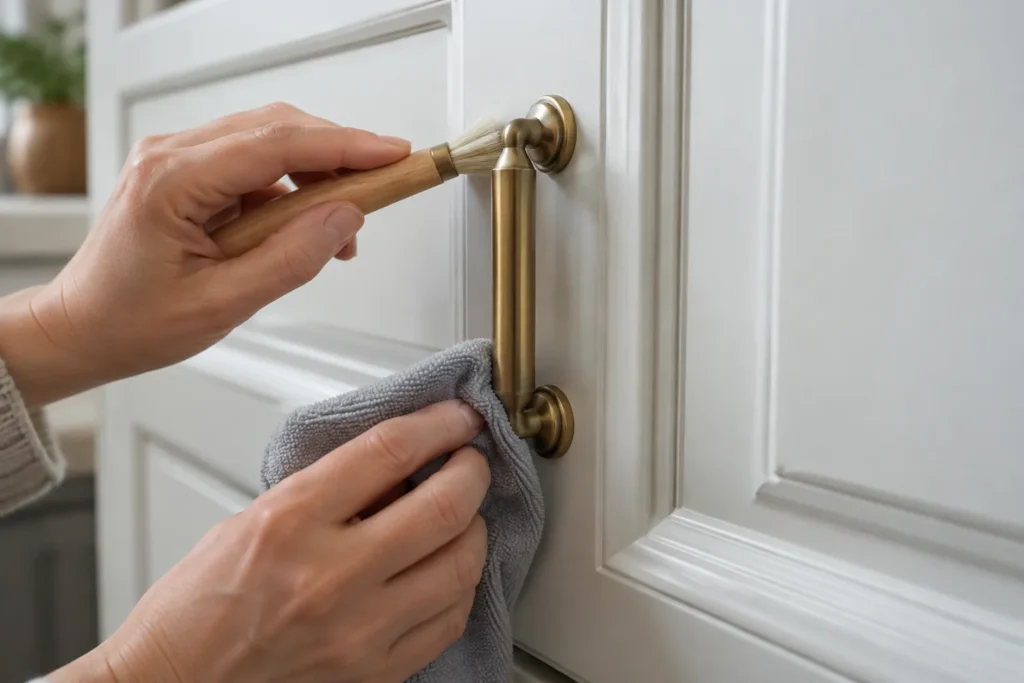
Use a compatible nonabrasive cabinet cleaner only as directed by its label and the cabinet maker. Apply it to the cloth, never flood the surface. A soft detailing brush can reach carved details and the base of handles; wipe and dry the area afterward.
What not to use
- Abrasive powders, scouring pads, steel wool or rough sponges.
- Bleach, ammonia, acetone, paint thinner, strong solvents or chemical mixtures.
- Oven cleaner, which can damage cabinet finishes.
- Excess water or vigorous rubbing, especially on high-gloss, laminate and wood fronts.
Repeated stickiness, lifting edges, swelling, discoloration or a failed finish is a repair issue rather than a signal to use a stronger cleaner. Ask the cabinet maker or a qualified finisher for advice.
Prevent buildup
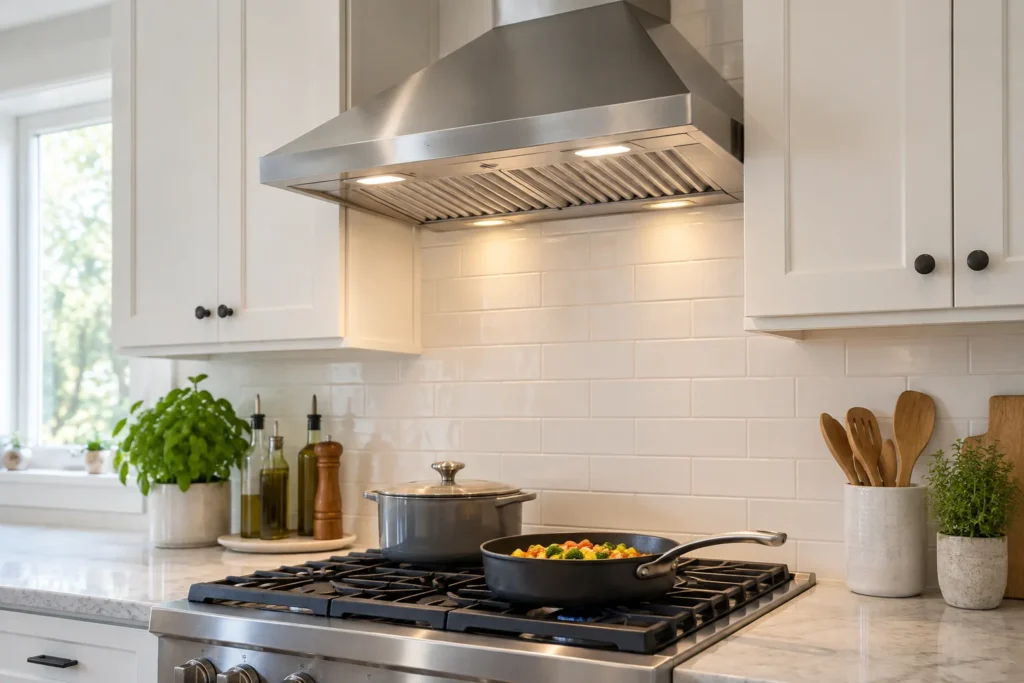
Run the extractor while cooking, clean its filters as directed in our range hood cleaning guide, and wipe nearby cabinet fronts regularly with a dry or lightly damp cloth. Deal with spills promptly and keep wet dish towels off cabinet doors. Consistent drying also limits moisture problems discussed in safe bathroom mold-cleaning guide.
Sources
- MasterBrand: care and cleaning
- KraftMaid: cabinet care
- Wood-Mode: care instructions
Yüzeye uygun yöntemi seçin
Son karar mobilya üreticisinin bakım talimatıdır. Boyalı ahşap için yumuşak pamuklu bez, laminat ve parlak yüzey için temiz mikrofiber daha uygundur. Kaplama bilinmiyorsa iyi sıkılmış ılık su beziyle başlayın. Doğrudan güneşte çalışmayın; yüzey kalıntıyı silemeden kuruyabilir.
Yapışkan alan için sıra
- Silmeden önce tozu alın ki çizmesin.
- Küçük alanı hafif nemli bezle temizleyin.
- İz kalırsa izinli, aşındırmayan ürünü beze sürün ve denemeyi tekrarlayın.
- Kalıntıyı alın, kurutun ve sonraki alana geçin.
Ne zaman durmalı?
Renk değişirse, parlaklık giderse veya yüzey yapışkanlaşırsa ovmaya devam etmeyin. Şişmiş kenarlar, kalkmış kaplama, çatlak boya veya gevşek kaplama üretici ya da onarım uzmanı gerektirir.
Hızlı kontrol listesi
- Yalnızca yumuşak temiz bezler ve ayrı kurutma bezi.
- Yeni ürünü gizli yerde deneyin.
- Sıvıyı birleşimlerden, menteşelerden ve kenarlardan uzak tutun.
- Davlumbazı çalıştırın, sıçramaları bekletmeyin.