نصائح لتنظيف المنزل والتنظيم وأسلوب الحياة
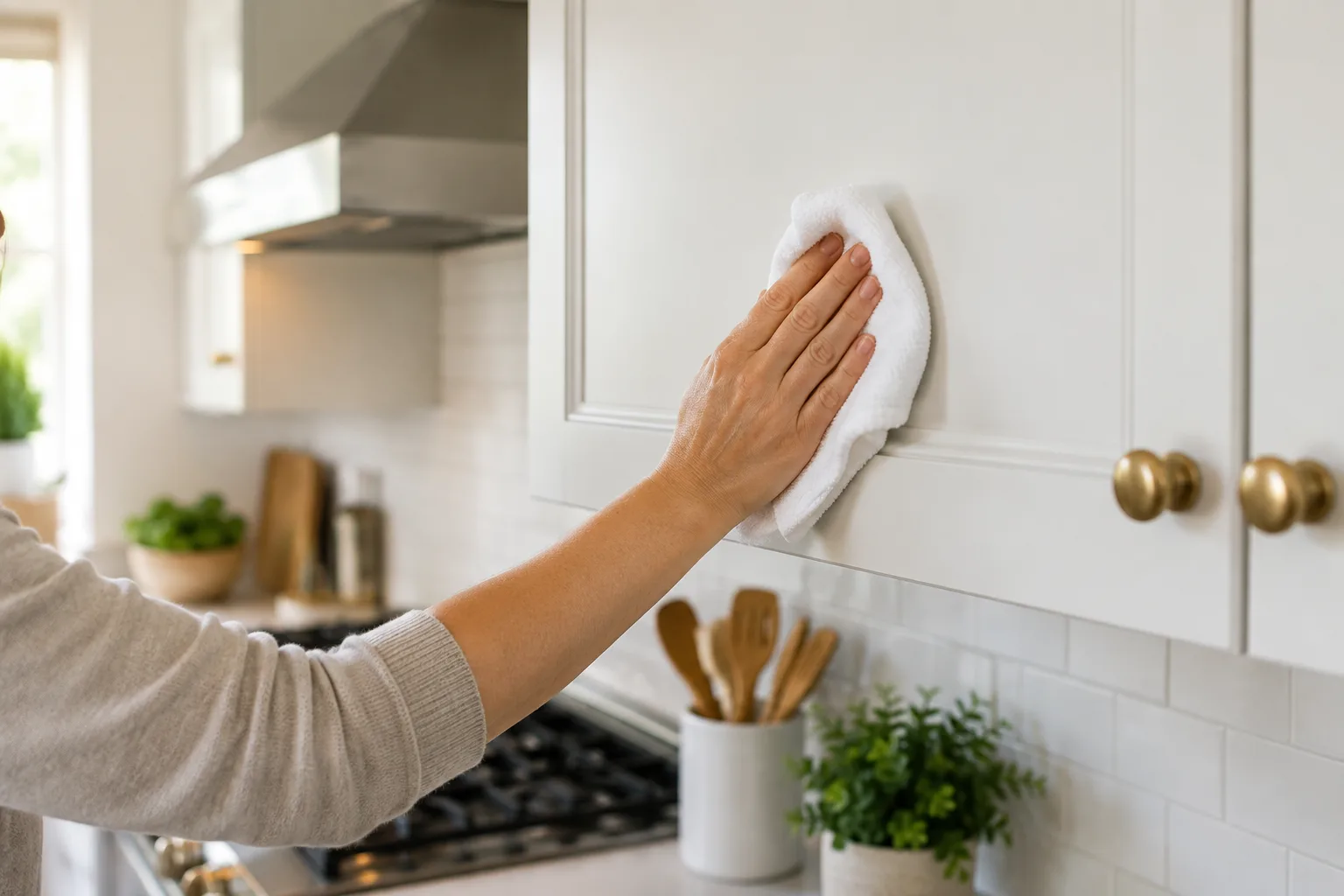
Short answer: use a soft lint-free or microfiber cloth that is only lightly damp, start with warm water, and use a mild cleaner only when the cabinet maker permits it. Work on a small area, then dry it immediately with a second clean cloth.
Kitchen grease is mixed with dust and moisture, but the finish matters more than the “strongest” remedy. The careful surface-first approach in our safe washing-machine cleaning guide and home water-saving guide is useful here too.
Identify the finish and test first
Painted wood, stained wood, laminate, thermofoil and high-gloss fronts do not all tolerate the same products. Read the maker’s care information when available. Test any cleaner on a hidden inside edge, wait for it to dry, and stop if color, sheen or texture changes.
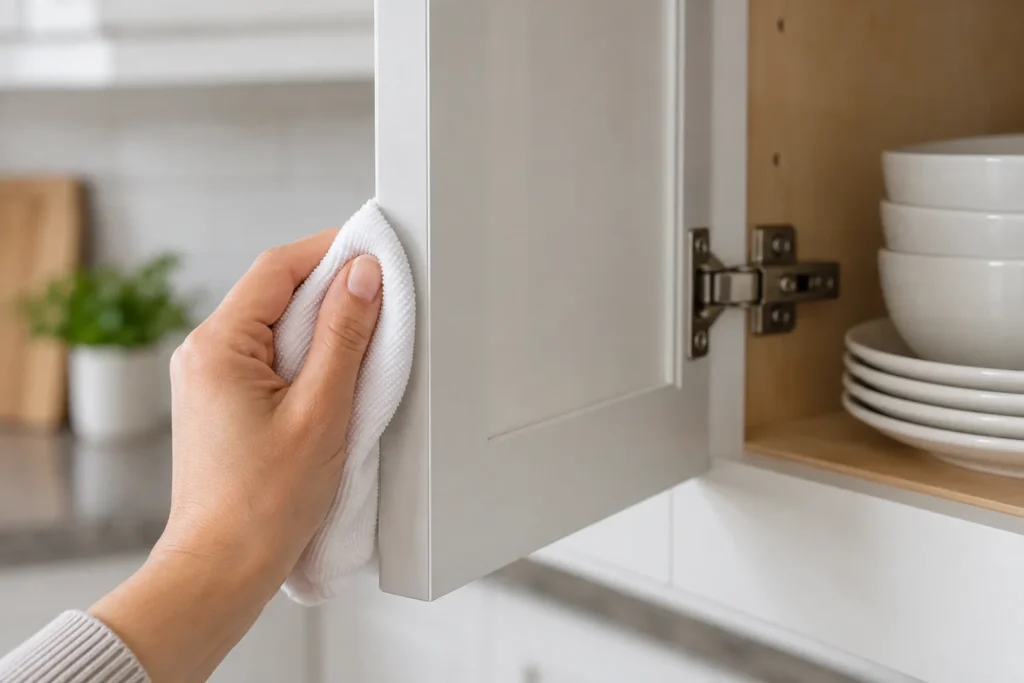
A safe routine for light grease
- Dust the door and handle with a clean dry cloth.
- Dampen a soft cloth with warm water and wring it out well.
- For residue, use a small amount of mild dishwashing liquid in water only if the cabinet instructions allow it.
- Wipe gently in the direction of the grain or finish, remove any residue with a clean damp cloth, then dry immediately.
Do not spray liquid directly on doors, seams, hinges or glass inserts. Moisture can enter edges and joints.
Stubborn spots, grooves and hardware
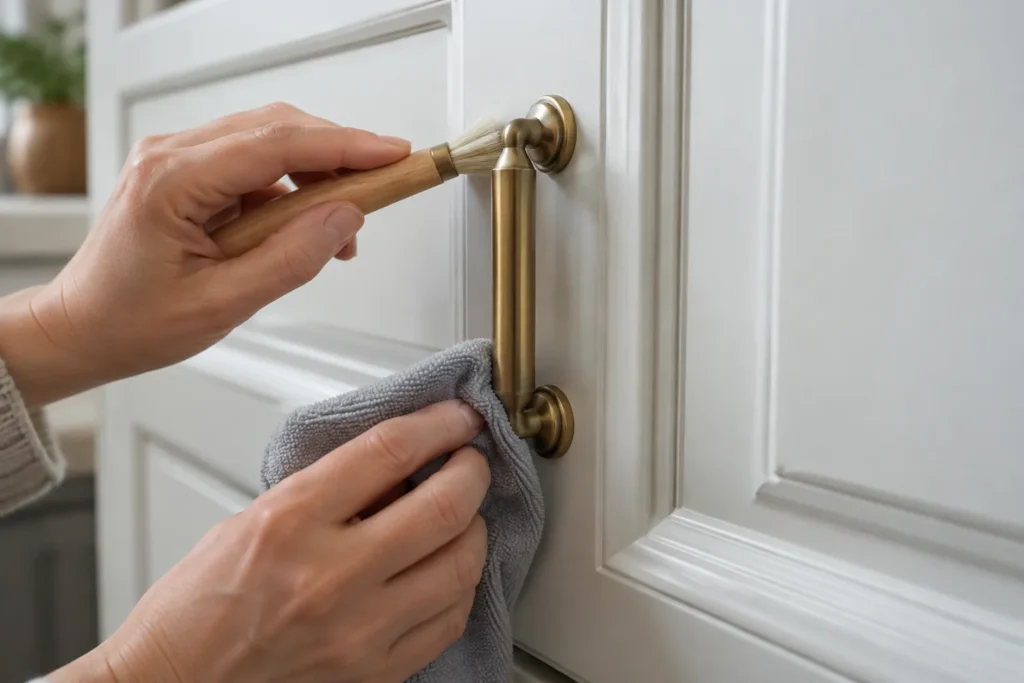
Use a compatible nonabrasive cabinet cleaner only as directed by its label and the cabinet maker. Apply it to the cloth, never flood the surface. A soft detailing brush can reach carved details and the base of handles; wipe and dry the area afterward.
What not to use
- Abrasive powders, scouring pads, steel wool or rough sponges.
- Bleach, ammonia, acetone, paint thinner, strong solvents or chemical mixtures.
- Oven cleaner, which can damage cabinet finishes.
- Excess water or vigorous rubbing, especially on high-gloss, laminate and wood fronts.
Repeated stickiness, lifting edges, swelling, discoloration or a failed finish is a repair issue rather than a signal to use a stronger cleaner. Ask the cabinet maker or a qualified finisher for advice.
Prevent buildup
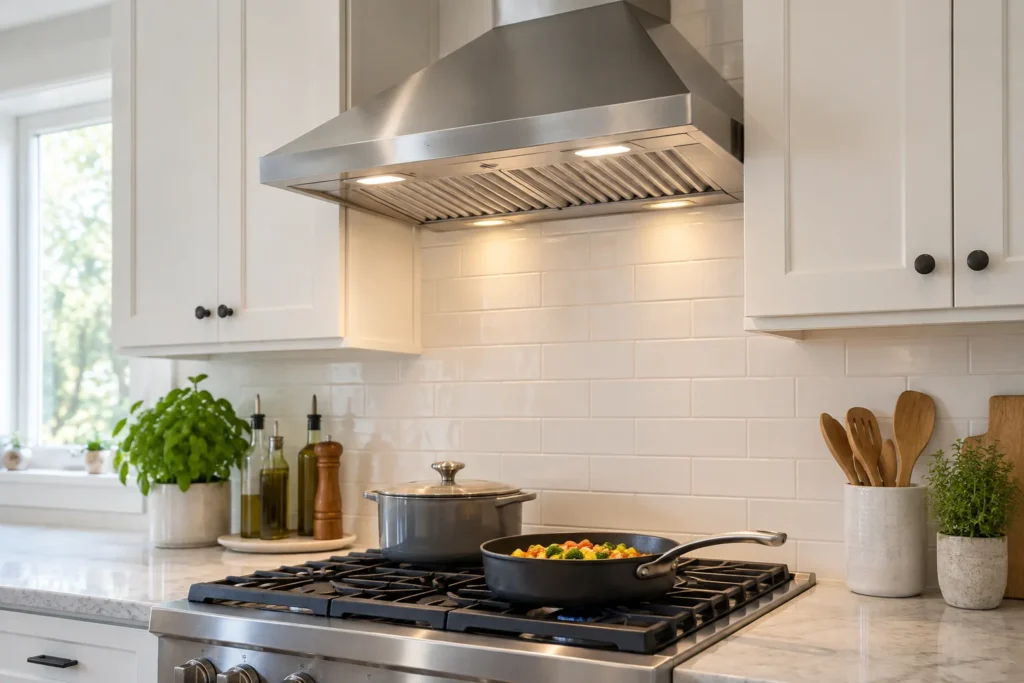
Run the extractor while cooking, clean its filters as directed in our range hood cleaning guide, and wipe nearby cabinet fronts regularly with a dry or lightly damp cloth. Deal with spills promptly and keep wet dish towels off cabinet doors. Consistent drying also limits moisture problems discussed in safe bathroom mold-cleaning guide.
Sources
- MasterBrand: care and cleaning
- KraftMaid: cabinet care
- Wood-Mode: care instructions
اختر الطريقة حسب نوع السطح
تعليمات صانع الخزانة هي المرجع النهائي. يناسب القطن الناعم الخشب المصبوغ، بينما تحمي المايكروفايبر النظيفة اللامينيت والأسطح اللامعة. إن لم تعرف الطلاء، ابدأ بقطعة مبللة قليلاً جداً بماء دافئ. تجنب الشمس المباشرة كي لا يجف السطح قبل إزالة البقايا.
ترتيب العمل في المنطقة اللزجة
- أزل الغبار أولاً كي لا يخدش السطح.
- نظف جزءاً صغيراً بقطعة رطبة قليلاً.
- إذا بقي الأثر، ضع المنتج غير الكاشط المسموح على القماش وأعد الاختبار.
- أزل البقايا وجفف ثم انتقل للجزء التالي.
متى تتوقف؟
لا تستمر في الفرك إذا تغير اللون أو خفت اللمعان أو صار السطح لزجاً. الحواف المنتفخة أو الطلاء المتقشر أو القشرة المرتخية تحتاج نصيحة المصنع أو مختصاً.
قائمة سريعة
- قطع قماش ناعمة ونظيفة وأخرى للتجفيف.
- اختبر أي منتج جديد في مكان مخفي.
- أبعد السائل عن الفواصل والمفصلات والحواف.
- شغل الشفاط وامسح الرذاذ سريعاً.