Home cleaning, organization and lifestyle tips

A small kitchen isn’t a life sentence — it’s a challenge. When I lived in a tiny apartment with a 55 sq ft kitchen, I had to get creative to fit everything. But after some experimenting, I found solutions that turned that cramped space into something actually comfortable and functional.
The good news? Even on 50–70 square feet, you can fit everything you need and still have room to move. The bad news? Without a system, it’s chaos.
Why Organizing Your Small Kitchen Matters
In a small kitchen, every shelf, drawer, hook, and corner has to work harder. Good organization helps you cook faster, keep counters clear, avoid duplicate purchases, and make the room feel larger than it really is.
What You’ll Need
- Drawer dividers
- Clear stackable containers
- Hooks, rails, or magnetic strips
- Vertical racks for pans and lids
- Baskets for cabinet doors or under-sink storage
Step-by-Step Guide
Step 1. Zone Your Kitchen
Even in a small space, define zones. This keeps every task from spreading across the whole kitchen and makes it easier to put things back where they belong.
- Cooking zone: stove, cutting board, knives.
- Cleaning zone: sink, dish soap, drying rack.
- Storage zone: food, dishes, pots.
- Dining zone: table, chairs, stools, or breakfast bar.
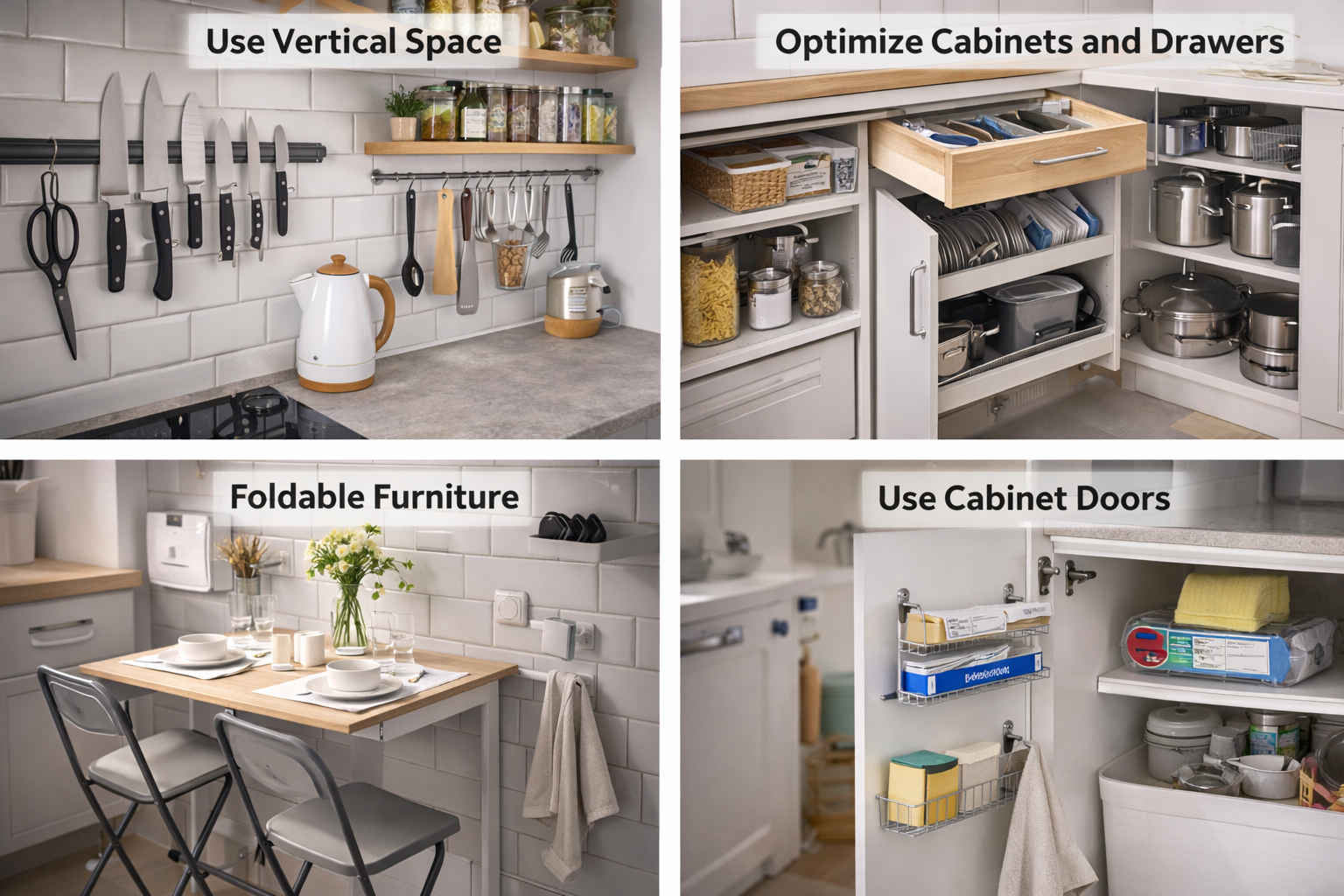
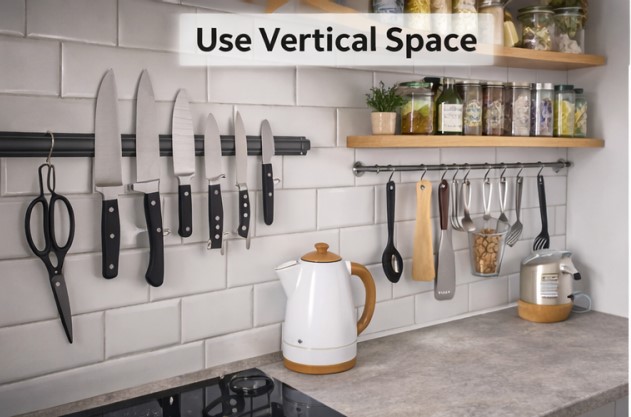
Step 2. Use Vertical Space
- Shelves above the counter. Store everyday items such as spices, oils, and jars.
- Rails on the backsplash. Hang spatulas, ladles, scissors, and small tools.
- Magnetic knife strip. It is safe, space-saving, and keeps knives easy to reach.
Step 3. Optimize Cabinets and Drawers
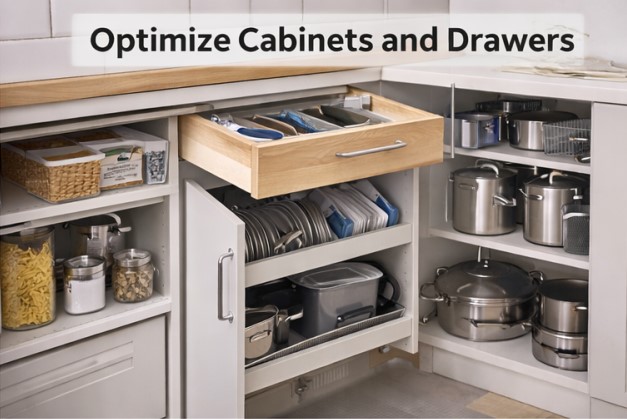
- Use drawer dividers so forks do not mingle with spoons.
- Store pots and pans with lids in lower cabinets.
- Use vertical dividers or racks to keep lids, boards, and trays tidy.
- Keep light, rarely used items on upper shelves.
Step 4. Store Dry Goods in Clear Containers
Uniform, stackable containers save space and let you see what is inside. They also help prevent messy half-open packages and make it easier to spot what needs restocking.
Step 5. Clear the Countertops
Only keep daily essentials on the counter: a kettle, maybe a toaster, and the items you truly use every day. Everything else should go into a cabinet, drawer, basket, or wall-mounted storage.
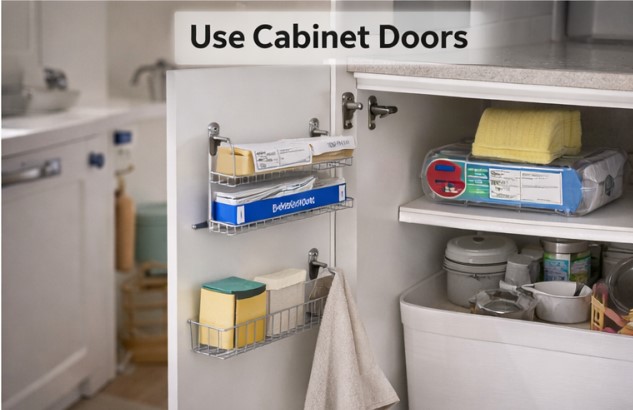
Step 6. Use Cabinet Doors
- Hang small baskets inside cabinet doors for sponges, plastic wrap, and foil.
- Add hooks for towels, measuring spoons, or lightweight tools.
- Use the under-sink door for cleaning supplies, gloves, and trash bags.
Step 7. Foldable Furniture
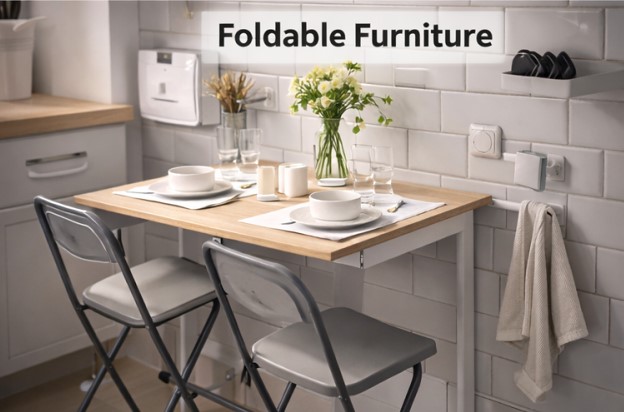
If your dining table eats half the kitchen, consider a drop-leaf table, a folding table, or a breakfast bar. Chairs that fold or stack, or stools that slide under the table, are game-changers.
What Not to Do
- Do not clutter the windowsill. Use it for herbs or as extra counter space.
- Do not keep cleaning supplies out in the open. Store them under the sink.
- Do not buy full-size appliances if compact models would work better.
- Do not hang shelves too low, or you will bump your head.
Prevention Tips
- Do a monthly purge. If you have not used something in a month, consider letting it go.
- Shop in smaller amounts. There is no need to stockpile for a year in a tiny kitchen.
- Clean as you cook. Wash dishes and wipe counters right away.
The Bottom Line
A small kitchen can be a joy to cook in. Use every inch wisely, embrace vertical storage, and keep only what you actually use. A system and a little discipline will make even the tiniest space feel open and efficient.
Tested in my Soviet-era kitchen: after I cleared the counters and installed a rail, cooking actually became fun.
Got your own small-kitchen secrets? How do you store your pots? Share in the comments!