Home cleaning, organization and lifestyle tips

One day I noticed tiny black flies hovering around my favorite ficus. At first, I ignored them. A week later, they were swarming every pot on the shelf. Turns out, I had been overwatering, and the soil had gone sour. I had to save my indoor jungle fast. Now I know exactly how to deal with these little pests safely and quickly.
The good news? You can get rid of gnats without harsh chemicals. The bad news? If you ignore them, their larvae can damage your plant’s roots.
Why gnats appear
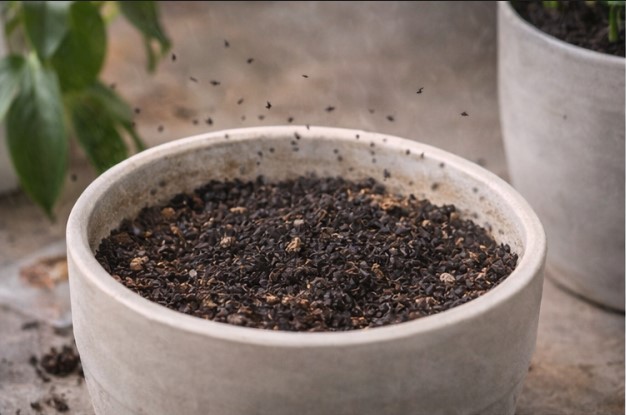
The usual culprit is fungus gnats – tiny black flies that lay eggs in moist soil. The larvae feed on organic matter and can nibble on delicate roots.
| Cause | Explanation |
|---|---|
| Overwatering | Constantly wet soil is a breeding ground |
| Poor drainage | Water sits in the pot |
| Infested soil | Eggs or larvae were already in the potting mix |
| Organic fertilizers | Things like tea leaves or banana peels attract them |
| Open windows | Gnats can fly in from outside |
What you’ll need
- Yellow sticky traps or regular flypaper
- 3% hydrogen peroxide
- Cinnamon, wood ash, or tobacco powder
- Fine sand or vermiculite for top dressing
- Insecticidal soap or Bti mosquito dunks for severe cases
Step-by-step guide
Step 1. Let the soil dry out
Gnats and their larvae cannot survive in dry soil. Stop watering until the top inch or two (2-3 cm) is completely dry.
Step 2. Set up traps
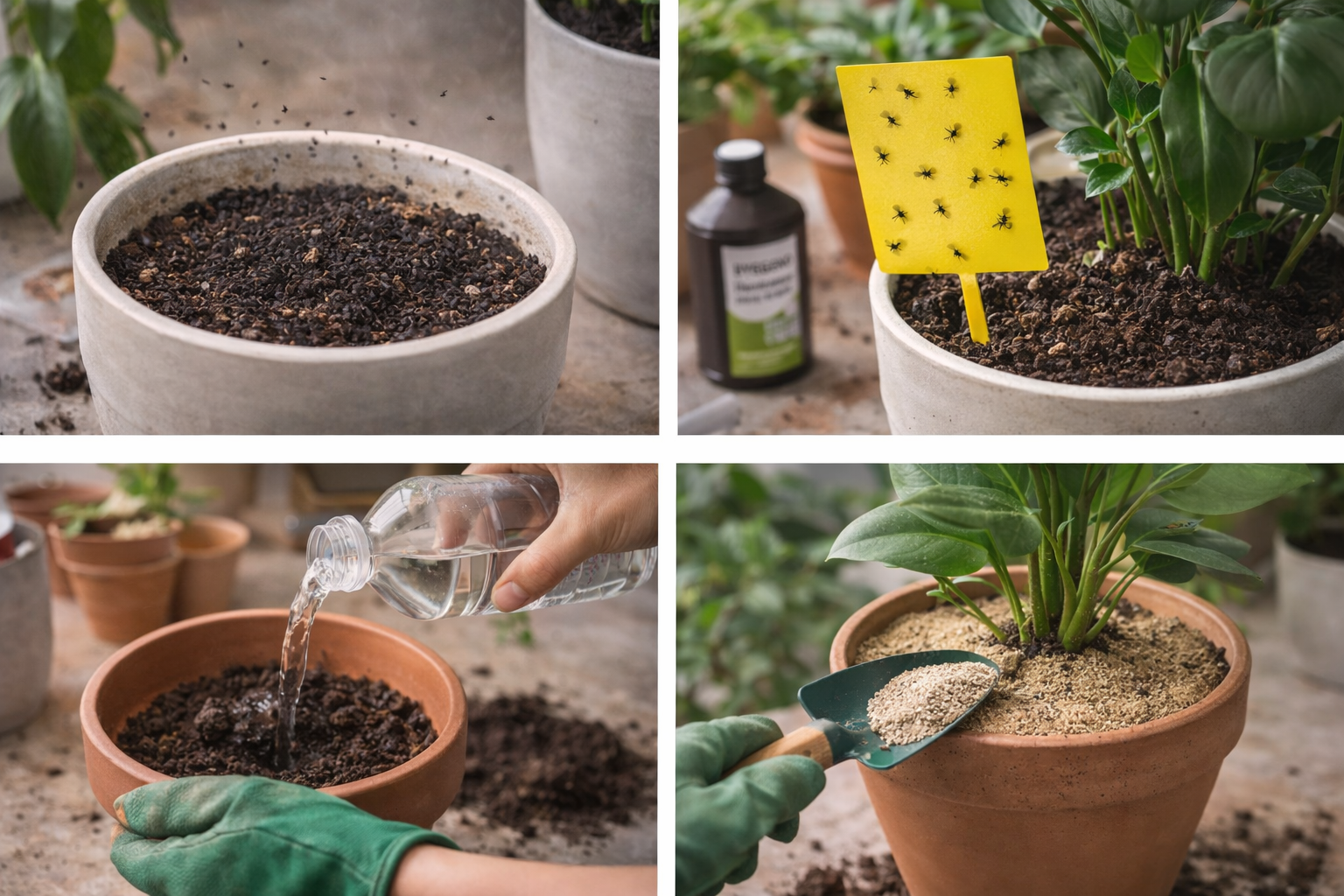
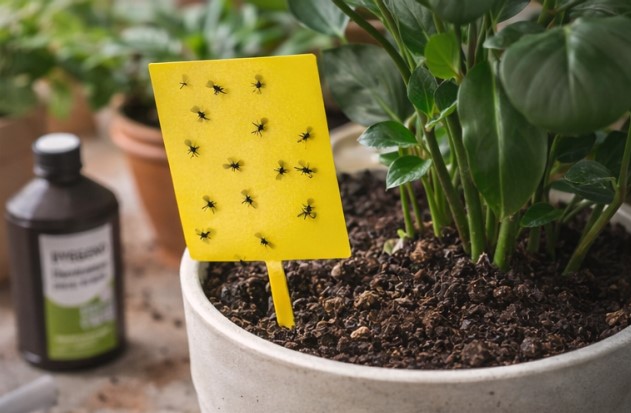
Place yellow sticky traps near your plants. Adult gnats are attracted to the color and get stuck. Regular flypaper works too.
Step 3. Treat the soil
Natural options:
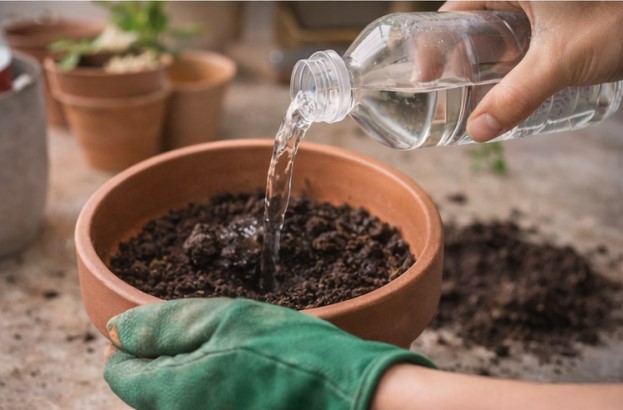
- Hydrogen peroxide: Mix 1 part 3% peroxide with 4 parts water. Water the soil with this solution – it kills larvae and aerates the roots.
- Cinnamon or wood ash: Sprinkle it on the soil surface. Gnats dislike these smells.
- Tobacco dust: Sprinkle it over the surface and lightly work it into the top layer.
Stronger options:
- Bti (Bacillus thuringiensis israelensis): Found in mosquito dunks. Crush and soak in water, then use that water for your plants. It is safe for plants and pets but kills gnat larvae.
- Insecticidal soap: Follow the label instructions carefully.
Step 4. Replace the top layer of soil
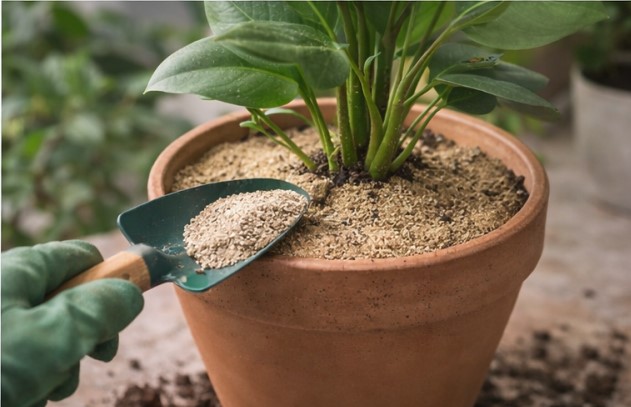
If the infestation is bad, remove the top inch (2-3 cm) of soil and replace it with fresh, dry potting mix. Top with a layer of sand or vermiculite – it dries out fast and prevents gnats from laying eggs.
Step 5. Repot as a last resort
If nothing works, repot the plant in fresh, sterile soil. Gently remove old soil from the roots and rinse them with a weak potassium permanganate solution, or simply with clean water.
Treatment comparison chart
| Method | Effectiveness | How it works |
|---|---|---|
| Drying out soil | Medium | Removes breeding conditions |
| Sticky traps | High | Catches adults |
| Hydrogen peroxide | High | Kills larvae quickly |
| Cinnamon / ash | Medium | Good for prevention |
| Bti mosquito dunks | Very high | Targets larvae and is safe for plants |
What not to do
- Do not overwater after treatment – the gnats will come right back.
- Do not use strong chemical insecticides indoors without ventilation.
- Do not leave organic matter such as tea leaves or fruit peels in the pots.
- Do not skip drainage holes – they are essential for preventing standing water.
Prevention tips
Water wisely. Let the top inch of soil dry out between waterings.
Use quality potting mix. Do not use garden soil indoors.
Always have drainage holes and a layer of gravel or perlite at the bottom.
Sterilize new soil before planting: bake it at 200°F (100°C) for 20 minutes, or drench with boiling water.
Avoid raw organic fertilizers. Stick to balanced liquid fertilizers.
The bottom line
Gnats in your plants mean you are either watering too much or using soil that was not clean. Dry it out, trap the adults, treat the soil with peroxide or Bti, and you should be pest-free in a week.
Tested on my own ficus: after drying out the pot and watering with peroxide, the gnats were gone in three days, and the plant perked right up.
Have you dealt with gnats in your houseplants? What worked for you? Share in the comments!